Santa Barbara
Well-structured and rich, with caramel sweetness. Orange, dried pineapple and milk chocolate.
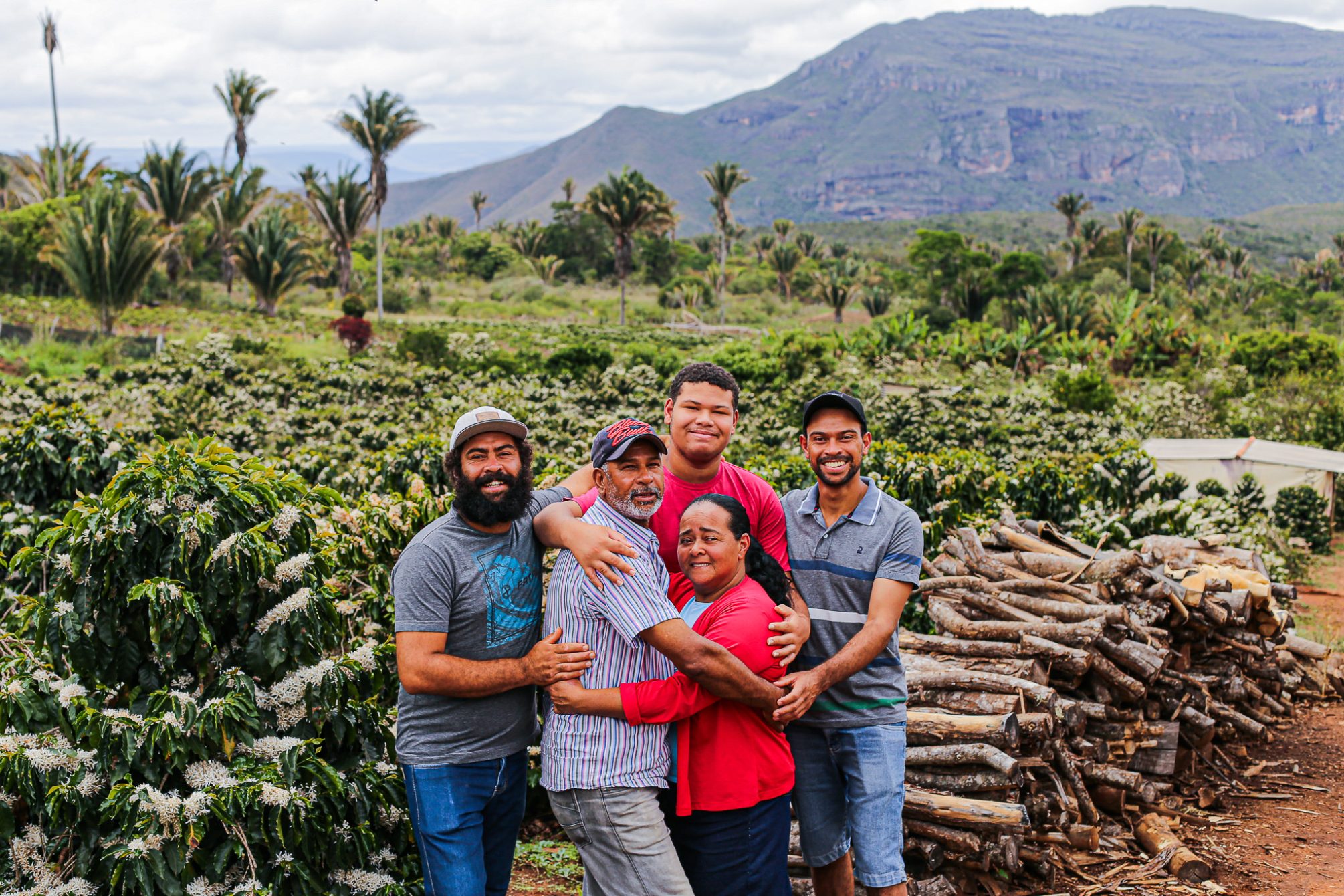
Santa Barbara is a beautiful farm located near the town of Piatã, in Bahia’s unique growing region of Chapada Diamantina. The estate is a family affair, with owners José Joaquim Oliveira and wife Marlene Torres at the helm while sons Ricardo, Gilliard and Jonas play important roles in its operations throughout the year. The entire family are based out of Santa Barbara, as eldest son Gilliard lives there with his spouse and daughter as well.
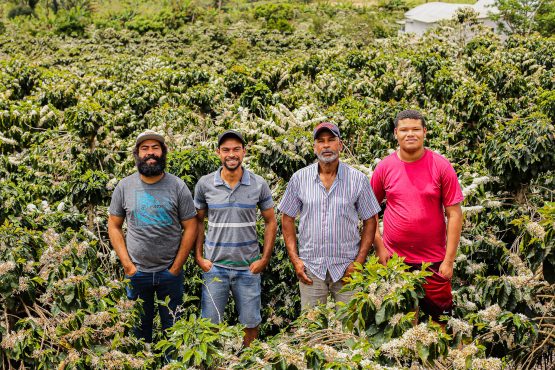
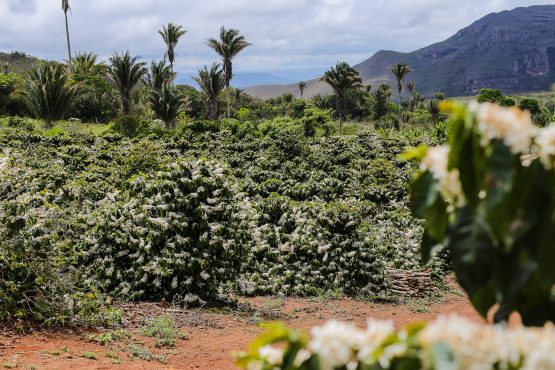
José Joaquim first purchased the four-hectare property in 2000, back when it was only used as pasture. He initially planted it with beans and corn for the family’s consumption, with the first coffee trees established in 2007. Two years later, he was able to expand by purchasing the larger neighbouring plot Sítio Cafundó, which covers 20 hectares and is named after the microregion where it is located, cafundó (which translates to ‘very, very far away’ in Portuguese). Since then, José and his sons have established five hectares of coffee across the two parcels, dividing the plantations’ responsibilities among themselves.
As the estate grew, so did José Joaquim’s ambition, who began to focus on specialty coffee in 2011. Since then, he has been perfecting both properties’ agricultural practices along with the processing methods they follow at a wet mill they share with Pedro and Delzute of Cafundó. The Oliveiras’ friendship with the couple has been hugely important as they’ve both progressed their careers in specialty coffee production. By relying on each other for advice and resources, the two families support each other during the busiest spells of the harvest and share in each others’ successes.
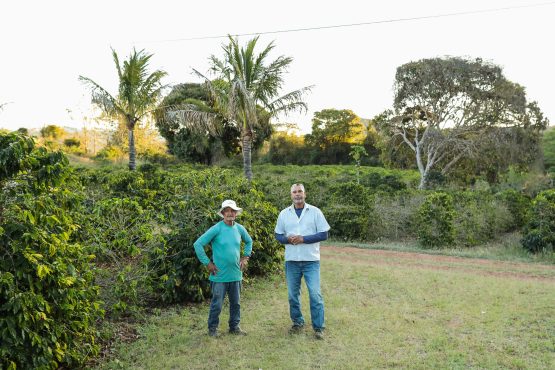
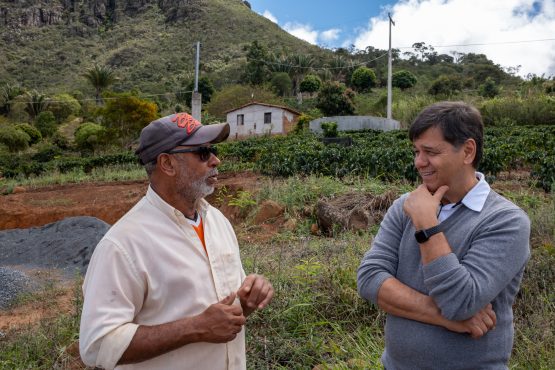
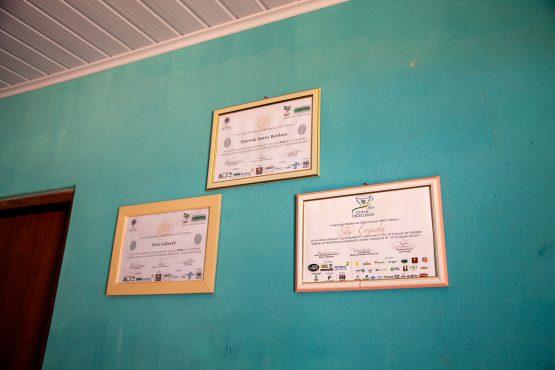
Santa Barbara first shot to fame when it took the top spot at Brazil’s 2016 Cup of Excellence competition with a stunning 91 point lot. When reminiscing about the victory, José Joaquim recently told us that he, “had been trying [to win] for four or five years and in 2016 I won as the best coffee in Brazil. The eight bags of the first place sold very well. The price earned is an incentive to produce better and better.” Since then, both Santa Barbara and Sítio Cafundó have placed in the auction again, with Marlene also producing a lot that earned recognition at the female-led ‘Florada Premiada’ competition. The family have also found a stable market for their crop through their relationship with good friend Silvio Leite. It was Silvio who first introduced us to José Joaquim (and neighbour Pedro) on our maiden visit to Piatã in 2015, and we’re thrilled to be sourcing his coffee for the first time this year.
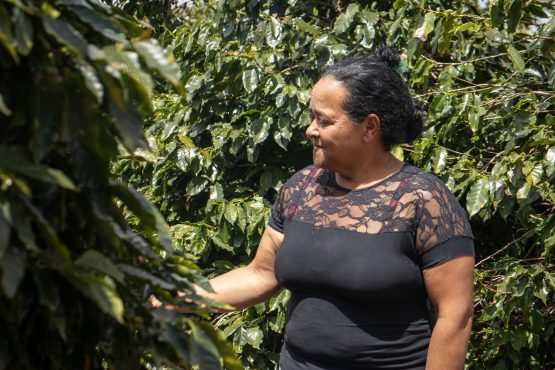
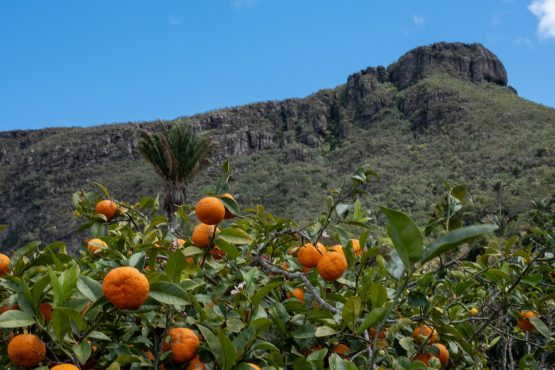
Today, Santa Barbara is planted with Catucaí, Catuaí and Acauã, along with food crops like bananas, tangerines and oranges. Because most of the land remains uncultivated, the family also keep cows and chickens. When we asked José Joaquim why his coffee was so delicious, even if there is no irrigation system established, he gave us a list of non-negotiable they follow, starting with “Good cherry selection, careful drying after processing, keeping shoes clean in drying patios, and treating all coffee with the same level of respect.” Clearly, the family are on to something special!
ABOUT PIATÃ
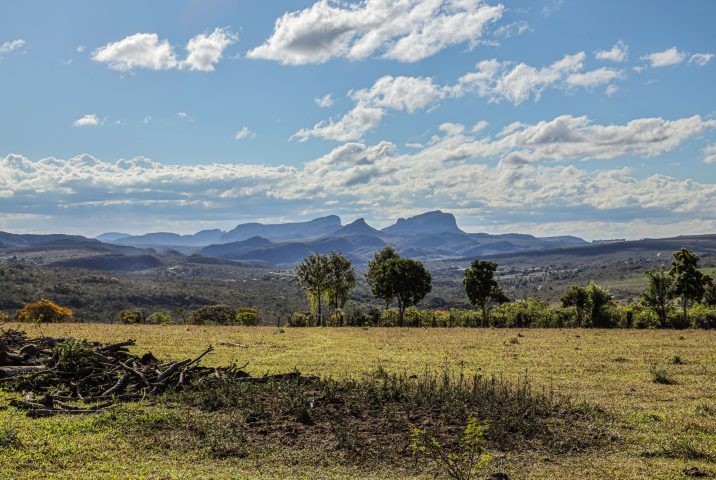
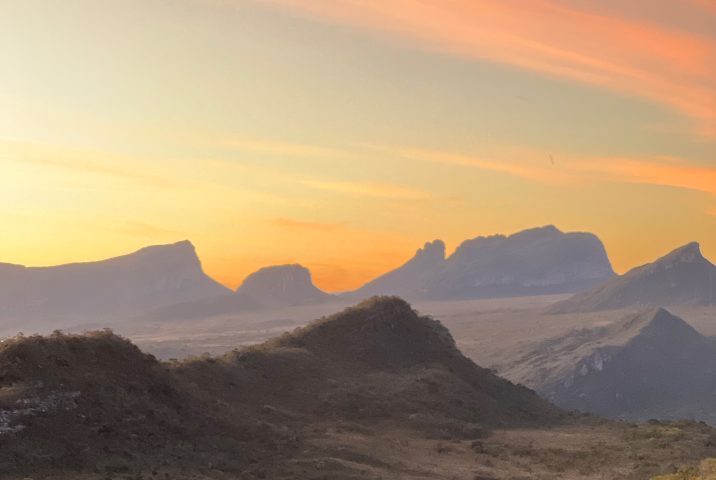
Located at the foot of the Chapada Diamantina mountain range, Piatã is a unique growing region in Brazil’s Bahia state. The coffees produced here tend to be floral, sweet and complex, and noticeably distinct from those grown elsewhere in the country. There are two main factors behind this: coffee grows at elevations of up to 1,400 meters above sea level, which is high for Brazil; and temperatures range from about 2°C to 18°C in winter, some of the country’s lowest. Combined, the high elevation and cool climate are key in slowing down the maturation of the coffee cherries, leading to an increased concentration of sugars in the bean. The result is a cup profile that is bright, transparent, and distinctive. Piatã’s relative proximity to the Equator line ensures the region’s coffee trees can experience such drastic conditions without being affected by frost, unlike other, more traditional growing regions like Minas Gerais.
Piatã’s exceptional natural characteristics also contribute greatly to the coffees’ profile. In the distant past, the whole of Chapada Diamantina was completely under water, slowly eroding over millions of years — leaving behind soil that is nutrient-rich and slightly soft. This soil, along with the above-average local humidity, is home to a healthy and diverse ecosystem that includes some 1,600 individual plant species. While the highlands of Chapada are rugged and dry, the area surrounding Piatã is filled with streams, waterfalls and even swamps that, in most years, provide plenty of water for irrigation and agriculture.
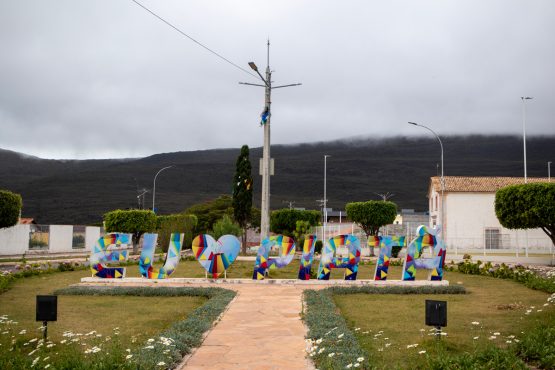
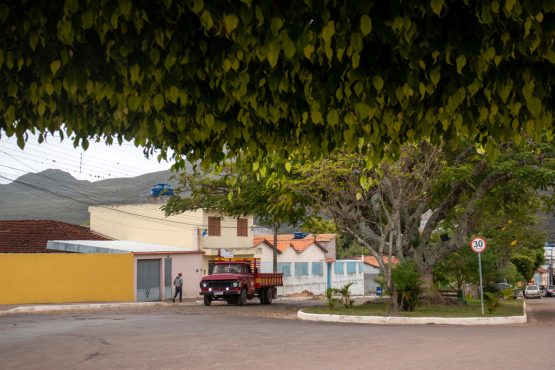
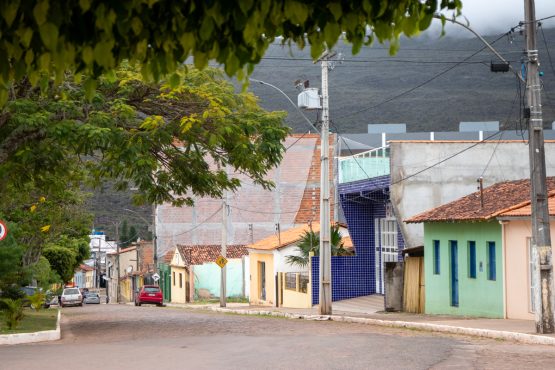
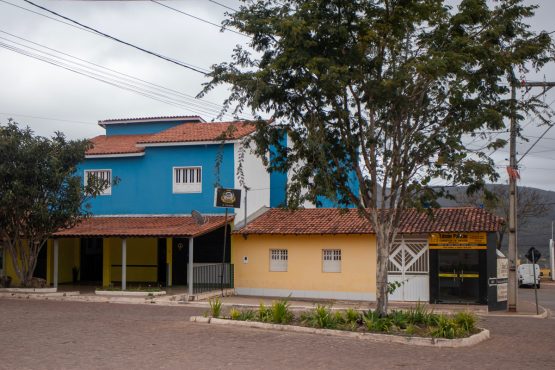
While coffee production is on the rise in Piatã, it is still very much a developing industry. Locally produced lots didn’t gain recognition for quality among Brazilian buyers until the 1990s. This recognition led to the establishing of the ASCAMP growers’ association in 1998, which was tasked with assisting growers who had land, but few resources. Over the next decade, cooperatives and other farmer groups were founded, playing a pivotal role in elevating the coffees grown and processed in the region. Piatã went on to be internationally recognised for its high quality in 2009, when five of the top 10 spots in Brazil’s Cup of Excellence came from this small corner of Bahia. The region’s dominance in the competition has continued every year since, particularly in 2016 when an astounding 19 of the 24 winning lots came from Piatã, and again in 2022, when 10 local winners were recognised. MCM has been sourcing coffee from this region since 2015, thanks to the support of longtime partner and coffee mentor Silvio Leite. Head here for more on Silvio and the incredible work he’s done in Brazil.
Part of what makes the Piatã region so special is that production is extremely limited, given the scale of the local estates. Farm sizes tend to be relatively small when compared to other producing areas in Brazil, usually just ten hectares or less in size, and are not visible when driving through the outskirts of town (unlike somewhere like Cerrado de Minas in Minas Gerais, where large estates make up the majority of the landscape). Most growers process their own cherries on site, sticking to traditional methods with little focus on experimentation, as the goal is to process coffee well to ensure the final cup is sweet and clean. Because many producers rely on coffee as their main source of income, simplicity and repeatability are prioritised. Great attention to detail is placed on the post-harvest work, as the region’s cooler temperatures and high humidity pose risks to the drying parchment. To prevent any potential defects in the cup, many local producers have built greenhouses and raised beds, to add a layer of protection without minimising the necessary ventilation for coffee to dry evenly and at a steady rate.
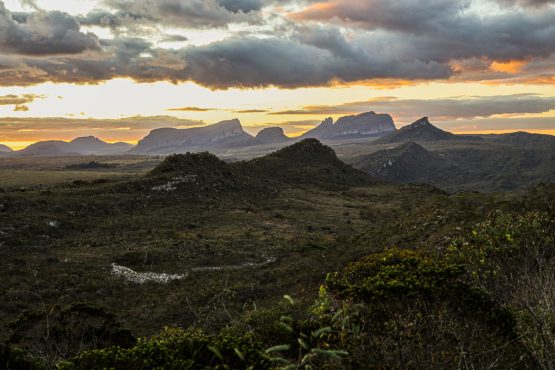
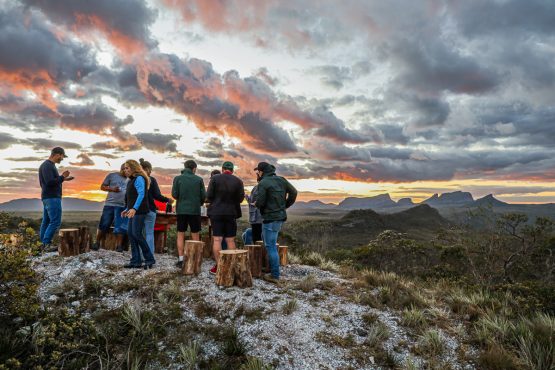
The region of Piatã is the traditional home of the Cariri and Maracá indigenous people, who were defeated during the Portuguese invasion of Brazil in the seventeenth century. While most of the remaining Cariri people were displaced to other regions within the state of Bahia, eventually joining other indigenous communities, the Maracás have a nearby municipality named in their honour, as it is located on their historical capital city. The word “piatã” translates to “hard foot or fortress” in the indigenous Tupi language (which was spoken by most First Nations People along Brazil’s coast). Head here to learn more about beautiful Piatã.
HOW THIS COFFEE WAS PROCESSED
Coffee cherries at Santa Barbara were picked selectively by the Oliveiras and a small team of some 15 seasonal harvesters (made up of mostly women) who assist during the peak of the season. Good fruit selection is one of José Joaquim’s priorities, so each pass was done carefully and methodically. These were then processed as a pulped natural lot onsite at a mill shared with neighbours Cafundó. Like most producers out of Piatã, the Oliveiras process their coffee with the goal of preserving its inherent and best properties.
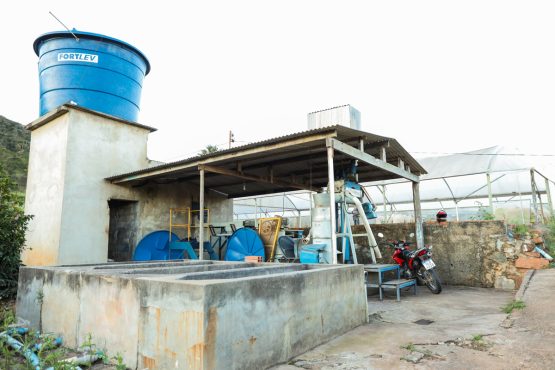
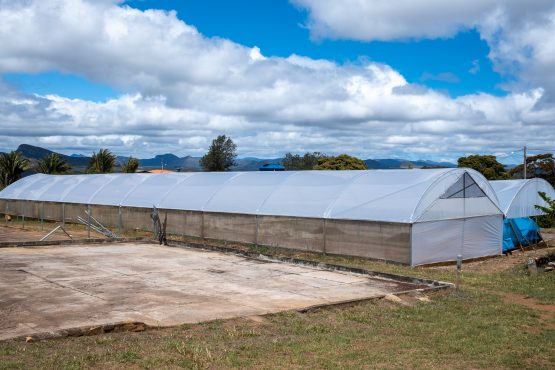
After pulping, the coffee was sun-dried on pristine patios with some of its mucilage still attached. The parchment was spread in layers of about four centimetres and raked several times a day to ensure the coffee dried evenly. It was primarily dried under shade in greenhouses that are closed overnight, to slow down and homogenise the drying process. This extra attention to detail is key in improving and ‘saving’ the fructose and all positive attributes found in the fruit that contribute to a higher quality in the final cup, and adds to the longevity of the lot.
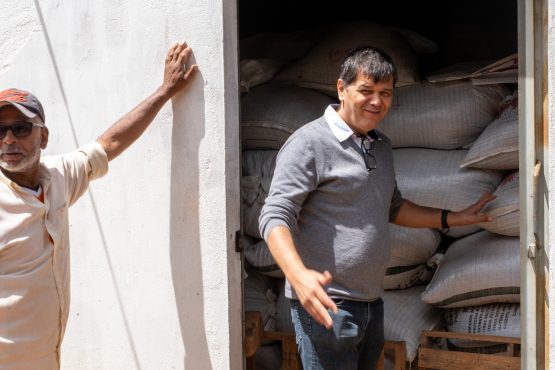
Finally, the coffee was separated into numbered lots which were stored and rested in parchment at Santa Barbara’s purpose-built warehouse (which is insulated to protect the coffee from humidity) before being prepared for export at Fazenda Progresso.