Mbokam Estate AA
Elegant and refined with sparkling, tropical acidity. Lifted florals, nectarine and honey.
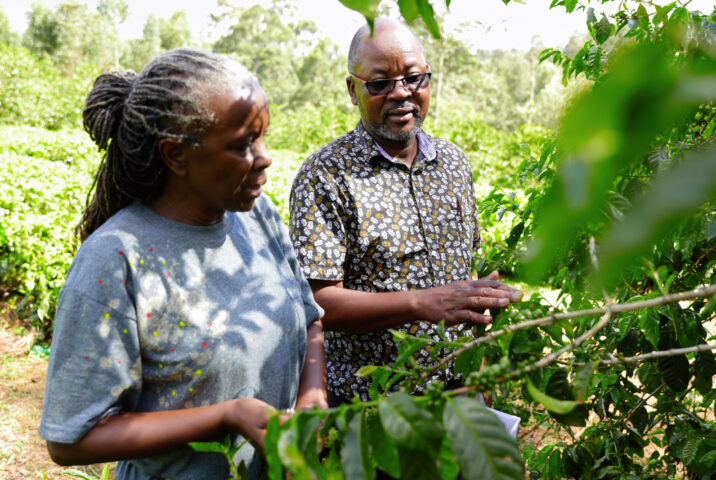
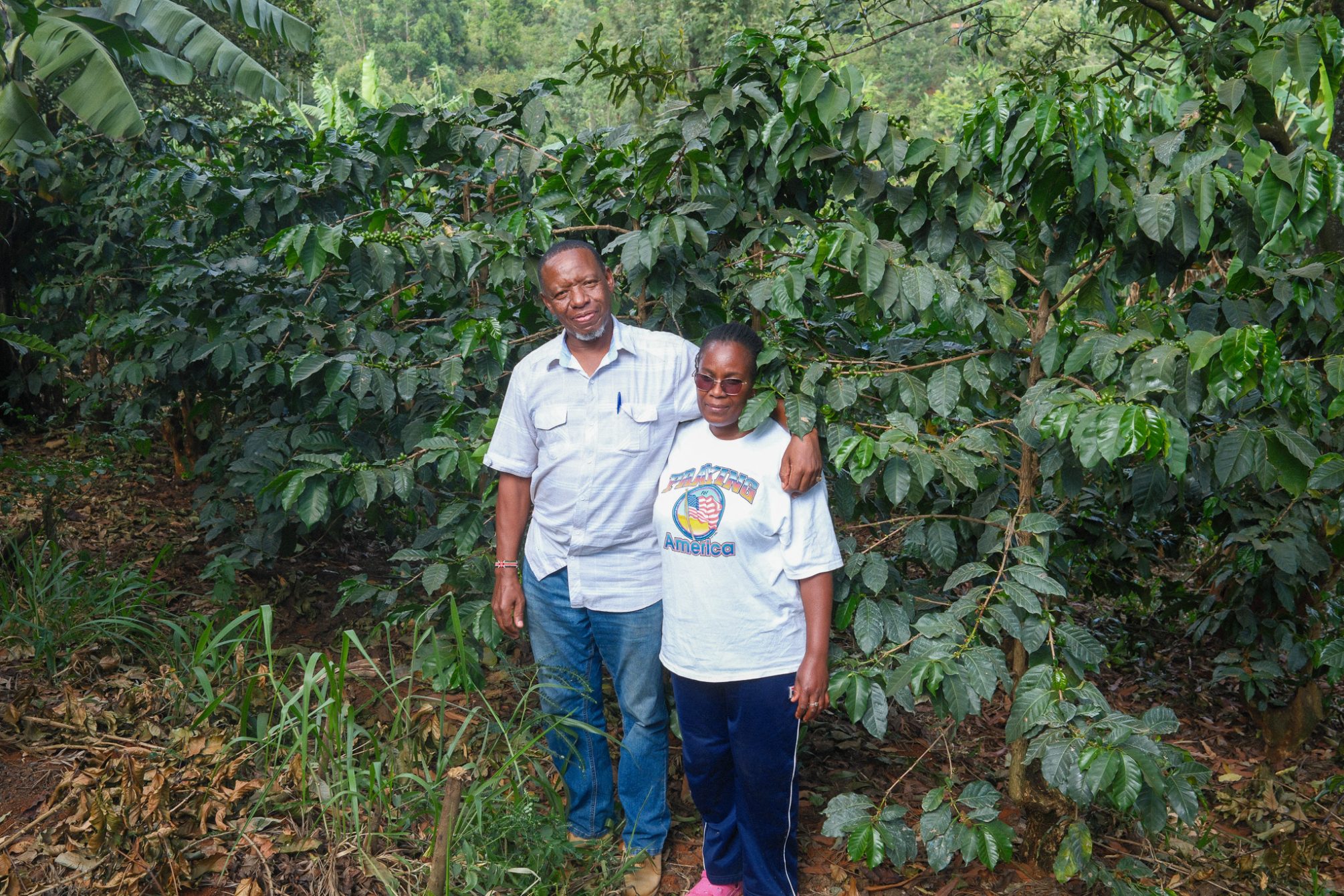
Mbokam is a 2.5 hectare coffee farm and wet mill (or factory, as they are known in Kenya), owned by Arthur and Josephine Mbogo, located in Embu County. The estate is lush and healthy, thanks to the couple’s commitment to following sustainable agricultural practices, with plenty of food crops and cattle raised alongside coffee. This considerate approach to farming is led by Josephine, and it contributes to the estate’s rich biodiversity, supports a balanced ecosystem, enriches the soil, and provides the couple with a diverse and secure source of food and income.
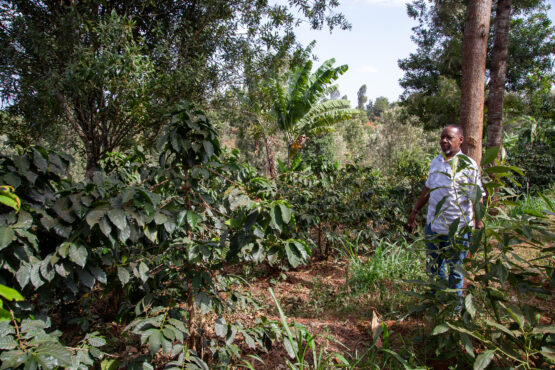
Mbokam was first established in the early 1950s by Arthur’s father, Mr. Gerishon Mbogo. He received the original parcel of land from elders of the Embu community and he named it by combining his family name, Mbogo (which translates to ‘buffalo’), with the name of the stream that flows through the farm, Kamavindi. In 1958, the estate was planted with its first 100 trees, a limitation set on Kenyan farmers by the ruling British colonialists. Following Kenya’s independence in December 1963 and the abolishment of these regulations, Gerishon was able to expand his plantation. For years, he sold his coffee cherries to the local Kibugu Farmers Cooperative Society; until in 1996, when his volumes had increased enough, he built a small factory onsite.
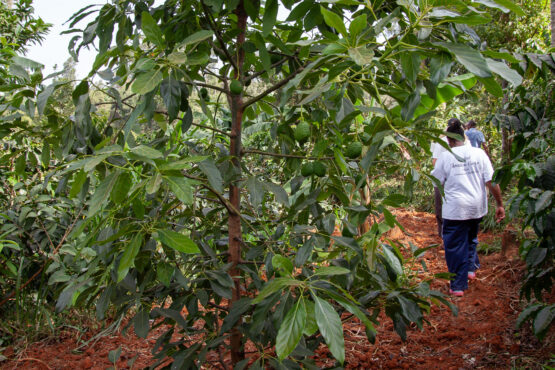
Today, Josephine and Arthur tend to some 6,500 SL28 trees. Because Arthur works as a public servant, Josephine is in charge of running Mbokam — a job she excels at, given how productive the farm is. Along with coffee, Josephine has planted avocado, corn, banana, pumpkin and macadamia, as well as native trees. Everything planted has a purpose, from generating extra income and food for sustenance, to helping prevent erosion and promoting shade.
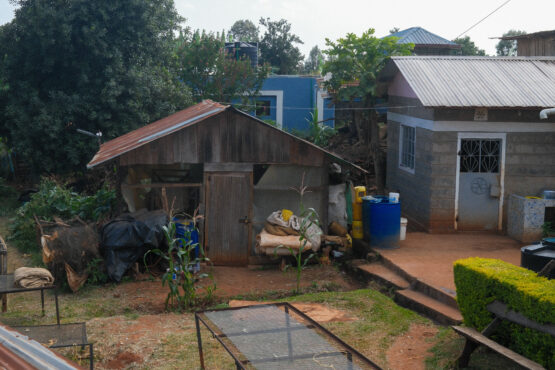
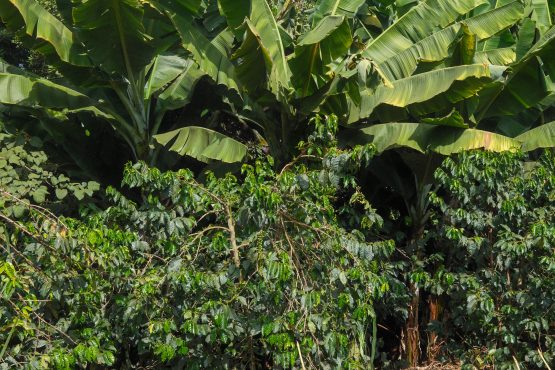
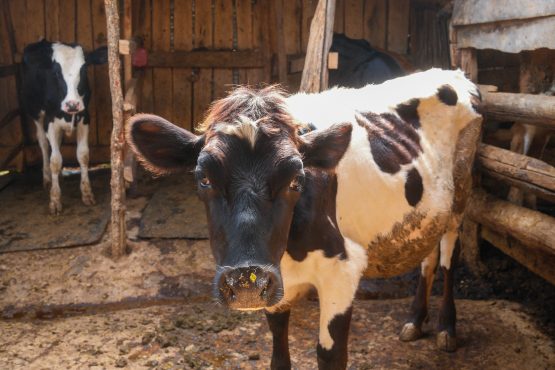
Additionally, no chemical fertilisers are used at Mbokam; instead, the couple use manure from their cows to compost their own feeding inputs. In fact, on our 2026 visit, as we arrived Arthur rushed us to meet his cows, before we’d even had the chance to look at the coffee plantation. “These animals are very important,” he explained. “They provide us with milk to drink and fertiliser for our trees.” To help with this, their homestead is fitted with a ‘biodigester,’ which takes household and agricultural waste and transforms it into biogas and organic fertiliser. This fuel can replace traditional energy sources like charcoal and firewood, reducing greenhouse gas emissions and making household air cleaner and safer.
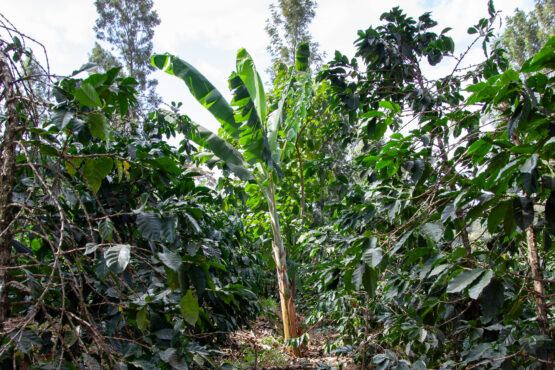
Following the Kenyan government’s 2023 reforms, we are able to source coffee from Mbokam directly, with the help of Wycliffe Murwayi as the Direct Sales Agent. The benefits of the direct model are higher profits, as the buyer (in this case, MCM) must offer competitive pricing to secure the coffee, and a faster turnaround time between the sale and the grower receiving their payments. Direct sales also support a more meaningful and values-led relationship between the growers and their buyers and have become more widespread as the coffee sector adapts to the reforms.
ABOUT EMBU
Embu County is part of Kenya’s former Eastern Province, which was dissolved in 2013. Embu borders Kirinyaga to the west, along with the country’s central coffee-growing regions. Embu is the traditional home of the Embu, Kamba and Mbeere people. The region has a long and proud history of agriculture and cattle-raising; it is farmed intensively, with coffee, tea and dairy being the most important modern crops in Embu’s more humid areas. In the county’s drier terrain, beekeeping and goat rearing are also common.
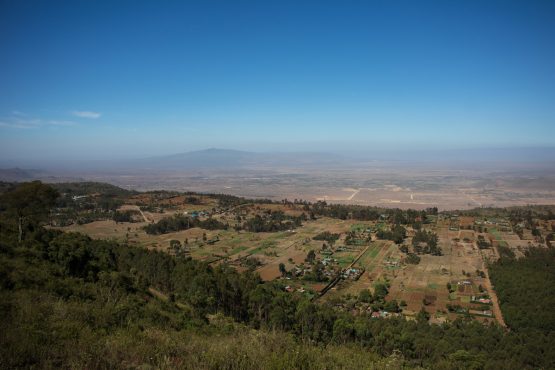
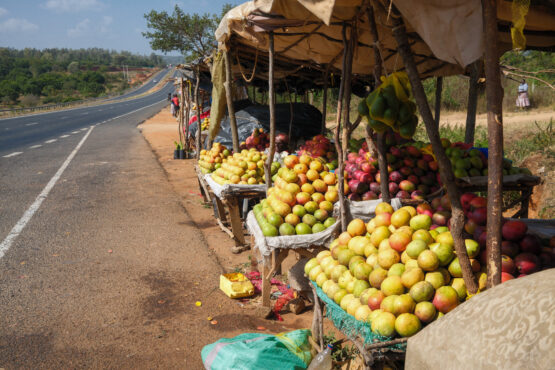
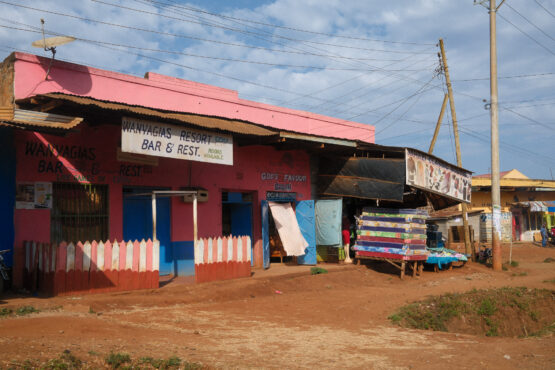
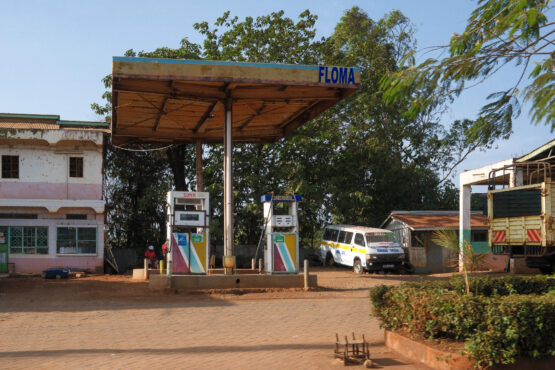
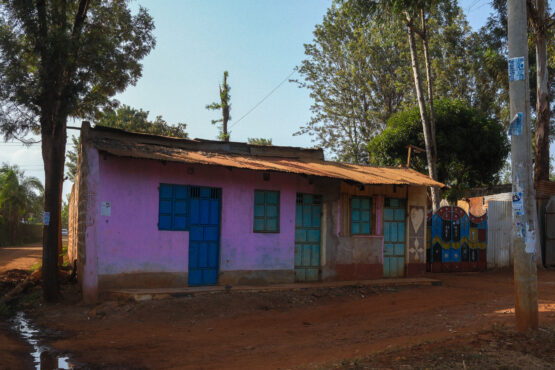
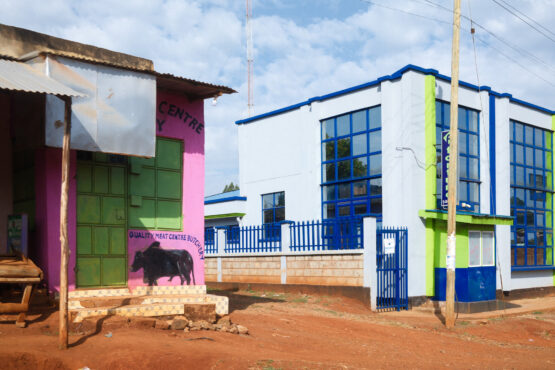
Kenya’s central highlands are considered some of the wealthiest areas of the country, due to the incredibly fertile land, geographical proximity to the capital, Nairobi, and close integration with the country’s colonial administration before Kenya gained independence. This integration afforded some of the communities who lived here with opportunities for education, business and political prowess, even if most smallholders still had to endure the various injustices and limitations placed by the colonial government. That’s why independent estate owners who are able to process and sell their own crop are incredibly proud of their work, as it affords them access to markets and opportunities that have been historically difficult to reach.
GRADING
Kenya uses a grading system for all its exportable coffee lots. The grading system is based on the size and assumed quality of the bean. A coffee’s grade is directly correlated with the price it attracts at auction or through direct trade.
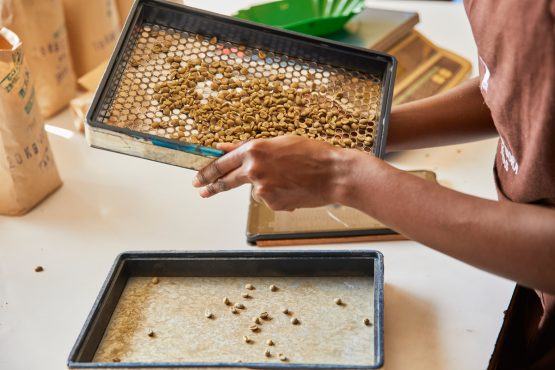
This coffee is graded as an AA. This grade relates to the size (in this case, AA means that the beans are screen size 18 and above). More AA grade coffee is found in Central Kenya than anywhere else in the country, thanks to the high elevations which allow for greater late yields. These later yield cherries have the benefit of better weather, with optimum sunshine and a longer period for the sugars to develop and when they are finally picked, they are typically fuller, redder and heavier than cherries grown in other areas.
HOW THIS LOT WAS PROCESSED
The coffee was carefully hand-selected by seasonal workers under Josephine’s supervision. During the peak of the harvest, cherries were carefully picked, to ensure only the ripest are selected. After sorting, cherry was pulped to remove the skin and mucilage (sticky fruit covering) from the inner parchment layer that protects the green coffee bean.
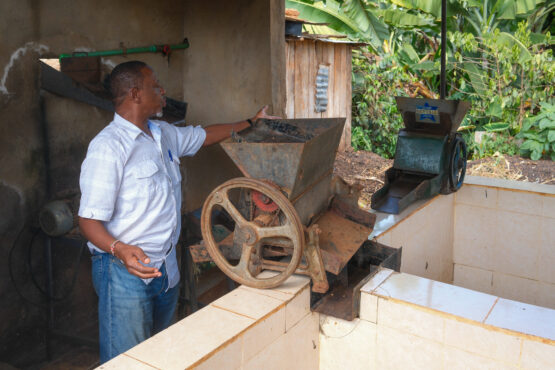
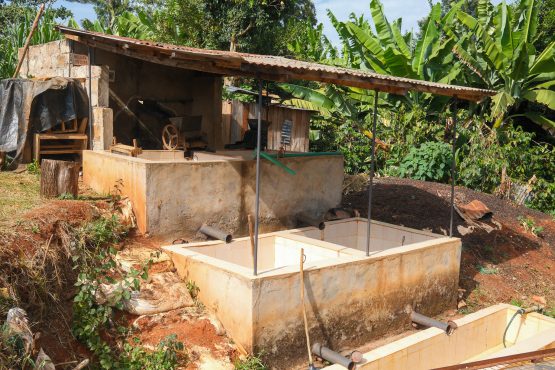
The coffee was then dry fermented for 16-24 hours, to break down the sugars and remove the remaining mucilage from the outside of the beans. Whilst the coffee was fermenting it was checked frequently, and when ready it was rinsed and removed from the tanks.
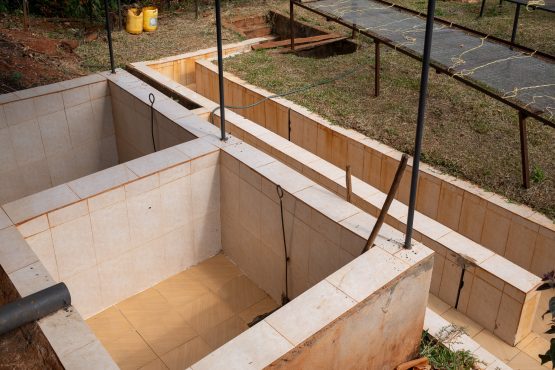
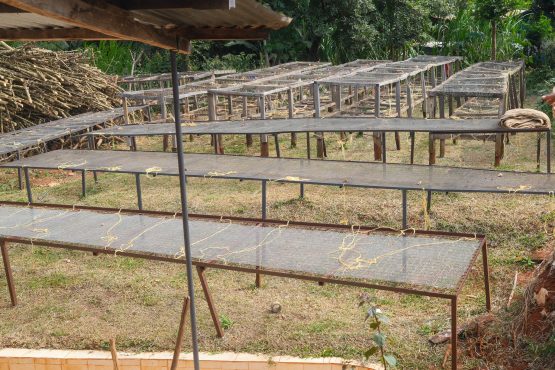
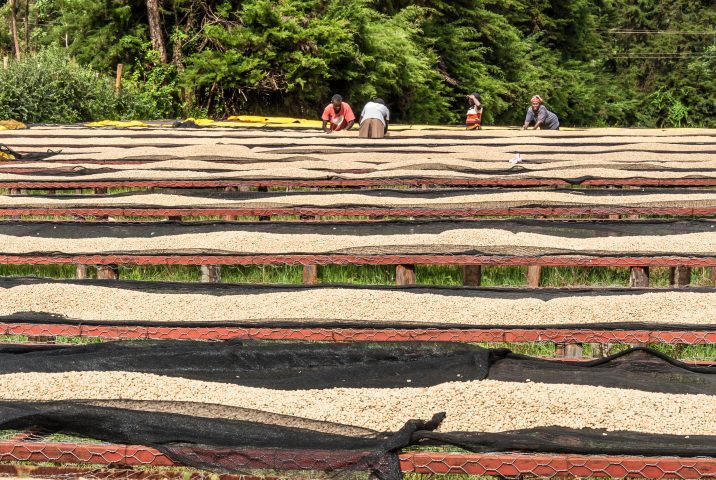
Using fresh water from Kamavindi River, the parchment-covered coffee was soaked in clean water for another 24 hours and then washed and graded in water channels, before being transferred to raised drying tables. During the drying stage, which takes up to three weeks, the drying parchment was turned constantly to ensure it is dried evenly, until it reached 11–12% humidity. Once ready, coffee was dry milled and prepared for shipping.