Faith Estate AA
Intensely fruit-driven and complex with tropical fruit acidity. Orange sherbert, yellow peach and rooibos tea.
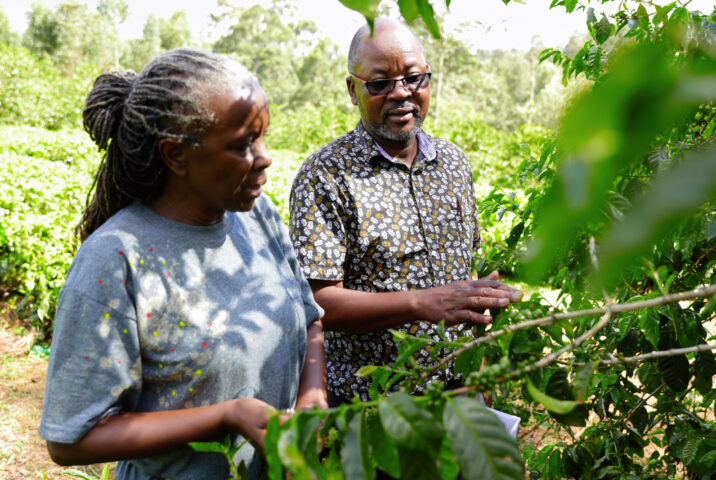
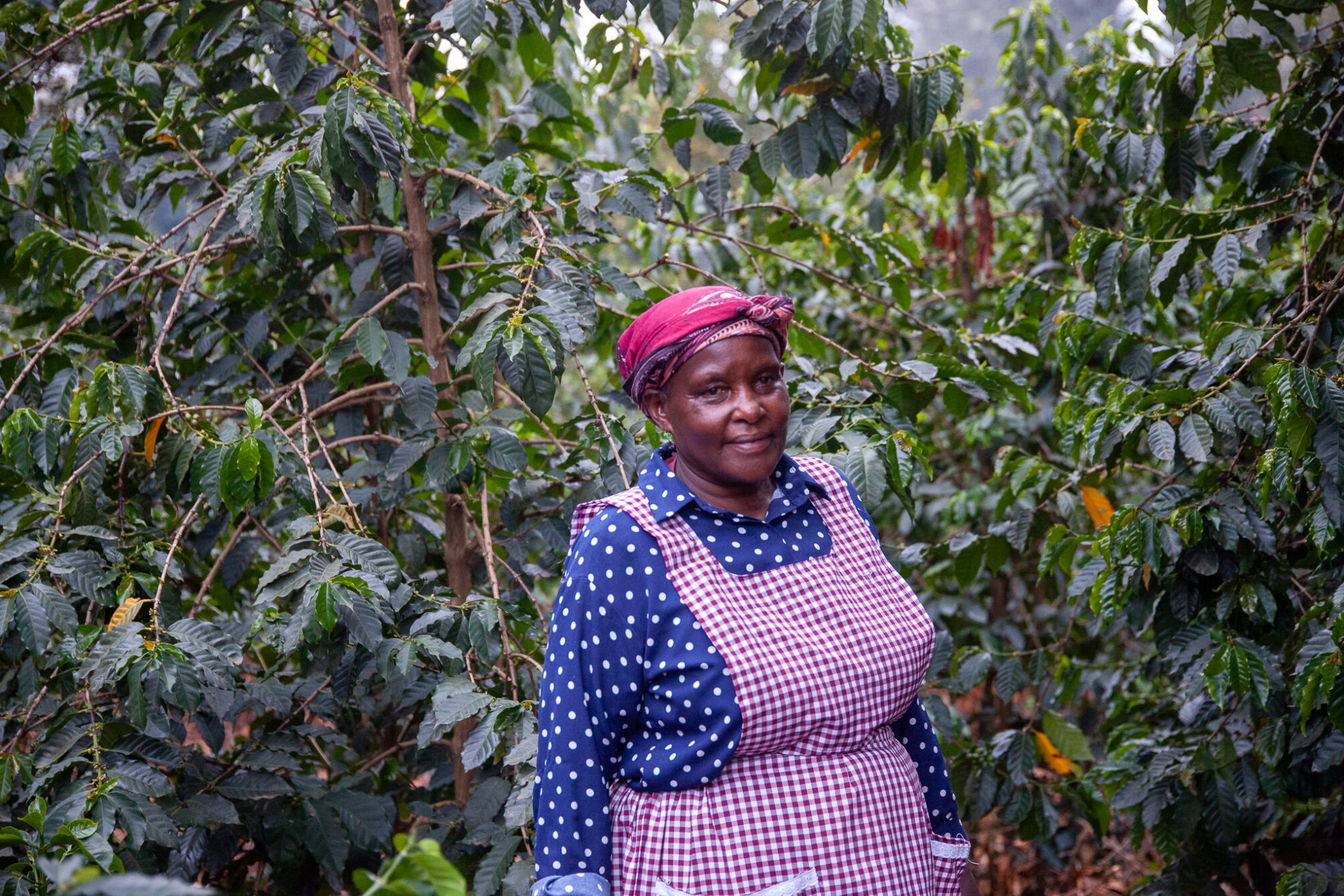
Faith is a two hectare estate owned by Cecilia Wanjiku Haniel, one of Kirinyaga County’s most influential coffee producers. Because her production is tiny and the quality of her crop exceptionally high, Cecilia’s coffee is incredibly sought after. A pillar of her local community, Cecilia is greatly admired in Kirinyaga, having helped many of her neighbours by generously sharing her knowledge and expertise.
As the daughter of coffee farmers, Cecilia grew up surrounded by coffee trees in Kiambu County, Kenya’s most productive coffee region. Her hometown of Thika has been very significant in the country’s coffee industry — many large, foreign-owned coffee estates were planted here, and to this day, it’s where several of the country’s dry mills are located. “I grew up seeing that the Europeans were doing very well, and I decided that when I grew up, I wanted to farm and process coffee like them,” Cecilia told us.
That’s why, when her and her husband (who has since passed) took over their farm in 1972, it was Cecilia who led operations managing it. She named the property Faith Estate, because “it took faith, of having a dream from my childhood, and then accomplishing it as an adult[…] When I bought the farm, I only thought of planting coffee and processing it, and selling it to buyers from abroad.” To accomplish this dream, she has received support from her children and even grandchildren Sandra and Brian over the years, with her son Francis joining her in the most recent harvest. When we asked Francis why she had joined Cecilia this year, he said that she “has motivated me and I’ve also decided to be a coffee farmer; I will be doing the processing with her[…] It’s good business.”
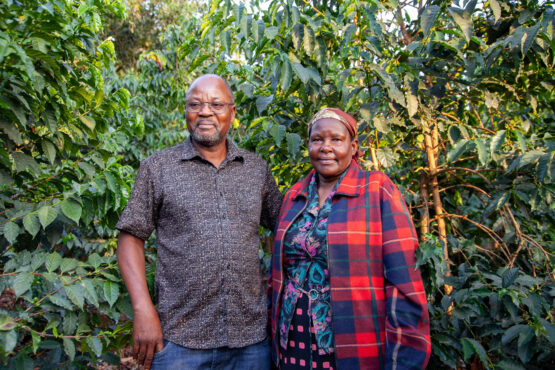
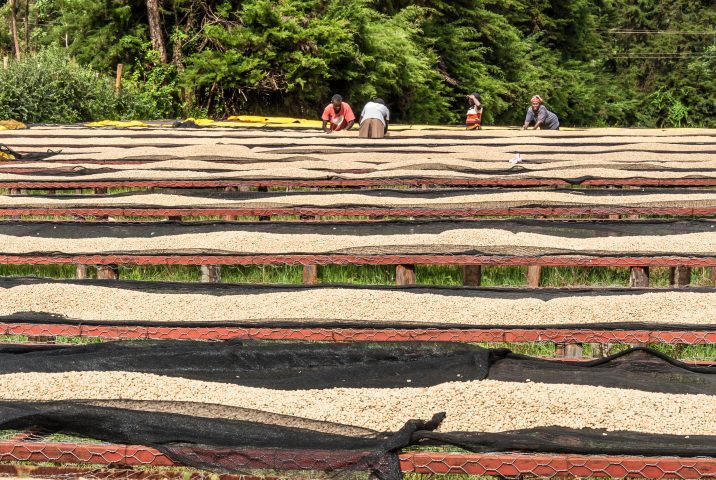
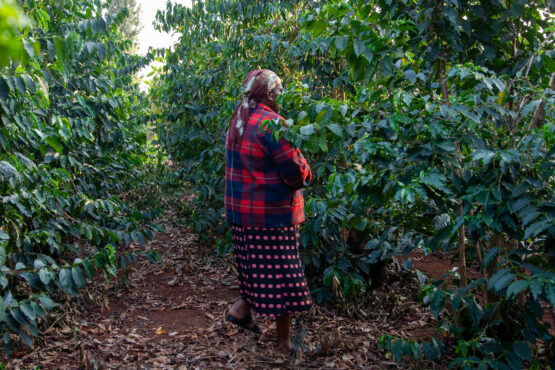
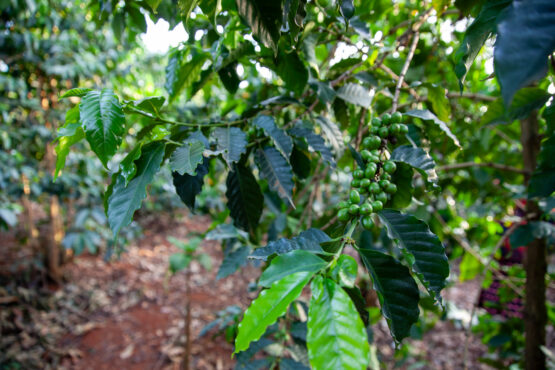
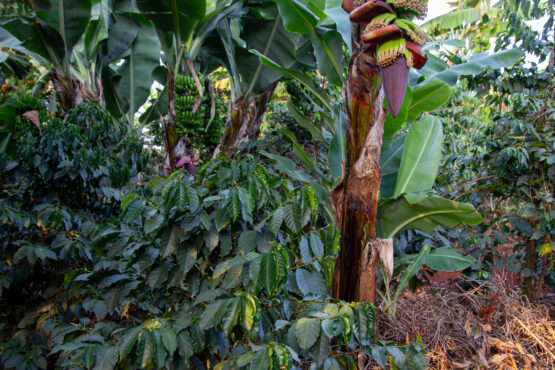
Today, the farm is one of the healthiest we’ve seen anywhere we source coffee from, and it is imbued with Cecilia’s incredible energy and calm warmth. Cecilia tends to some 2,250 coffee trees, alongside tea and other food crops like banana, macadamia and other vegetables. The main variety grown on the farm is SL28, which was selected and planted by Cecilia and her husband, with a small amount of Ruiru 11 introduced in recent years. Faith Estate sits at 1,700 meters above sea level in the foothills of the extinct volcano, Mt. Kenya. Along with her children and grandchildren, Cecilia is assisted by a team of seasonal workers who take care of the picking during the harvest and the pruning and weeding during the off-season.
Thanks to her meticulous approach to agriculture and processing, Cecilia has been recognised by her neighbours for producing excellent coffee, which is fitting because as she told us, “I want to do everything I do well.” For years, she has been an advisor and teacher to many local farmers, setting up a ‘school’ under a large tree in her front garden. Friends and neighbours gather around the tree to learn from Cecilia, who always makes time for them. “A lot of people come to this home to learn about coffee. She has helped them in a big way,” her son Francis explained, “even now (in the middle of the fly crop) she has farmers visiting for training.”
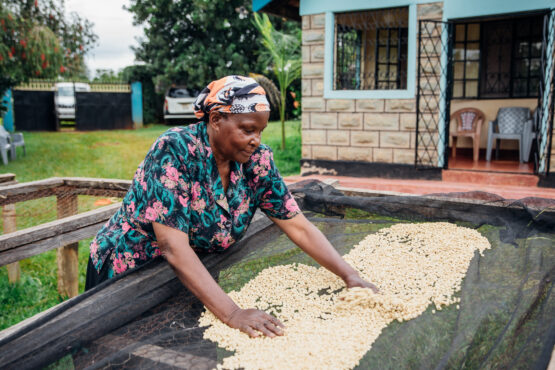
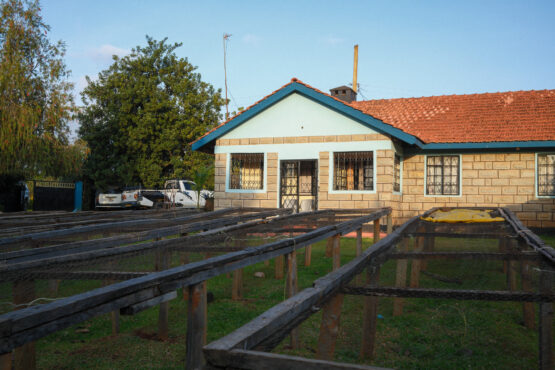
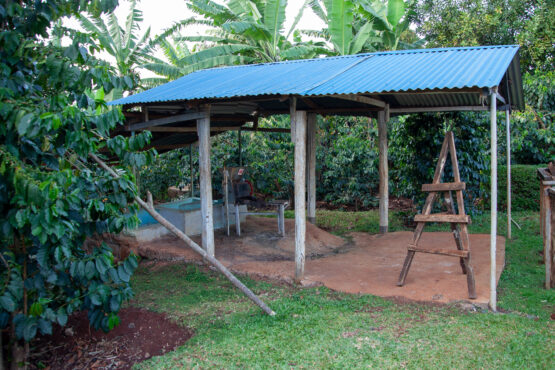
In 1996, Cecilia built a small wet mill – or factory, as they are called in Kenya – on her land. She keeps the facility impeccably clean, because it enables her to process and dry her crop onsite, rather than selling fresh, whole cherry to the local cooperative. By processing her coffee independently, Cecilia controls every step of the coffee’s production directly, ensuring the full potential of her crop is achieved in terms of quality and sale price. Managing such a small scale factory has required significant investment in infrastructure, equipment and staff. It is also far costlier to mill and market small volume lots than large day lots. Yet, the resulting coffee lots reflect the incredible amount of hard work and attention to managing every single variable that influences quality Cecilia has poured into Faith.
When we asked Cecilia what she hoped for the future of her farm, she said that, “I want Faith Estate to grow and also for my children and grandchildren to embrace what I have done so that the estate can be one of the leading producers in the world, and we can fetch good prices.” To Australians who enjoy her coffee, Cecilia also made sure to tell us that, “They can expect a good cup, and with the way I have done the farming this year, you can expect even more good coffee in the future!”
Following the Kenyan government’s coffee trade reforms of 2023, we have been able to source Cecilia’s coffee directly, with the help of Wycliffe Murwayi as the Direct Sales Agent. The benefits of the direct model are higher profits, as the buyer (in this case, MCM) must offer competitive pricing to secure the coffee, and a faster turnaround time between the sale and the grower receiving their payments. Direct sales also support a more meaningful and values-led relationship between the growers and their buyers and have become more widespread as the coffee sector adapts to the reforms.
ABOUT KIRINYAGA
Kirinyaga County is part of Kenya’s former Central Province, which was dissolved in 2013. The area includes Murang’a, Nyeri, Kirinyaga, Kiambu and Nyandarua Counties, and is traditionally the homeland of the Kikiyu people, who have a long and proud history of agriculture. Similar to Nyeri, Kirinyaga benefits from sitting on the southern slopes of Mt. Kenya, where the rivers flow and rain is plentiful. Because of this, the region is incredibly well-suited to tea and dairy production. Both enterprises generate a weekly income for farmers, with coffee being a supplemental annual cash payment which covers larger expenses like investment on the farm and school fees for children.
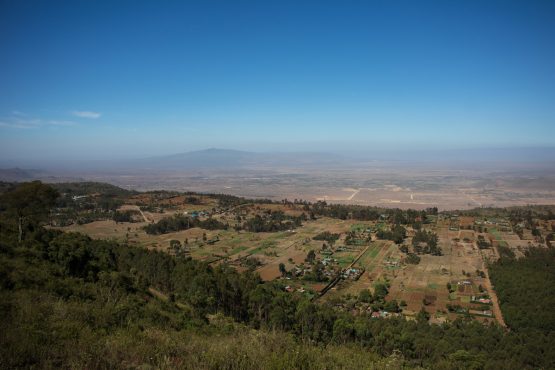
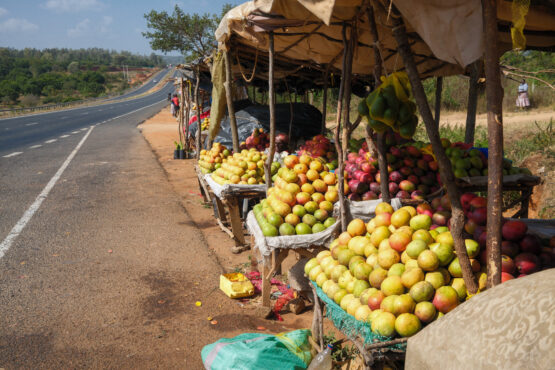
Kenya’s central highlands are considered some of the wealthiest areas of the country, due to the incredibly fertile land, geographical proximity to the capital, Nairobi, and close integration with the country’s colonial administration before Kenya gained independence. This integration afforded some of the communities who lived here with opportunities for education, business and political prowess, even if most smallholders still had to endure the various injustices and limitations placed by the colonial government. That’s why independent estate owners who are able to process and sell their own crop are incredibly proud of their work, as it affords them access to markets and opportunities that have been historically difficult to reach.
GRADING
Kenya uses a grading system for all its exportable coffee lots. The grading system is based on the size and assumed quality of the bean. A coffee’s grade is directly correlated with the price it attracts at auction or through direct trade.
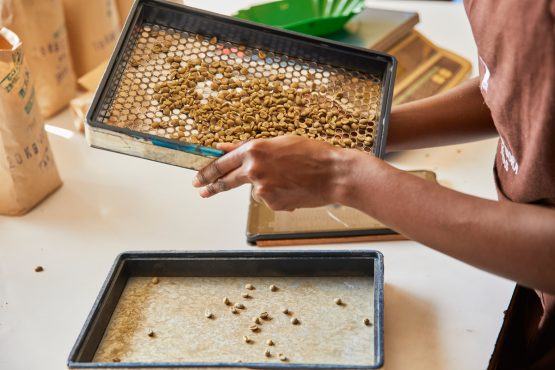
This coffee is AA grade. This grade is easily defined by size (in this case, AA means that the beans are screen size 18 and above) and to a certain extent, quality. While it is assumed that AA lots represent the highest quality, we have often found AB and peaberry lots to be just as good.
HOW THIS COFFEE WAS PROCESSED
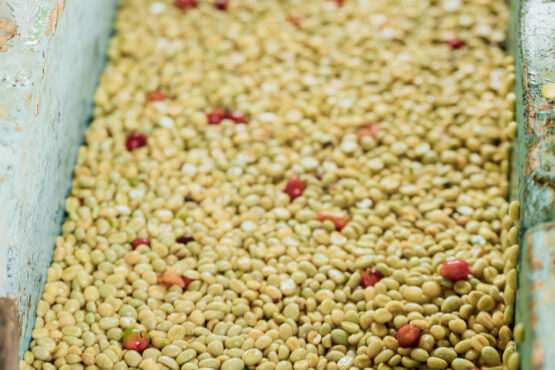
Coffee cherries were carefully handpicked by a team of seasonal workers Cecilia employs during the harvest. After careful hand sorting, the coffee was pulped in the late afternoon of the day it was picked, using a small, manual pulping machine, to remove the skin and mucilage (sticky fruit covering) from the inner parchment layer that protects the green coffee bean.
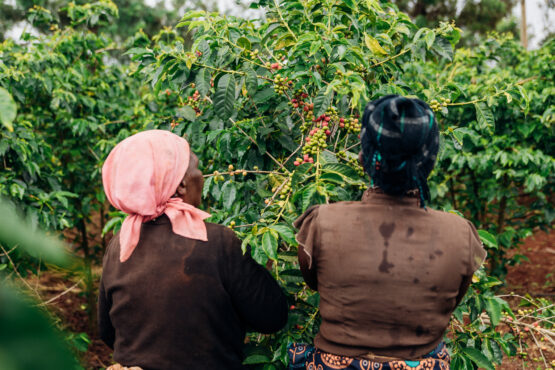
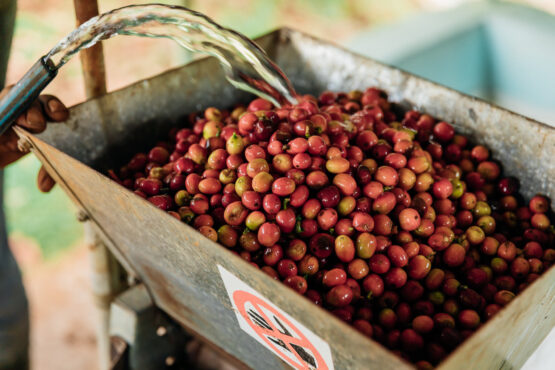
The parchment was then dry fermented overnight, or up to 24 hours depending on the weather, to break down the sugars and remove the remaining mucilage from the outside of the beans. The coffee was checked from the following morning onwards, and when it was ready, it was rinsed and removed from the tanks.