Lomaverde Decaf
Rich brown sugar sweetness with silky mouthfeel and good weight. Candied orange, fig and dark chocolate.
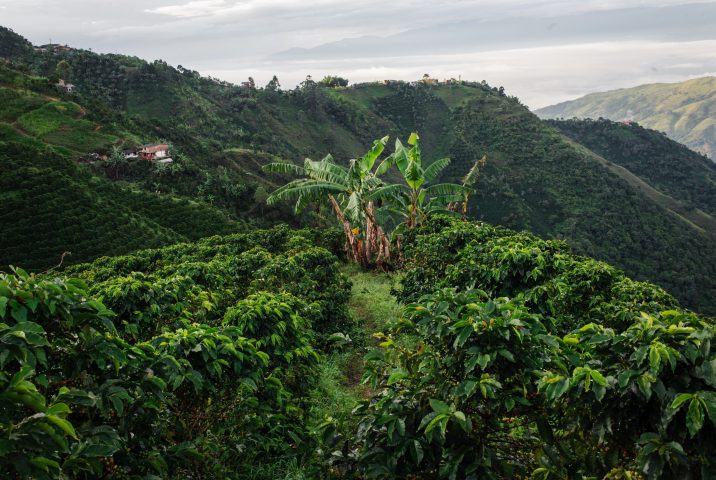
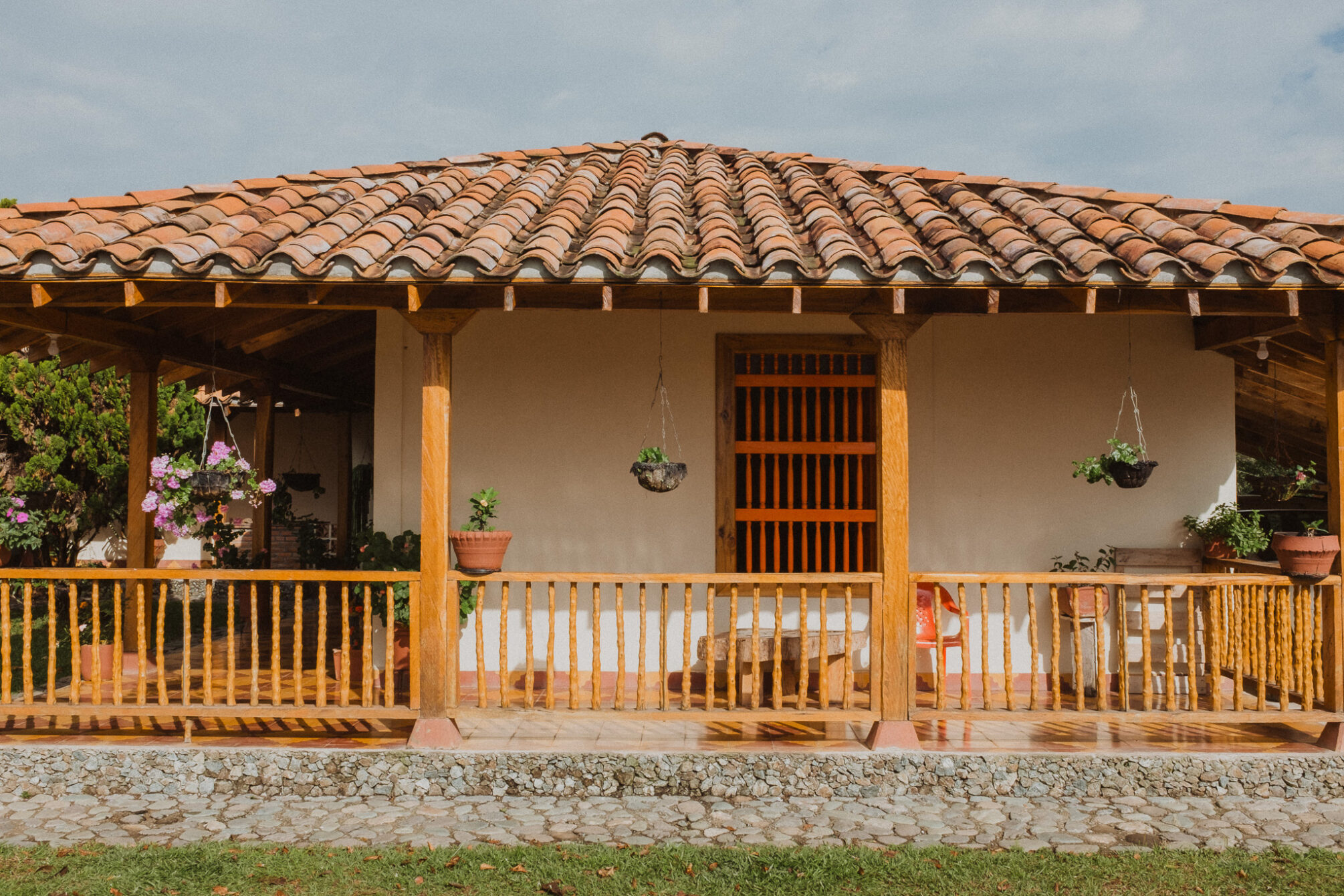
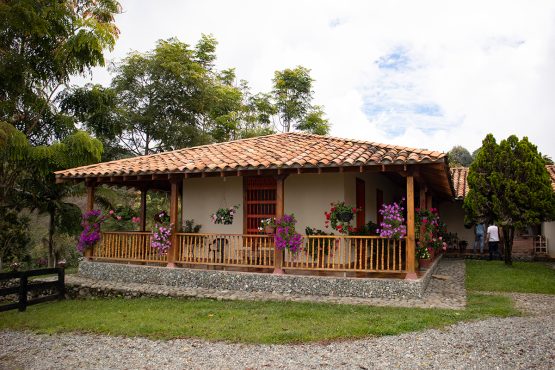
This special microlot was grown and processed at Finca Lomaverde, a stunning farm owned by our good friends and longtime Colombian export partners the Echavarría family of Pergamino Coffee. Lomaverde was initially the largest of five parcels that made up Santa Bárbara Estate, which was established in the hills of the state of Antioquia by Pedro Echavarría Sr. in the 1970s. Today, the 70-hectare property (35 of which are under coffee) acts as the family’s beating heart in the region, as it has been transformed with a look towards the future by prioritising a more sustainable approach to farming while also introducing rare varieties and innovative processing methods that have resulted in some of the country’s most elegant and refined coffees.
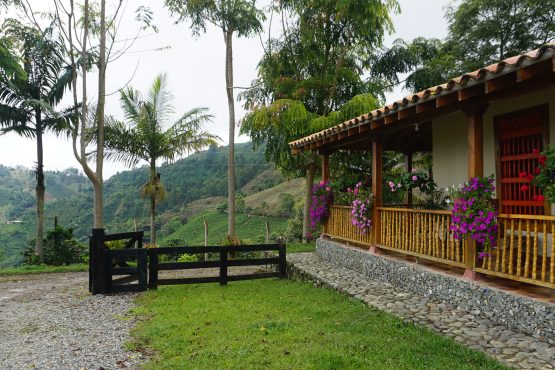
Lomaverde sits at a staggering 1,950m above sea level, with rich volcanic soil and abundant water sources that contribute to excellent fruit quality — even at such a high elevation. Over the years, the family have shifted their goals for the property, as it once primarily produced large volume lots of Caturra and later Colombia (following devastating bouts of leaf rust in the 2000s). Over the last decade, Lomaverde’s productivity has been in decline largely due to the effects of climate change, which have led to minimal volumes produced during Colombia’s fly crop, after once representing more than 30% of the estate’s production. Combined with a rise in labour shortages, Pedro Echavarría Jr., who now leads the family’s coffee operations, made the decision to downsize the number of hectares under production.
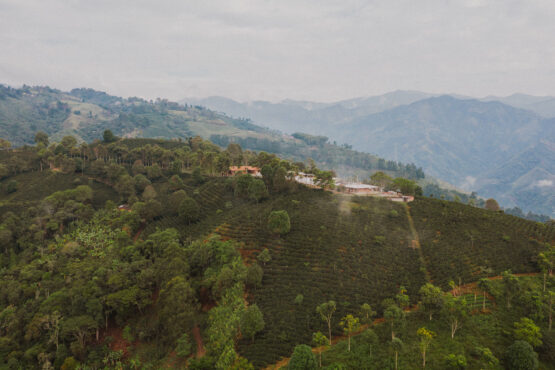
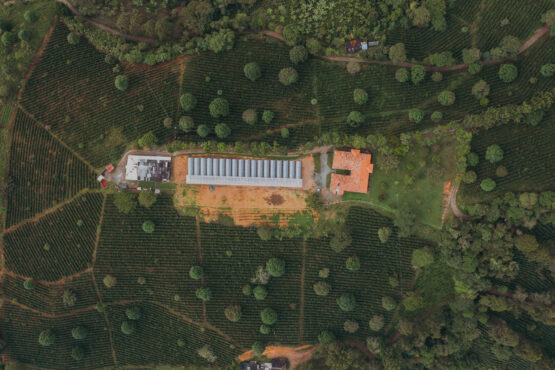
This change has had several benefits for the Echavarrías. Guided by the advice of Leo Henao, Pergamino’s Director of Coffee, and brother Juan (who provides agronomical support to all producing partners Pergamino source from), varieties like Chiroso and Gesha began to be planted throughout the farm, at lower densities than the old Caturra and Colombia trees. In practice, this has meant the farm can be managed more easily and carefully, as harvesters can select cherry based on sun aspect and site, to ensure only the very best are picked. Additionally, the change has left space for more shade to be established, and for pruning practices to be adapted to ensure it can happen more regularly without the need for stumping trees entirely.
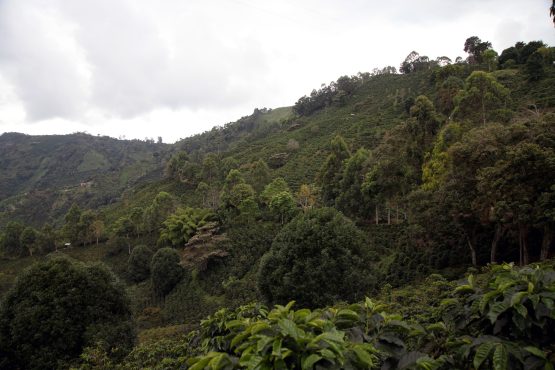
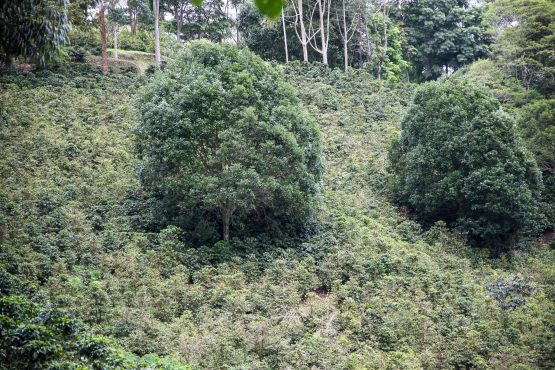
Pedro has seen many of these strategies working well during his sourcing trips throughout Colombia’s coffee-growing regions. Here, he noticed that the different style of farm management applied by the small-scale producers they were buying coffee from was resulting in much better tasting coffees — with a lower environmental footprint. This focus on quality, rather than quantity, has also helped the Echavarrías devote more resources to protecting Lomaverde’s health. While a complete shift to organic has not been possible (yet!), the farm’s team have drastically reduced their reliance on chemical inputs. Most of this has been done through better manual control of weeds and through the application of an organic solution made with a compost of cherry husks, coffee pulp, spent grounds from Pergamino’s cafes and a mix of beneficial microorganisms. The farm feels as lush and healthy as ever, and the Echavarrías have positioned themselves as leaders of Colombia’s coffee industry well into the future.
ABOUT SANTA BARBARA ESTATE
Santa Barbara Estate was established by Pedro Echavarría Sr. in the 1970s, when he purchased a small, abandoned farm in his home state of Antioquia, in the north-west of Colombia. From the very beginning, Pedro Sr. recognised that selecting the right location for his farms was critical. For this reason, he chose to grow coffee high up in Antioquia’s side of the Andes mountain range, which had the perfect conditions to produce exceptional coffee, with a unique microclimate, rich volcanic soil and high elevations. His passion for coffee continued to flourish as the property eventually extended into the small town of Santa Barbara. By marrying hard work, precision and efficiency with ideal coffee-producing conditions, Pedro was able to increase the estate’s area under cultivation and develop a reputation as a quality-focused coffee producer.
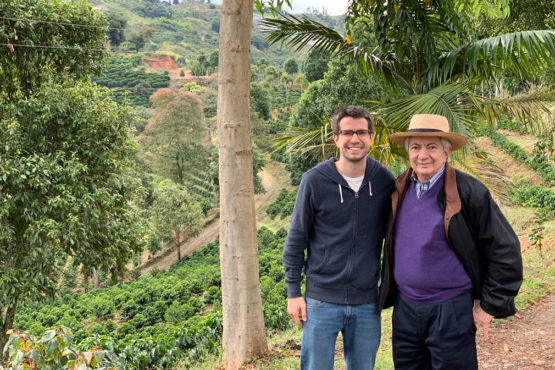
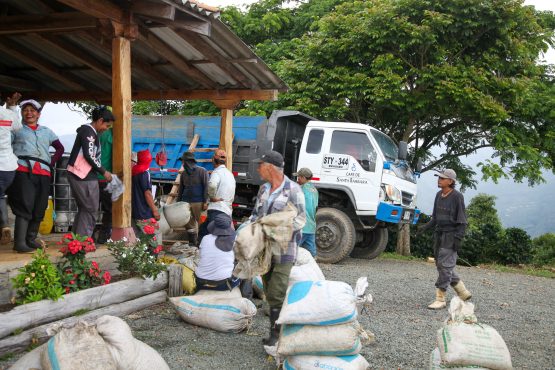
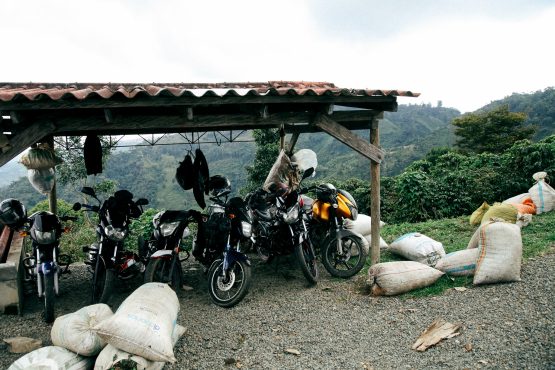
Today, some 45 people are employed year-round at Santa Barbara. Several of them also receive free housing for themselves and their families on the farm, with many having worked for with the Echavarrías for a decade or more. A further 120-150 seasonal workers are hired during the main harvest, comprised mainly of small-scale coffee producers from around Santa Bárbara, who pick coffee to supplement their income. The Echavarría family run extensive scholarship and financial aid programs for their staff’s children, and make an effort to help long-standing employees acquire their own piece of land upon retirement.
Beyond their work at the estate, the Echavarrías have gone on to positively impact hundreds of other coffee-growing families across Colombia through their roastery, cafes and export business, both of which operate under the name Pergamino. In establishing these, Pedro, along with Pergamino’s first employee (and now Director of Coffee) Leonardo Henao, have developed the Allied Producer Program. Through this initiative, Pergamino have built long-standing relationships with a myriad of smallholder producers and connected them with international buyers like MCM more directly, helping them fetch higher prices for their crop and cultivating a more independent supply chain.
ABOUT ANTIOQUIA
Antioquia is located in central northwestern Colombia. Coffee was introduced to the region in the latter part of the 19thcentury. Since then, this mountainous, fertile department has 128,000 hectares of coffee that is produced by a mix of large estates and tiny farms.
Antioquia only recently became more accessible to specialty coffee buyers – largely thanks to a transformation of the department led by Sergio Fajardo, who was the governor of the department between 2012-2016. Sergio transformed Antioquia’s capital city, Medellín, from a violent and dangerous place to a world-class tourist destination with a strong economy. Coffee has played a significant role in this this transformation, and as access to many producers has improved, the region has become one of Colombia’s most important and celebrated coffee-producing areas.
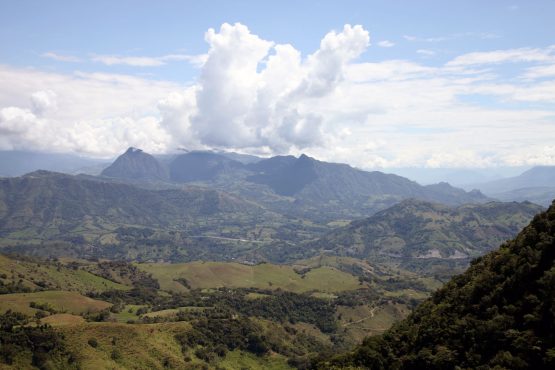
Our export partners for this coffee, Pergamino, have worked hard commercialise specialty-grade coffee throughout Antioquia, and have uncovered some stunning coffees and very dedicated producers in the process. They work closely with the producers to give them feedback on their coffees (provided by Pergamino’s expert team of cuppers) and provide top up payments when the coffee is sold at a higher premium.
Head here to learn more about the work of Pergamino and Léo’s role within the business.
HOW THIS COFFEE WAS PROCESSED
The coffee is selectively hand-harvested and then transported to the family’s mill, La Joyería. Farm administrator William is tasked with instructing seasonal workers when cherries are ready for picking, and later inspecting everything that is delivered to ensure less than 3% of the total crop processed is made up of unripe fruit. To ensure William’s success, the Echavarría family also use a combination of education and economic incentives. As they explained the first time we visited them, ‘We are working with our pickers to teach them why it is so important that they pick the fully ripened beans, as most of them have no idea of the effects of their job on the final product. We also complement this with a set of collective incentives. Throughout the day, we are taking constant measures of the quality of the picking, measuring what percentage of unripe beans we have. When this percentage reaches a certain point, a bonus kicks in, and then next day picking will be paid with a bonus. So far we have seen great results.’
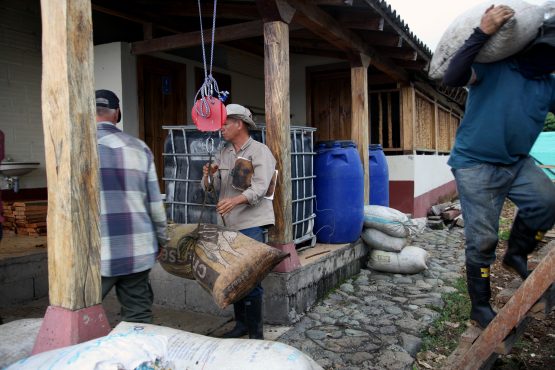
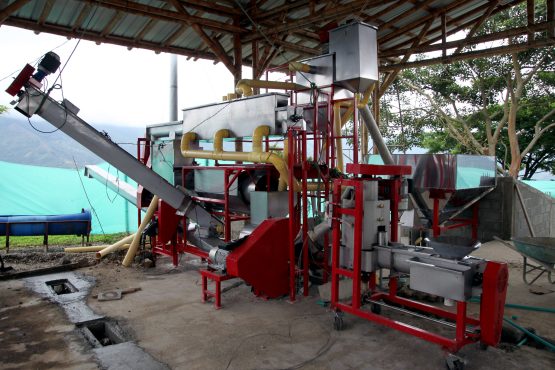
Pedro and Leo manage the wet mill with a blend of art, industrial rigour and scientific curiosity. Leo, in addition to being an agronomist, has earned a masters degree in fermentation processing at the National University’s Medellín branch, and has developed a unique method of processing coffee known as extended fermentation. In this method, two days’ worth of cherry pickings is used. Coffee picked on the second day is pulped and added to fermentation tanks that already hold the first day’s mucilage, which has been fermenting for 24 hours. The team does this for a third day, and then leave the entire mass of parchment to rest for another 24 hours in order to homogenise the entire collection. Through this method, the freshly picked and pulped coffee raises the pH level of the fermentation tank (making it more alkaline), permitting longer fermentation times that will produce a fruit-forward cup, without the acetic acid produced by bacteria at a low pH. The team is then able to maintain the correct pH level and avoid those that can lead to over fermented, boozy flavours during processing.
In addition to giving more control over pH levels, this method also gives more control over yeast and bacteria activity. The inspiration for the process was taken from small farmers throughout Antioquia, Tolima and Huila, who often have two to three days pickings fermenting together, as their farms are so small that one day’s picking is often not sufficient to make up an entire lot. Pedro and Leo have worked to perfect the process and adapt it for larger-scale production.
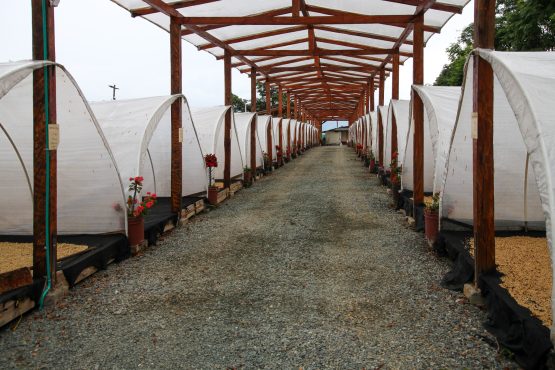
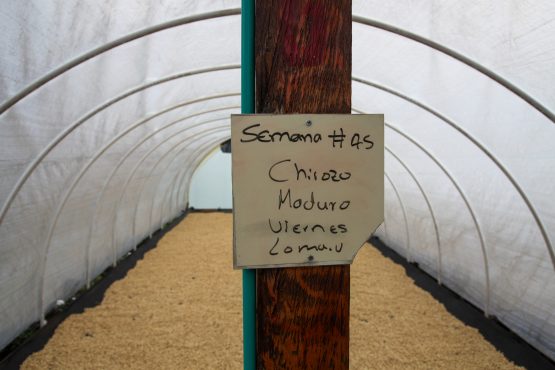
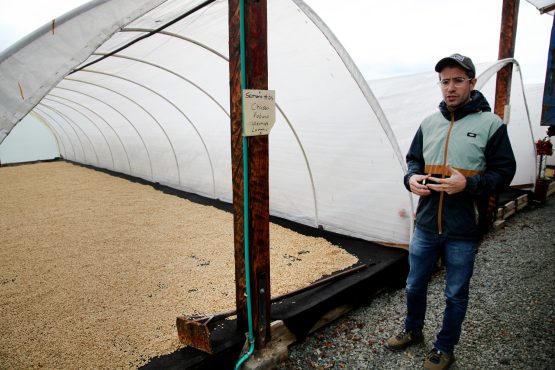
After fermentation, the coffee is washed and dried under greenhouse conditions for between two to three weeks, depending on the weather. The slow and steady drying ensures even moisture loss and stable water activity. After the parchment is fully dried to the optimal humidity, it is delivered to Pergamino’s dry mill in Medellín for quality assessment, storage and eventual export.
ABOUT THE ETHYL ACETATE PROCESS
For this decaffeinated lot, Pergamino has enlisted the services of Colombia’s only decaffeination plant, Descafecol, located in the city of Manizales, in the western state of Caldas. The company uses ethyl acetate to decaffeinate coffees, a natural component derived from fermented sugarcane that is also found in certain fruits (especially when they are very ripe). The process begins when milled green coffee is placed in tanks and steamed to remove the silver skin. The tanks are then filled with hot water to soften and open up the seeds’ cell membranes, ‘loosening’ their caffeine compounds. An ethyl acetate solution is then introduced to the coffee and cycled through several times, with increasingly more caffeine bonding to the chemical compound the longer it is exposed.
Descafecol’s goal is to remove as much as 99.9% of the beans’ caffeine. Once they have achieved this target, the coffee seeds are gently dehydrated in vacuum dryers, until the desired moisture content of 11% is reached. The slow nature of this process has one key benefit: the coffee’s cell structure is only marginally compromised and sugar is retained, meaning beans remain dense and roast similarly to their non-decaffeinated counterparts. We were extremely impressed with Descafecol’s plant while touring the site in November 2024, when we were introduced to the team and saw first-hand the careful handling and quality control of their practices — head here to listen to Fleur talk about her visit to the plant, via our podcast The Green Delivery.