El Jardín Gesha Natural
Floral, clean and balanced with complex fruits. Pomegranate, berries and melon.
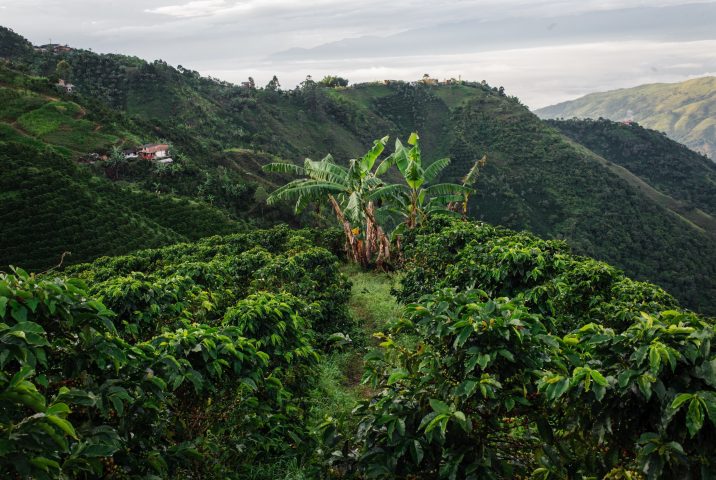
This 100% Gesha microlot was grown and processed at Finca El Jardín, which translates to ‘the garden’ in Spanish. The property, previously known as Finca La Palma, was once part of Pergamino founders the Echavarría family’s Santa Bárbara Estate, but is now owned by the company’s Director of Coffee Leo Henao and wife Jenny. This stunning property is located in the municipality of Santa Barbara, in Colombia’s state of Antioquia. The farm is 67-hectares in size (15 under coffee) and sits at a staggering 1,950 – 2,050m above sea level, with rich volcanic soil and abundant water sources that contribute to excellent productivity — even at such a high elevation.


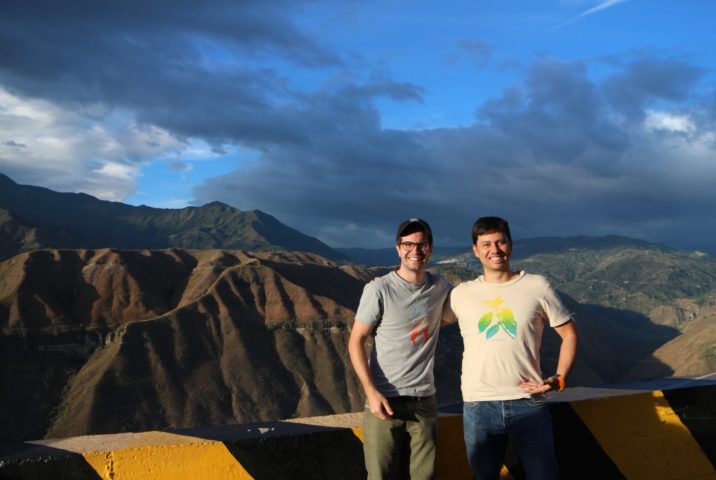
Leo has had a long career in coffee, having spent most of his adult life working at farms, mills, quality assurance and as a coffee buyer across Colombia’s growing regions. He also holds a Masters degree in fermentation science, and has shared most of that knowledge with the numerous producers he has worked with. In collaboration with his brother Felipe and close friend Jorge Cuéllar, Leo’s previous farm, Los Palomos (located in Urrao, Antioquia), went on to earn first place in Colombia’s 2020 Cup of Excellence competition with a lot named ‘Los Tres Mosqueteros’ — “The Three Musketeers” in Spanish — in reference to the trio’s adventurous spirit. Unfortunately, due to security concerns and the long travel required to reach the property from the city of Medellín, where Leo and his family live, the farm was sold in 2022.
Knowing Leo was still passionate about agriculture and fermentation, Pergamino’s Managing Director (and close friend) Pedro Echavarría offered him the opportunity to purchase La Palma in 2024, as the property has its own wet mill and drying facilities on site, and can run independently of Santa Barbara Estate. Leo graciously accepted the offer, and renamed the farm to El Jardín, in reference to the garden of Greek philosopher Epicurus, a place where knowledge was freely shared by the ancient Athenians.


As such, Leo sees El Jardín as the continuation of what he first started at Los Palomos: a place where he can continue learning about and experimenting with coffee fermentation, and where he can grow and test the suitability of rare varieties with unique flavour profiles. Currently, El Jardín is planted with several varieties: the rust-resistant hybrid Colombia, along with high-earning varieties Chiroso, Gesha, and a small amount of SL28. By focusing on this type of experimentation at a manageable scale, Leo will be able to give specific advice, based on his own experience, to the producers he regularly meets, ensuring the broader network of growers Pergamino work with benefit from it and are able to apply what they can, to maximise the returns they get for their crop.
ABOUT THE GESHA VARIETY
Gesha seeds were originally collected from Ethiopian coffee forests in the 1930s. They were initially kept and studied at the Tanzania Coffee Research Institute, and subsequently at Costa Rica’s Centro Agronómico Tropical de Investigación y Enseñanza (known as CATIE). Both institutes recognised the variety’s resistance to coffee leaf rust, yet it was not propagated or planted widely due to the tree’s brittle branches. In the 1960s, the variety was distributed to farmers in Panama by Francisco “Pachi” Serracin. Gesha trees made their way to the country’s Boquete region, where they grew at high elevations without attracting much attention from local farmers. This was until the Peterson family, in Boquete’s Hacienda La Esmeralda, noticed a number of trees that had not been affected by a recent bout of leaf rust on a newly-acquired plot of land and decided to separate and cultivate them. The rest is history: the lot produced by these trees went on to win the Best of Panama competition in 2004, as its delicate, floral aroma and distinct flavour profile pushed the boundaries of what coffee could taste like.

ABOUT ANTIOQUIA
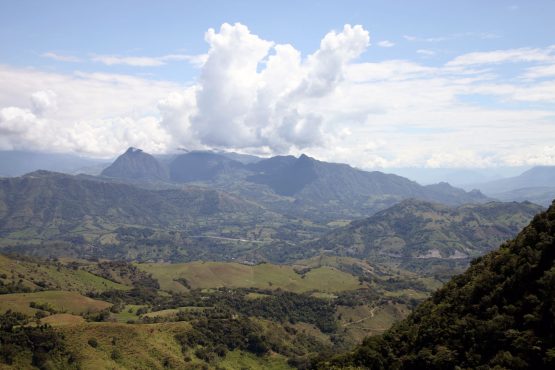
Antioquia is located in central northwestern Colombia. Coffee was introduced to the region in the latter part of the 19thcentury. Since then, this mountainous, fertile department has 128,000 hectares of coffee that is produced by a mix of large estates and tiny farms.
Antioquia only recently became more accessible to specialty coffee buyers – largely thanks to a transformation of the department led by Sergio Fajardo, who was the governor of the department between 2012-2016. Sergio transformed Antioquia’s capital city, Medellín, from a violent and dangerous place to a world-class tourist destination with a strong economy. Coffee has played a significant role in this this transformation, and as access to many producers has improved, the region has become one of Colombia’s most important and celebrated coffee-producing areas.
Our export partners for this coffee, Pergamino, have worked hard commercialise specialty-grade coffee throughout Antioquia, and have uncovered some stunning coffees and very dedicated producers in the process. They work closely with the producers to give them feedback on their coffees (provided by Pergamino’s expert team of cuppers) and provide top up payments when the coffee is sold at a higher premium.
Head here to learn more about the work of Pergamino and Leo’s role within the business.
HOW THIS COFFEE WAS PROCESSED
The coffee was selectively hand-harvested and then transported to El Jardín’s onsite wet mill. Leo brings an academic eye for detail to the processing, as in addition to being an agronomist, he has earned a masters degree in fermentation processing. For this naturally-processed lot, freshly picked cherries are delivered and go through a period of controlled fermentation where ambient conditions are carefully observed, as high temperatures can accelerate fermentation and introduce undesirable flavours.

Cherries are then washed with fresh water and sorted to remove any floaters, and placed on drying beds under shade for up to eight days, where they are turned constantly to ensure even drying. This approach allows for better integration of the mucilage sugars into the bean, increasing sweetness and complexity, resulting in profiles with pronounced fruity and floral notes. Once the pods have lost most of their moisture, they are mechanically dried to be finished off. After the cherries are fully dried to the optimal humidity, it is delivered to Pergamino’s dry mill in Medellín for quality assessment, storage and eventual export.