Las Brisas
Bright and vibrant, with honey blossom and vanilla florals. Pineapple, green apple and lemon lime acidity, with great clarity and length.
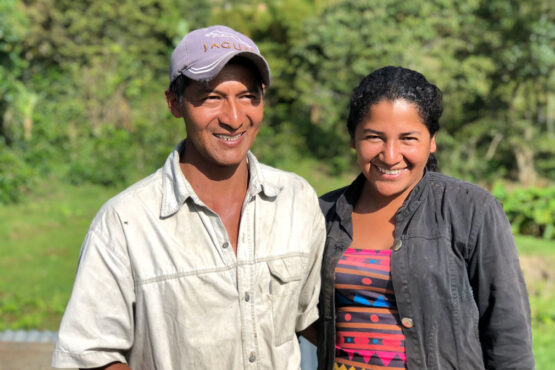
This coffee was produced by Héctor Quintero Aguirre, who farms coffee on his small farm Las Brisas, located near the town of Monserrate, in the municipality of La Plata in Colombia’s state of Huila.
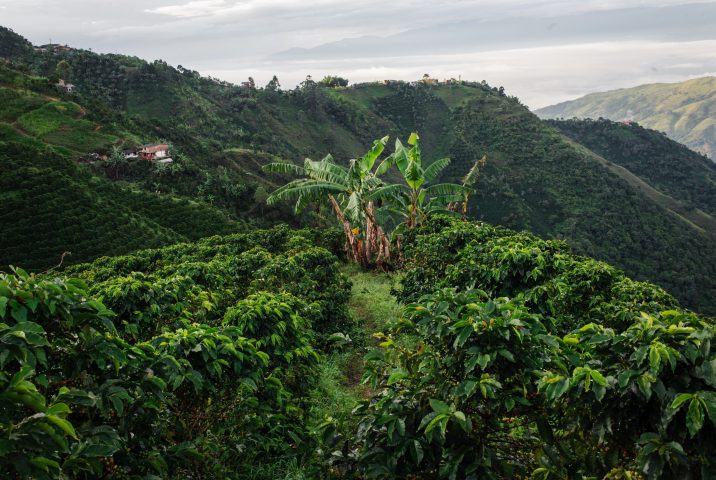
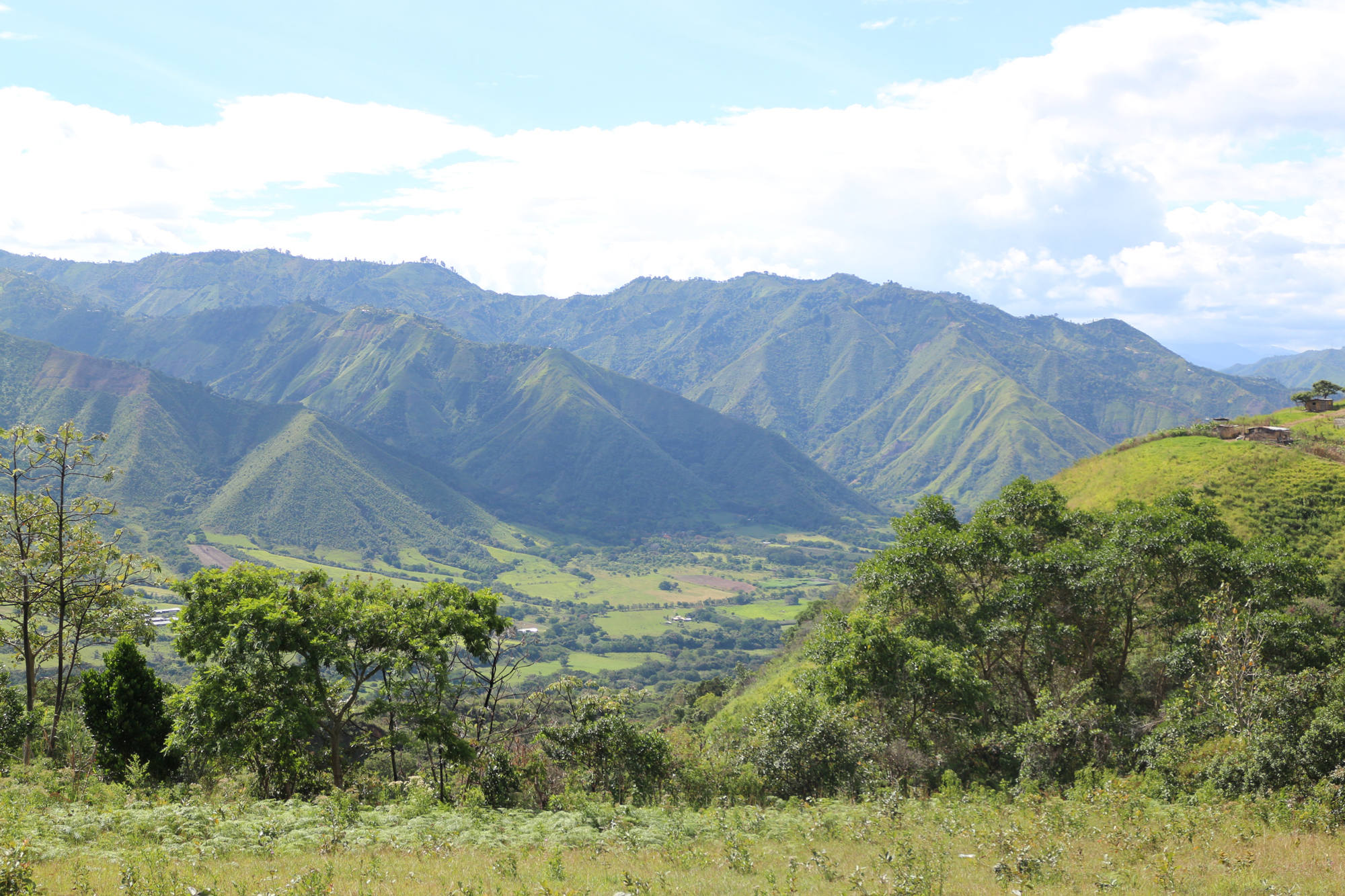
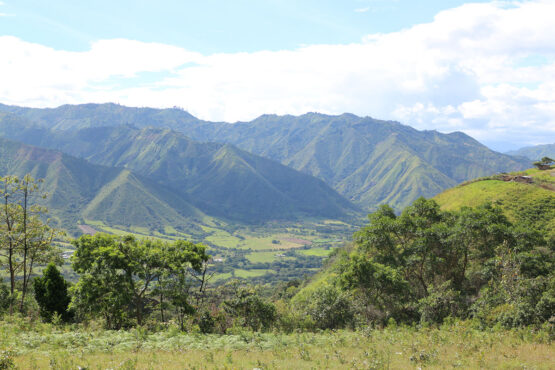
Las Brisas (which translates to ‘the breezes’ in Spanish) is just 2.4 hectares in size, situated at 1,900m above sea level, in the steep, rugged hills that surround Monserrate. Héctor grew up in the region, and now lives at Las Brisas with his wife and three of his children. His eldest son is completing his studies in the town of Popayán (Cauca), while his younger three children still live at home and help out with the activities around the farm.
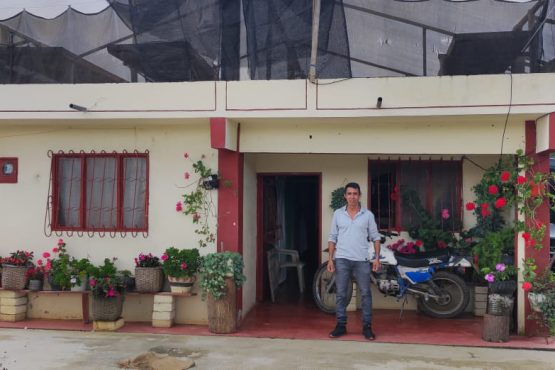
Las Brisas is mainly planted with the Typica variety, which along with Catura, was propagated heavily during the 1970s and 1980s when most local farms were established. Héctor has spent the last thirty years working in coffee, and farms with traditional techniques with most of the labour provided by him and his family. Fertilisation occurs around three times a year, usually after manual weeding, and pesticides are rarely used. Besides coffee, Las Brisas is intercropped with fruits and vegetables for the family’s consumption.
ABOUT LA PLATA
Located in the state of Huila, the municipality of La Plata borders the town of Inzá, in the state of Cauca, and forms part of the Macizo Colombiano (‘Great Colombian Massif’). Much like that found in these well-known coffee regions, the volcanic soil in La Plata is perfect for coffee growing. Farmers here also benefit from year-round cool temperatures, abundant access to clean water, and almost exclusively produce coffee from older Caturra trees in plots of land under 2 hectares in size.
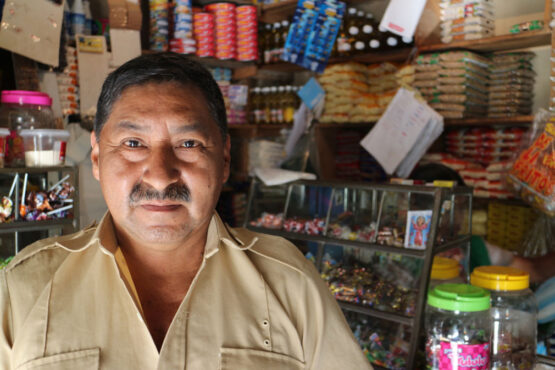
This coffee was sourced with the help of the influential Pillimué family, who work hand in hand with our supply partners, Pergamino, as their local logistical operators in La Plata. While the Pillimués are based in the state of Cauca, their hometown of San Antonio sits at the border with the state of Huila — a mere 30km away from La Plata. Having farmed coffee here across three generations, the family has a longstanding presence in the area. Pergamino has partnered with them to set up a collection point in Huila, with the parchment collected being delivered to their facilities in San Antonio, where the family also keep the town’s general store and have built an adjacent warehouse and QC lab.
During the harvest, local farmers deliver small lots (around 100-150kg) of dried parchment to the Pillimué family’s collection point in La Plata every two to three weeks. Upon delivery, a sample of the dried parchment is milled and assessed for physical attributes, including uniformity of size, presence of defects, moisture content and seed to hull ratio. If the coffee passes the physical assessment, it is accepted and the farmer receives their first payment for the coffee, calculated by the weight delivered and a base rate related to the physical quality of the parchment.
Samples of the coffees are then cupped by a trained team in San Antonio and, if selected, sent weekly to Pergamino’s QC lab in Medellín where they are further assessed by an expert team of cuppers. Each lot is carefully evaluated and, based on the cup score and profile, sorted into different grades of quality and combined into exportable sized lots. Feedback on each lot is relayed back to the producer and after it has sold, a second payment is made to them according to the premium the coffee attracted.
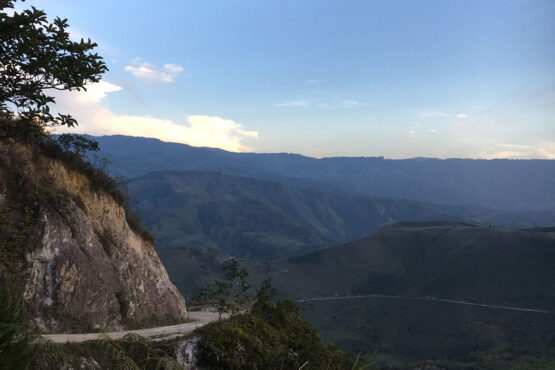
La Plata has a long history of coffee-growing and agriculture. Along with coffee, the region is known for growing rice, plantain and cacao and for its rich biodiversity. The region is the traditional home of the Yalcón and Nasa (or Páez) people. While few Yalcón communities survive today, the Nasa remain one of Colombia’s largest indigenous groups. During the Spanish invasion of Colombia, many of the Nasa were able to avoid bloodshed by escaping to the rugged hills and high plateaus of the Andes Mountains, where the Spaniards were unable to capture them. Today, the Nasa economy relies on agriculture, and society is organised into tight knit farming communities who distribute duties equitably under the guidance of cabildos, or locally elected councils. Like many indigenous groups across Latin America, the Nasa have spent decades lobbying for the return of their land rights, finding success in recent years. Their struggle has led to legal recognition of the fundamental rights of indigenous peoples, including recognition of the autonomy of their communal indigenous lands in the 1991 Colombian Constitution.
ABOUT HUILA
The department of Huila is located in the southwest of Colombia. It is framed by the Central and Eastern ranges of the Andes, with most of the region sitting in the Magdalena Valley. This area is renowned for the quality of its coffee and, in 2013, it received the Denomination of Origin status. Coffee production in Huila belongs to an ecosystem of subtropical, very humid mountain forest. The year-round distribution of rainfall, rich soil and temperature allow exceptional coffee to be cultivated at elevations of up to 1,900 meters above sea level almost throughout the whole year.
Huila is one of the largest coffee-producing regions in the country, however the size of coffee farms here are overwhelmingly small-scale, with most farmers owning on average just 1.5 hectares of land. Alongside coffee they also grow rice, raise cattle, and farm fish.
Our export partners for this coffee, Pergamino, have worked hard commercialise specialty-grade coffee throughout Huila, and have uncovered some stunning coffees and very dedicated producers in the process. They work closely with the producers to give them feedback on their coffees (provided by Pergamino’s expert team of cuppers) and provide top up payments when the coffee is sold at a higher premium.
Head here to learn more about the work of Pergamino.
HOW THIS COFFEE WAS PROCESSED
This coffee was processed using the washed method at the farm’s ‘micro-beneficio’ (mill). After being pulped using a small manual or electric pulper, coffee was placed into a fermentation tank, where it spent anywhere between 48 and 72 hours. Because of the cooler climate in Monserrate, Héctor can ferment his coffee for longer than usual, and will often blend two days’ worth of pickings over the fermentation period. Coffee was then washed using cold, clean water.
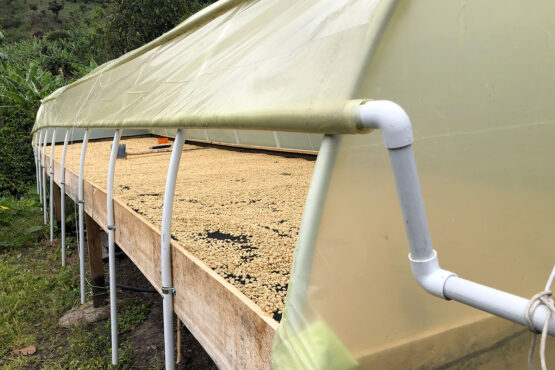
Once rinsed, the wet parchment was carefully dried (over 10–18 days) on a raised bed with plastic over the top which protects the coffee from the rain and prevent condensation dripping back onto the drying beans. This bed has adjustable walls to help with air flow, and temperature control to ensure the coffee can dry slowly and evenly.
Once dry, the coffee was delivered to Pergamino’s warehouse, where it was cupped and graded, and then rested in parchment until it was ready for export.