Sítio Canaã Natural
Berry compote, grilled pineapple and milk chocolate. Complex and transparent with lingering, jammy sweetness.
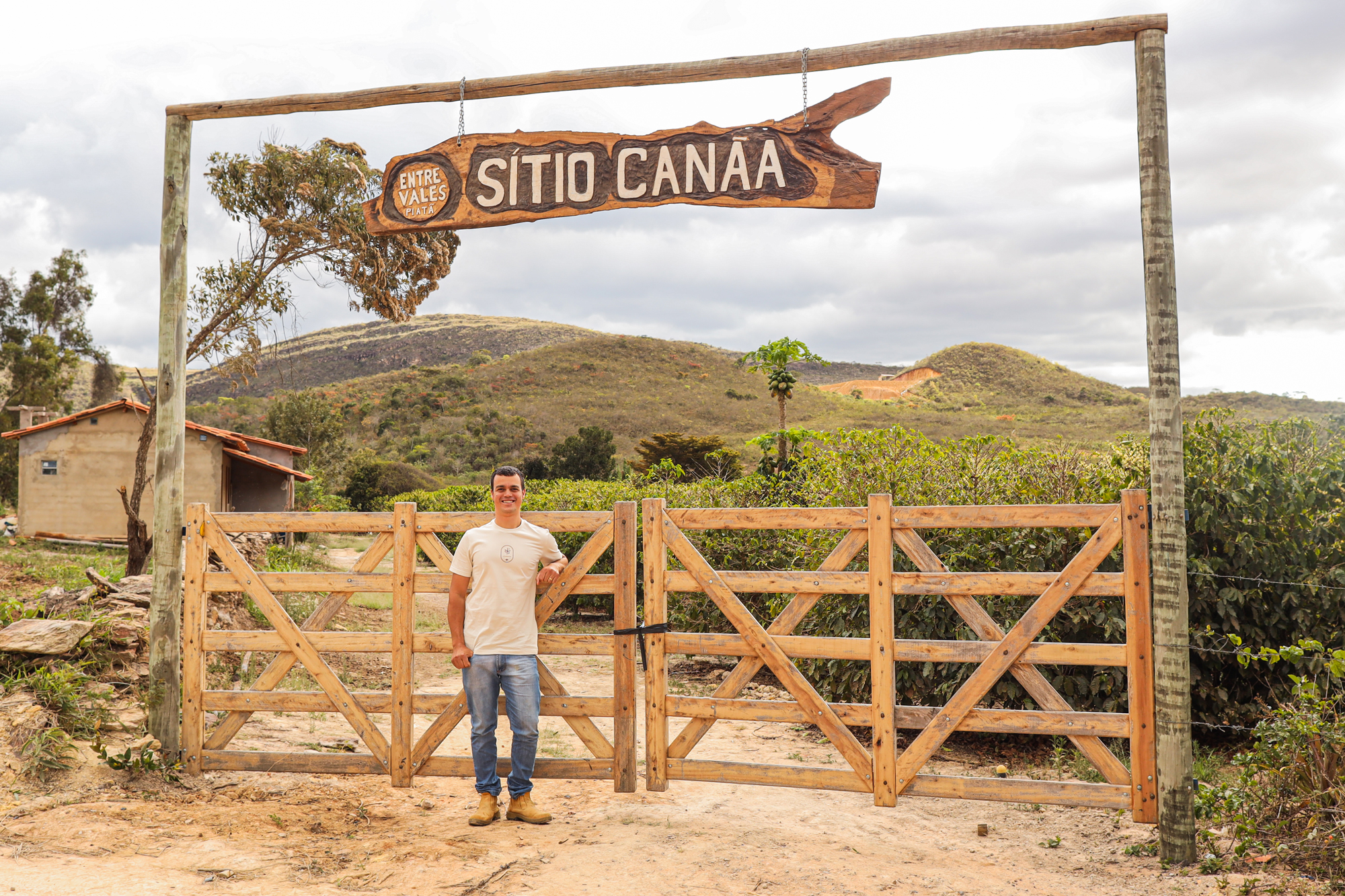
Lying just outside the town of Piatã, the beautiful Sítio Canaã — which translates to “The Promised Land” in Portuguese — lives up to its name, as it represents the Brazilian coffee industry’s promising future. Owner Kleumon Moreira’s approach to production is considered and progressive, and his practices are some of the most meticulous we’ve seen. We cherish our relationship with Kleumon; since impressing us with his first crop in 2018, we have purchased his complete production every harvest, and we hope to continue to do so for many years to come.
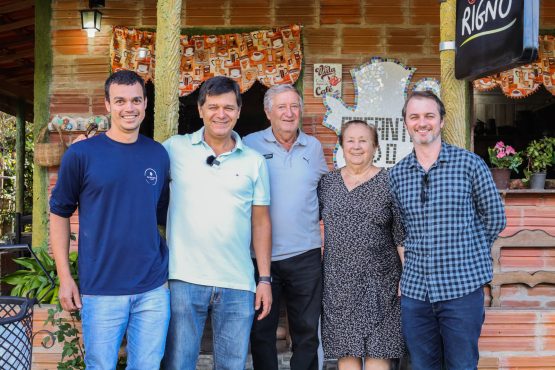
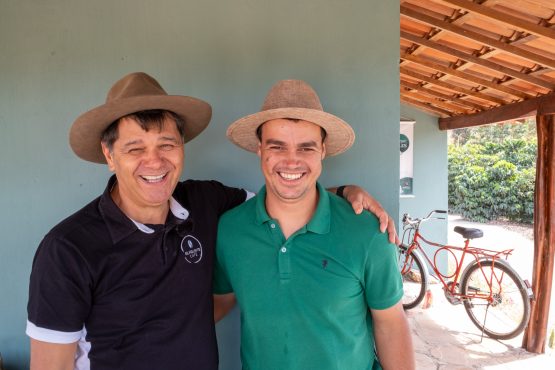
While Kleumon is young – he’s still in his 30s – he has been working in coffee for well over a decade. He spent his early career alongside mentor Antônio Rigno of São Judas Tadeau. Antônio is widely regarded as the best producer in the region and is famous for his commitment to quality, having achieved many accolades for his coffees in the Cup of Excellence competition along with other quality awards over the years. Rigno has provided advice and guidance for many producers in Chapada Diamantina, and Kleumon worked by his side for several years, learning everything from how to plant and care for the trees through to processing.
Having cut his teeth under the tutelage of such an accomplished mentor, Kleumon used all of his savings along with a small loan from the bank (for which Antônio was his guarantor) to establish his own coffee farm in 2016. After purchasing the 10-hectare plot of land, he began trialing a wide range of varieties, including Topázio, Catuaí, Obata, Bourbon, Paraiso, Arara, Acauã (Kleumon’s favourite!) and most recently Pacamara, with the goal of understanding how each one performs in terms of productivity and quality under Piatã’s unique conditions. He currently has two hectares under cultivation, with plans to triple that over the next couple of years.
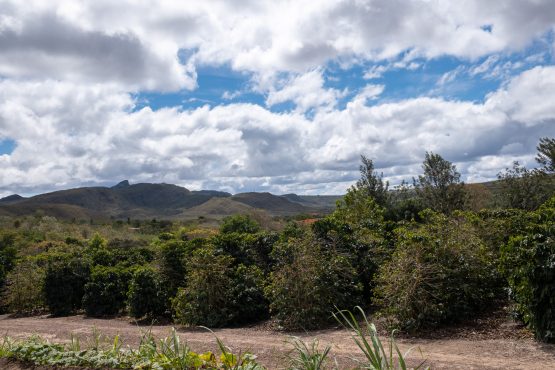
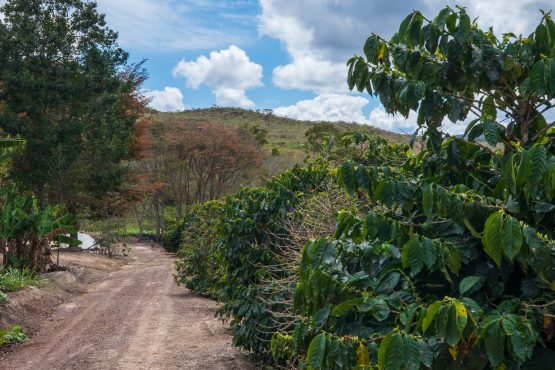
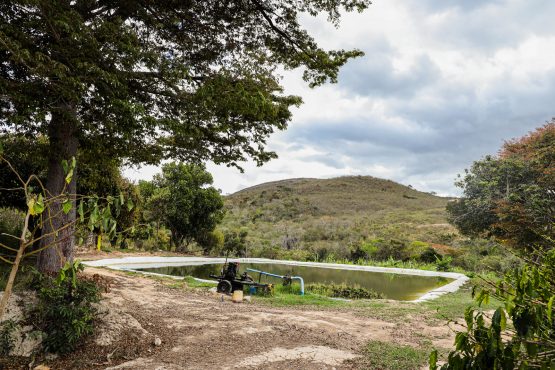
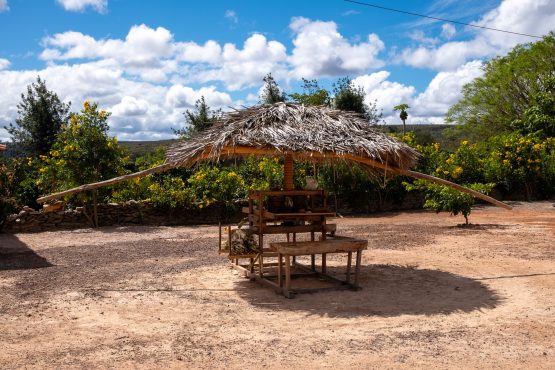
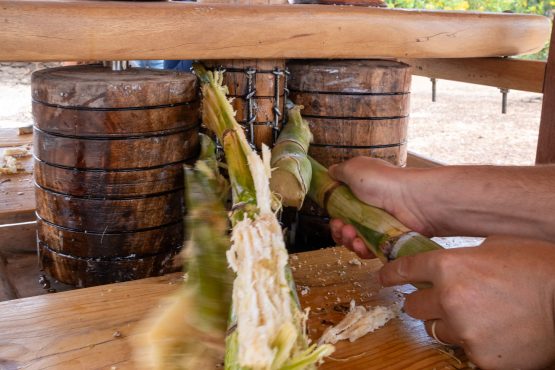
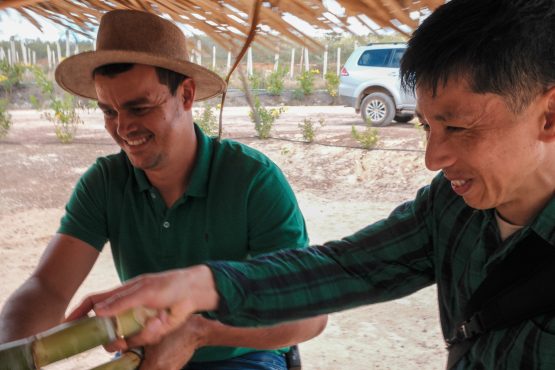
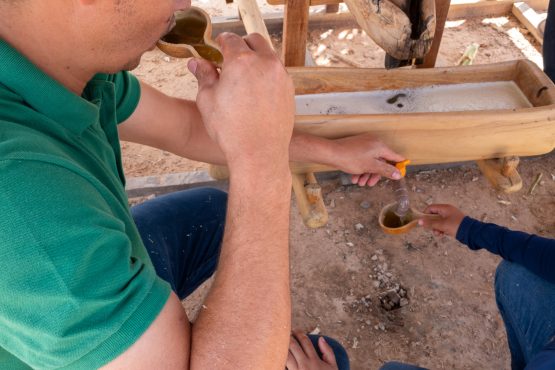
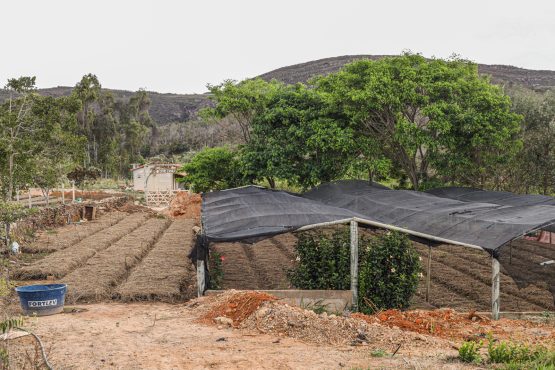
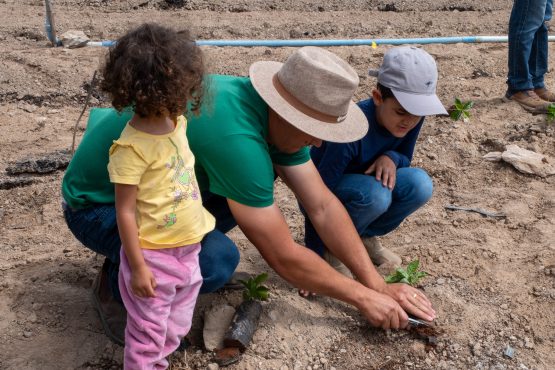
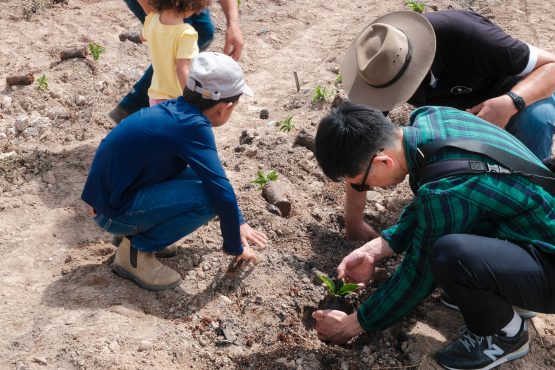
Kleumon is a conscientious producer, paying close attention to every aspect of Sítio Canaã; you can really see how much love and care goes into his farm. Trees are planted in neat rows — ensuring they aren’t too crowded and competing for nutrients, and that pickers have enough space to walk easily between them during the harvest — and minimal chemical inputs are used. At Canaã, Kleumon also grows sweet potatoes for his family’s consumption and sugarcane, which he uses to make cachaça and panela bricks. The property includes a water reserve, which Kleumon relies on heavily during years when the region is experiencing a drought.
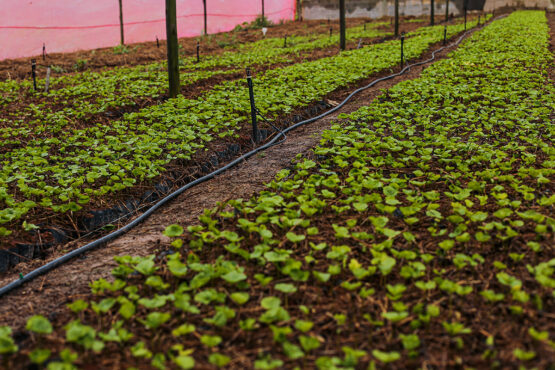
Along with his farm, Kleumon has also established a successful and healthy nursery of coffee seedlings, to continuously expand the number of trees planted in his property and to sell to other producers in the region. Over the years, the sale of seedlings and young coffee trees to Piatã’s coffee growers and to larger companies like Fazenda Progresso (who are seeking to expand in the area), has become an important source of income for Kleumon and his family. Because Canaã already grows the varieties that are for sale, producers can see for themselves how these perform on the local soil, and to get an indication of the cup profile they can expect. Each May, Moreira receives orders from potential customers, and then grows their seedlings over the course of six to seven months. All work is done manually by Kleumon and a team of around ten experienced and specialised workers who travel from Minas Gerais for the task.
When he’s not at Sítio Canaã, Kleumon manages day-to-day operations at Silvio Leite‘s estate Cerca de Pedras (which is down the road from him) and serves as Silvio’s right-hand person in town. The role is hugely important to Silvio, who really values the relationship. “Kleumon is so good,” he recently told us. “I owe a lot to Kleumon. He knows a lot about taking care of the coffee plants, and what their needs are.” In this role, Kleumon manages the estate’s administrative work and is responsible for all the farming and processing decisions made. Throughout the year, Moreira visits other producers who work with Silvio in the region, providing them advice and assisting in their transition to solely producing specialty grade coffee.
Kleumon’s love for Piatã and connection to its terrain are evident when spending time with him — he loves brewing coffee outdoors and hiking the hills that surround Sítio Canaã on his days off. When we first met him, Kleumon was quiet and reserved, and his focus was solely on establishing his farm. As he has continued to accomplish more at Sitio Canaã, and gained the respect of his neighbours and fellow coffee producers, Kleumon has grown in confidence and we now count him as a dear friend.
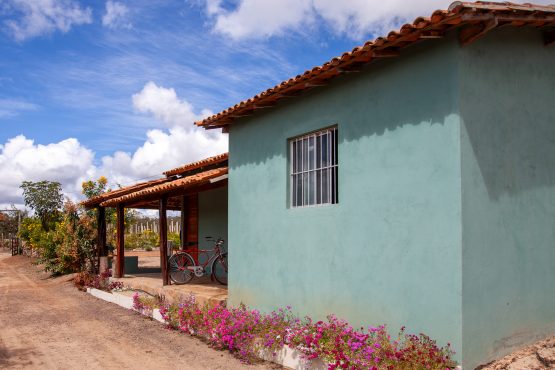
Kleumon and wife Diana live in Piatã with their two children, having bought land in town in 2019 and built a house with their earnings from coffee. When talking about the dreams and goals for their future, the couple share that they have no intention of leaving the specialty coffee industry, and hope to plant more trees and continue to expand the amount of coffee they grow. “I hope my kids still love coffee” he said, “and to one day come to Australia”. We can’t wait for this day!
ABOUT PIATÃ
Located at the foot of the Chapada Diamantina mountain range, Piatã is a unique growing region in Brazil’s Bahia state. The coffees produced here tend to be floral, sweet and complex, and noticeably distinct from those grown elsewhere in the country. There are two main factors behind this: coffee grows at elevations of up to 1,400 meters above sea level, which is high for Brazil; and temperatures range from about 2°C to 18°C in winter, some of the country’s lowest. Combined, the high elevation and cool climate are key in slowing down the maturation of the coffee cherries, leading to an increased concentration of sugars in the bean. The result is a cup profile that is bright, transparent, and distinctive. Piatã’s relative proximity to the Equator line ensures the region’s coffee trees can experience such drastic conditions without being affected by frost, unlike other, more traditional growing regions like Minas Gerais.
Piatã’s exceptional natural characteristics also contribute greatly to the coffees’ profile. In the distant past, the whole of Chapada Diamantina was completely under water, slowly eroding over millions of years — leaving behind soil that is nutrient-rich and slightly soft. This soil, along with the above-average local humidity, is home to a healthy and diverse ecosystem that includes some 1,600 individual plant species. While the highlands of Chapada are rugged and dry, the area surrounding Piatã is filled with streams, waterfalls and even swamps that, in most years, provide plenty of water for irrigation and agriculture.
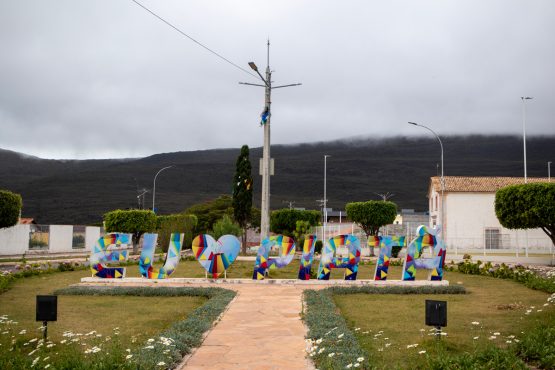
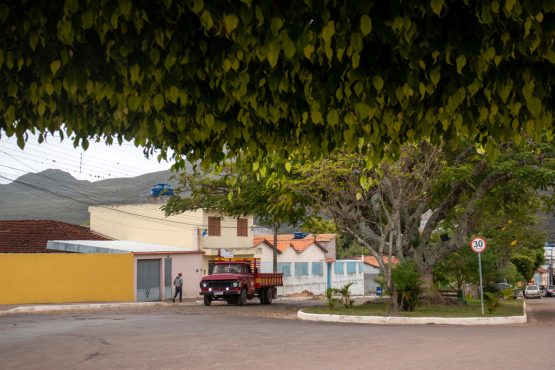
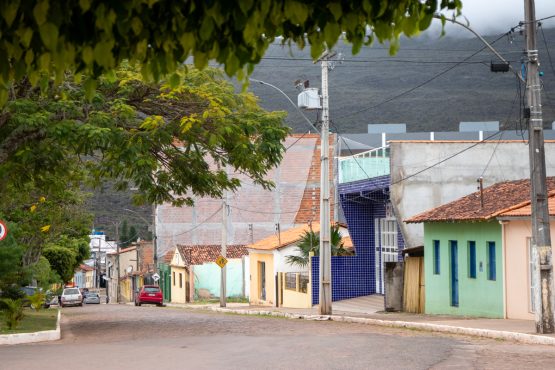
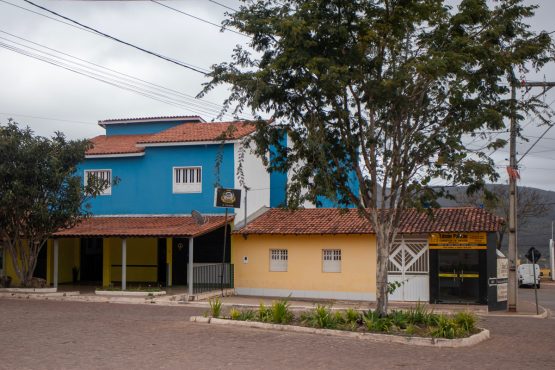
While coffee production is on the rise in Piatã, it is still very much a developing industry. Locally produced lots didn’t gain recognition for quality among Brazilian buyers until the 1990s. This recognition led to the establishing of the ASCAMP growers’ association in 1998, which was tasked with assisting growers who had land, but few resources. Over the next decade, cooperatives and other farmer groups were founded, playing a pivotal role in elevating the coffees grown and processed in the region. Piatã went on to be internationally recognised for its high quality in 2009, when five of the top 10 spots in Brazil’s Cup of Excellence came from this small corner of Bahia. The region’s dominance in the competition has continued every year since, particularly in 2016 when an astounding 19 of the 24 winning lots came from Piatã, and again in 2022, when 10 local winners were recognised. MCM has been sourcing coffee from this region since 2015, thanks to the support of longtime partner and coffee mentor Silvio Leite. Head here for more on Silvio and the incredible work he’s done in Brazil.
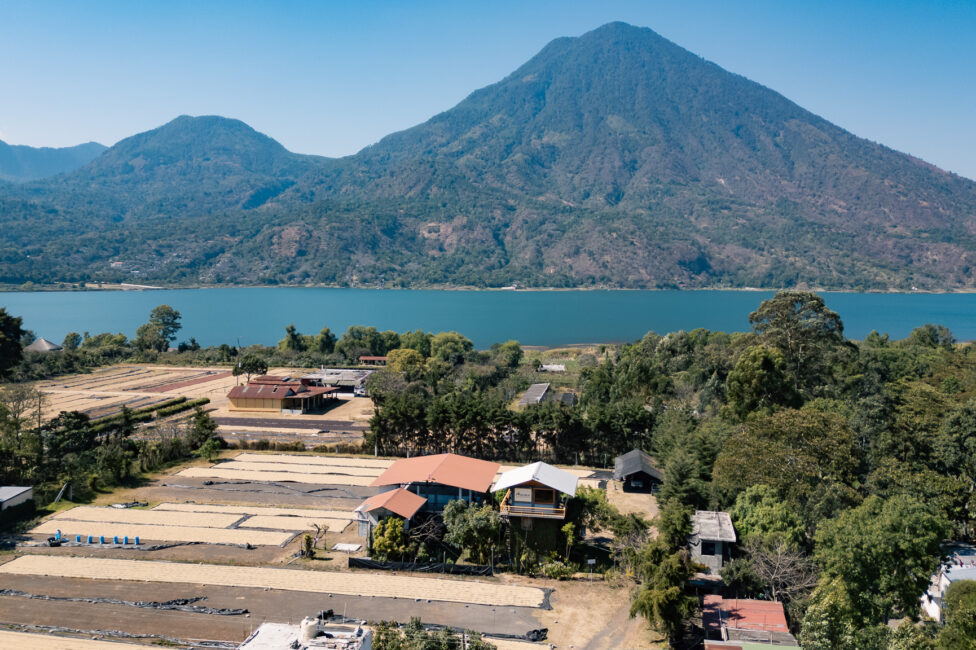
Part of what makes the Piatã region so special is that production is extremely limited, given the scale of the local estates. Farm sizes tend to be relatively small when compared to other producing areas in Brazil, usually just ten hectares or less in size, and are not visible when driving through the outskirts of town (unlike somewhere like Cerrado de Minas in Minas Gerais, where large estates make up the majority of the landscape). Most growers process their own cherries on site, sticking to traditional methods with little focus on experimentation, as the goal is to process coffee well to ensure the final cup is sweet and clean. Because many producers rely on coffee as their main source of income, simplicity and repeatability are prioritised. Great attention to detail is placed on the post-harvest work, as the region’s cooler temperatures and high humidity pose risks to the drying parchment. To prevent any potential defects in the cup, many local producers have built greenhouses and raised beds, to add a layer of protection without minimising the necessary ventilation for coffee to dry evenly and at a steady rate.
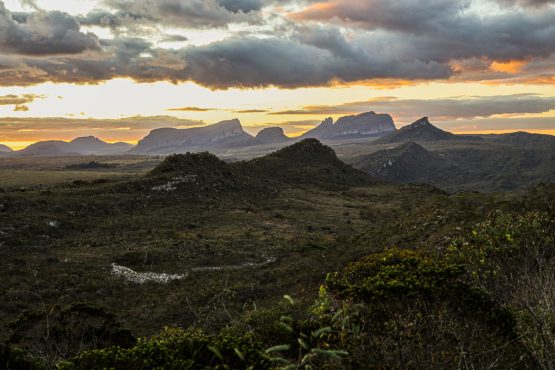
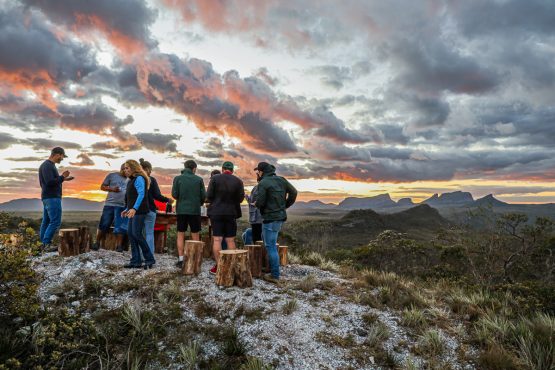
The region of Piatã is the traditional home of the Cariri and Maracá indigenous people, who were defeated during the Portuguese invasion of Brazil in the seventeenth century. While most of the remaining Cariri people were displaced to other regions within the state of Bahia, eventually joining other indigenous communities, the Maracás have a nearby municipality named in their honour, as it is located on their historical capital city. The word “piatã” translates to “hard foot or fortress” in the indigenous Tupi language (which was spoken by most First Nations People along Brazil’s coast). Head here to learn more about beautiful Piatã.
HOW THIS COFFEE WAS PROCESSED
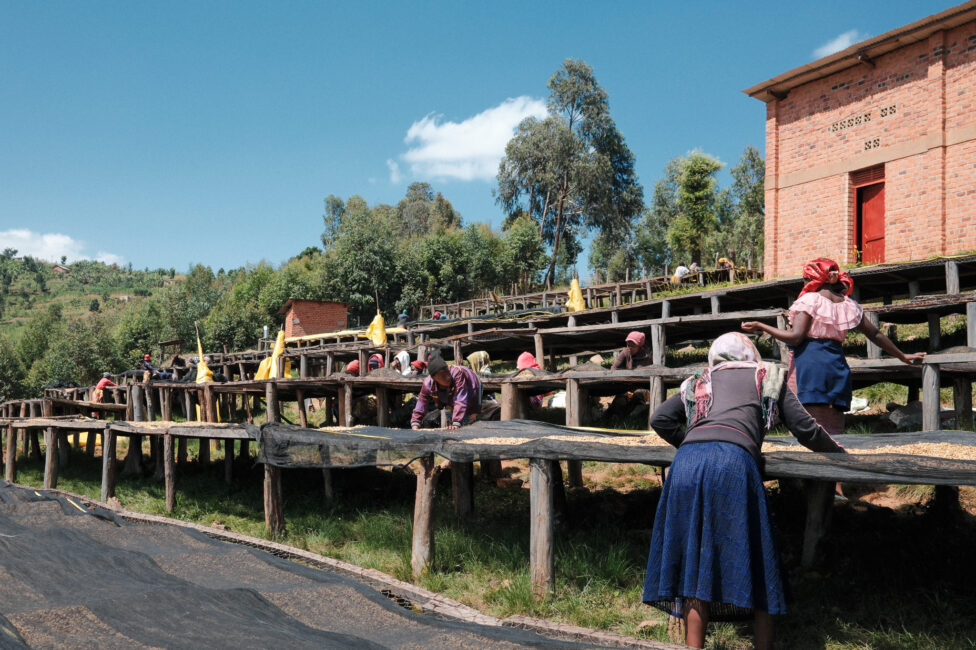
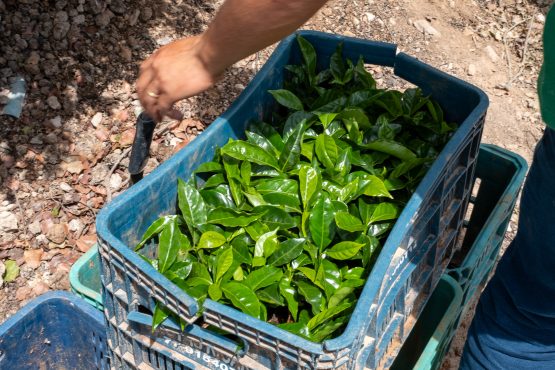
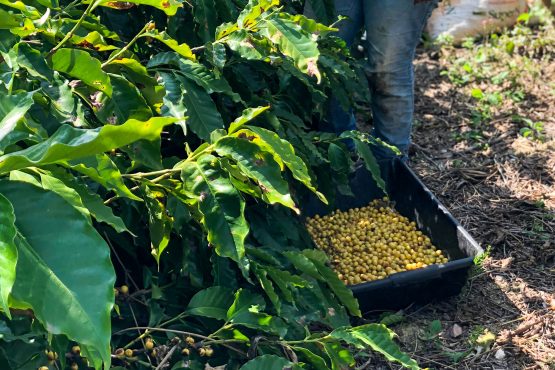
Kleumon ensures cherries were selected by hand only when fully ripe. Once picked, cherries were laid out to dry on raised beds under shade for 25 days.
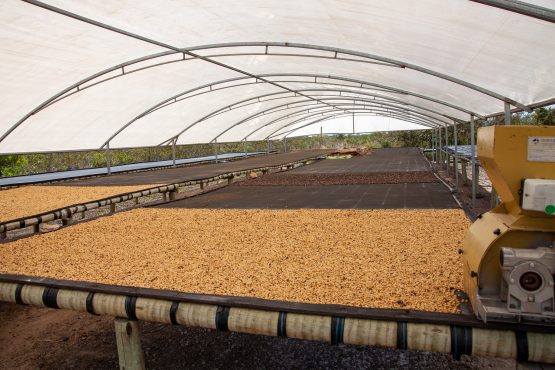
During drying, the cherries were turned several times a day to ensure they were drying evenly. At this stage, the coffee was primarily left in the shade and greenhouses are closed overnight, to slow down and homogenise the drying process. This extra attention to detail is key in improving and ‘saving’ the fructose and all positive attributes found in the fruit that contribute to a higher quality in the final cup, and adds to the longevity of the lot. Once dry, the pods were taken to Fazenda Progresso to be dry milled and separated into numbered lots. The sacks of parchment were later stored and rested before being prepared for export.