Celebrating ten years with Silvio Leite!
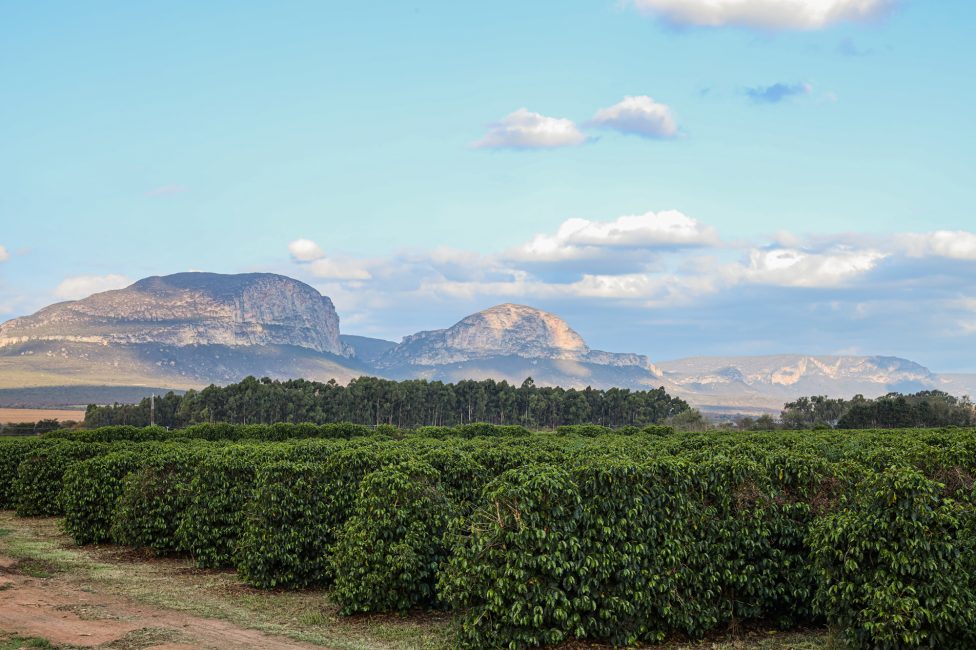
This past 2025 marked a decade since we began working with our good friend, coffee mentor and Brazilian supply partner Silvio Leite. In these ten years, we’ve seen his work in Piatã expand through the town’s community of specialty-focused producers, culminating with the founding of his own farm Cerca de Pedras.
During our most recent visit to the region, we spoke at great length with Silvio about his career and legacy in Piatã, which we’re thrilled to share in full below.
Published 03 Mar 2026
MCM: It’s been ten years since we began sourcing coffee from Piatã with your help, and so much has changed! When we came here in 2015, we met with producers like Antônio and Terezinha of São Judas Tadeu and Pedro and Delzute of Cafundó because you were already working with them. At the time, we also visited a beautiful plot of land, your dream farm, but you didn’t own it at the time — you weren’t a coffee producer back then; so much has changed over the last decade!
Silvio: Yes, many things have happened here, but if you go back even further in time, the region was discovered by the Cup of Excellence programme, which has helped open the doors to many coffee regions that have not been recognised for quality.
Here [in Piatã] the potential to produce high-quality, special and very unique coffee is huge, but you have to follow correct practices; not just when growing, but especially with post-harvest work. I became passionate about this region because I saw that we could be doing a lot of improvement in post-harvesting work; when I first tasted a lot that was from Mucugê, in Chapada Diamantina, I felt the potential existed, but it would remain underdeveloped without better post-harvest.
So we brought more knowledge, communication and a desire to share this with producers. At the time, Antonio Rignô and others got involved and they all started to believe in producing coffee this way. Since then, their lots began to appear in competitions and buyers realised they presented quality that was unique year-to-year, both in the Cup of Excellence and in internal competitions. More and more producers got involved, and more knowledge came here. I bought land here to have the opportunity to make one of my wishes come to life, to be a producer, as I have worked as a cupper and as a trader.
When I started, I had great support from people like Melbourne Coffee Merchants, who embraced the project and the plans, and year after year you have given it support by taking the coffee, paying a fair and correct price, and valuing Piatã’s producers. I’m very happy being a producer and improving the quality of the region and sharing this knowledge with my friends. Having this quality recognised through the price paid to the producers that we are working with has been fundamental because, besides the passion that we all have for each cup of coffee, a farm is a business and it must be sustainable.
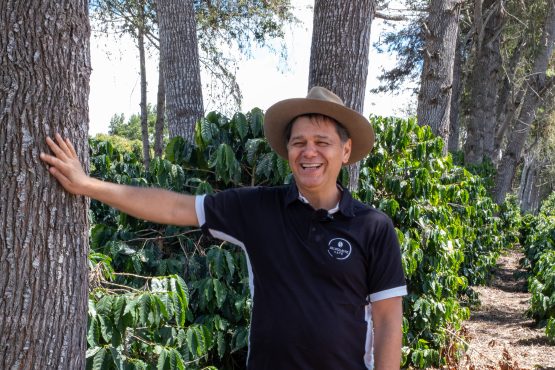
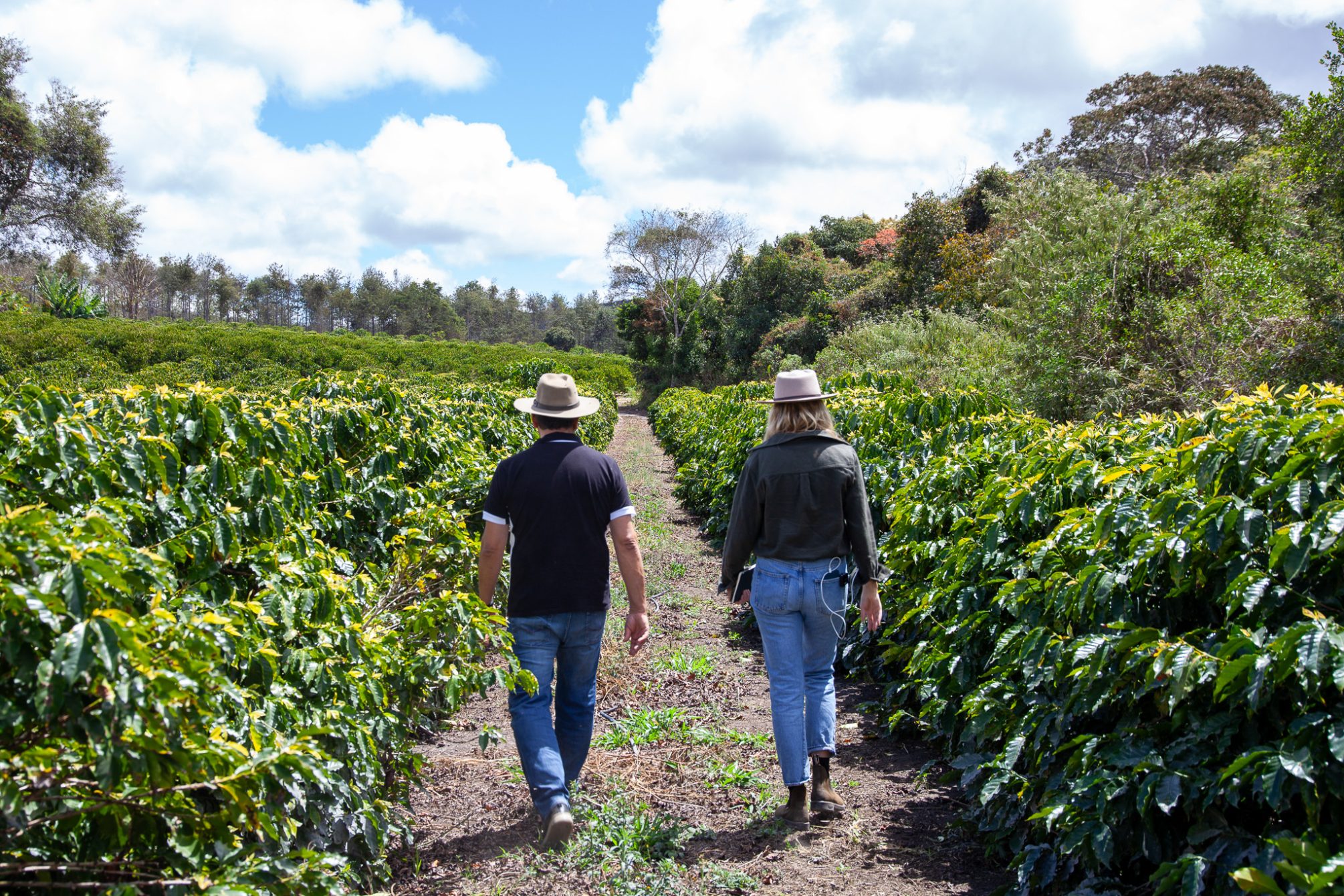
We loved walking through your farm’s São Benedito plot because it was beautiful, it had so many shade trees and a river running through it!
Yes, which I love, because this is the other kind of sustainability I believe in. You know, the region is not very rich in the amount of rain it receives every year, so I have to protect and save water in the field, and shade trees are helpful in promoting all the environmental conditions needed to produce speciality coffee, so São Benedito is full of shade. The river that runs through the farm is called Rio de Contas, and it is a very important river in Bahia that crosses a lot of municipalities, and its water supports a lot of the local population.
You’ve built a very special home right next to São Benedito, and you also have quite a big mill to pulp your coffee and patios to dry it as well, and you’re building a warehouse to store your coffee. All while also accepting coffee cherry from other small producers in the region?
Yes, and this is an important point! I have some capacity to receive coffee cherries from producers because sometimes when they have offered me their processed coffee in the past, it presented defects, and even phenolic taste, which greatly reduced the possibility to sell it for a good price. I knew that we could solve that problem just by improving post-harvest conditions.
I suggested they could sell their cherries to me, or otherwise I could process the cherries for them, and then we share the sale together. Most prefer to sell their cherries at a good price that acknowledges their high quality, and I think it’s beneficial for both sides. For us, for my team, we have an opportunity to process coffees that have different profiles from what we grow because they come from different land and a different environment. It’s lovely to do this because it can benefit farmers supplying cherries while giving us the opportunity to process them and offer them to the market in much better quality conditions.
My proudest moment is when people cup the results. It’s the results from all of us who are invested here, including the agronomist we work with, Kleumon, the pickers, and my cupping team. Year by year, whenever you cup the table, you start improving. That is the best moment, it makes us proud and satisfied by the results.
Through your career, you’ve cupped with many experts and novices alike. What benefits have you found in this?
Yes, and I find it both joyful and rewarding. Sharing coffee with young people or beginners is a beautiful experience. At first, many of them might say, “I don’t like this coffee.” That becomes a challenge and an opportunity — to show them different methods, to present flavours in ways that surprise and delight them. It is very much like a chef preparing dishes to open someone’s mind to new tastes.
When young people discover a great coffee, their faces light up. They begin to talk about it, share it, and carry that passion forward. This helps grow appreciation for coffee and also inspires the next generation of professionals: roasters, cuppers, traders, and producers. I love being part of that learning journey.
At the same time, cupping with experienced professionals is also extremely valuable. It keeps us calibrated, sharp, and open to new dimensions of flavour. Great coffees can be “multi-dimensional,” meaning that after you sip them, the flavours keep unfolding, multiplying in the aftertaste. Experiencing that with others is always special.
For me, cupping — whether with beginners or experts — is about connecting people, building knowledge, and sharing joy. It reminds me every day why I chose this path.
What an opportunity for you and your team to learn as well. The team at Cerca de Pedras are incredibly dedicated; clearly, you’re cultivating a very special culture with the people that work with you.
Yes, because I think that is extremely important. It’s valuable for the team to be connected, so that everyone understands what we’re doing and then can share the results together. The coffee harvest, and life in general, is not an industrial system where you can go to work without knowing what you’re doing, without understanding why you’re selecting some coffee cherries over others, or why you’re spending the whole day carrying coffee around. In my opinion, the whole team should understand the results of good practices, and what happens when these aren’t followed—not just technical results, but also the recognition. We recognise our staff in two ways: first, by offering good wages, and second by constantly telling them how important they are. It’s important for us to recognise jobs that are fundamental to this project.
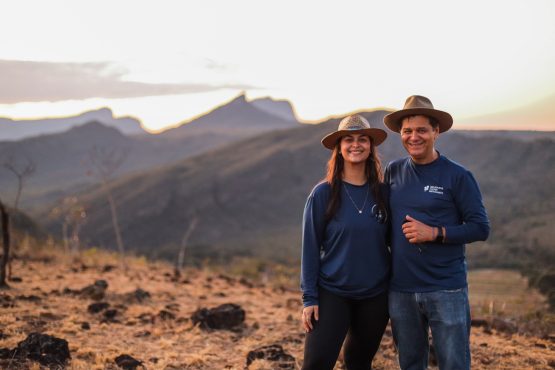
I need to have a good team because I’m not young anymore, so I’m relying on them for the future. My wish, my dream, is for this team to take care of Cerca de Pedras with my daughters, so they continue supplying good coffee, of good quality, to communities in Australia, Japan, Korea, the EU, the United States, and of course Brazil — because we’re big consumers now and have been learning how to improve quality. It’s fundamental to Brazilian producers that our coffee stays in the country, we must look after our population.
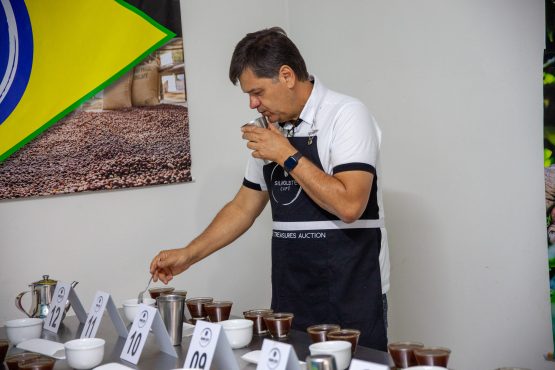
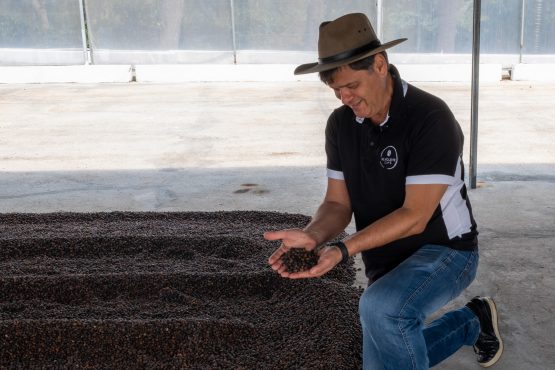
Something that we chatted about was you recently turning 60 — which makes it a later time in life to start such a big project, but you have so much knowledge and expertise that Cerca de Pedras feels like the culmination of those skills and your career. You’ve created something that will have a legacy and future for your family.
Yeah, you know, we don’t become better persons just by being good at something, it’s through having more experience, through analysing things more carefully, and thinking about your reactions more. At this age, I am more comfortable with thinking, “Okay, this is fine. This is enough for me,” or, “No, I won’t go down this path because it might be too much for me,” because I think a little more carefully about life in general.
Thinking about legacy is a beautiful thing. The difference between legacy and an inheritance is that an inheritance simply passes down a person’s wealth, whereas through legacy you pass down your knowledge, which lasts forever. I think projects like the Cup of Excellence or Cerca de Pedras will last much longer than my generation, it will plant a seed in thousands of new students that will come together and improve their skills, and many producers will improve their offerings. Consequently, there will be better results for their family economies, they will live better. This isn’t just going to happen in Brazil, because I’ve also seen the good that comes from running the Cup of Excellence in other countries, the achievements reached and the improvements to quality made. I think this legacy will be forever and I’m so happy about that.
I would love to continue working with women producers in Brazil and the many educational programmes that support them and indigenous tribes in the Amazon region that want to improve the quality of their crop while producing coffee in the jungle. They wish to offer this to the market, so I’m involved with a project through a company called ‘Tres Corações.’ It makes me feel very proud because it can make a difference in the lives of many people living in the Amazon, as well as giving women, and coffee businesses owned by women, the recognition they deserve for the great job they do.
We’d also love to hear about your relationship with Kleumon, because we did not meet him when we first visited you in 2015.
Oh yes, he did not have any farms back then! Officially he started at Cerca de Pedras in 2019, but we had started working together in 2016. Kleumon is very special, he’s serious and softspoken, but he has a brilliant mind — and I’m not the only one who thinks this. Because he was born in town and reserved, he doesn’t get enough recognition for his abilities. I understand why this is, because he was so young when we started working together, but even back then he had answers, solutions and the energy we needed to start Cerca de Pedras in Piatã. He has always been clear about his dream to be a quality-focused producer, to improve his family’s life, which is why I said to him, ‘Let’s work together!’
In this job, he has helped improve the quality of what we do, by selecting the best varietals, and he has also achieved good results with processing. I think this would be a great legacy for Kleumon to have for the future. He’s so young, and his son seems to be completely involved with coffee as well, and being connected to Australia will also be fundamental for Sítio Canaã’s future.