Kibingo
Kumquat and ripe fig rounded by lingering cacao nibs. Juicy and crisp.
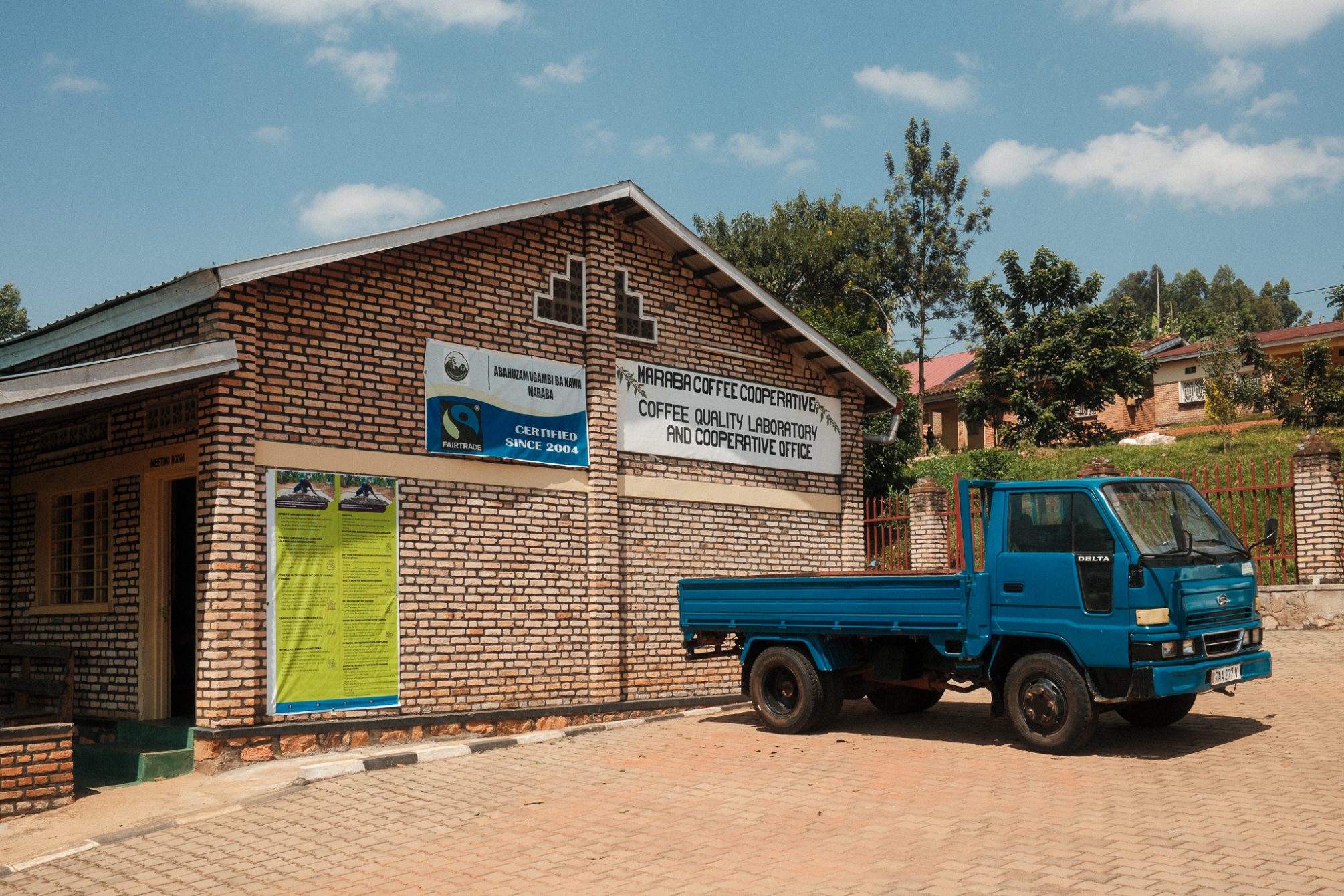
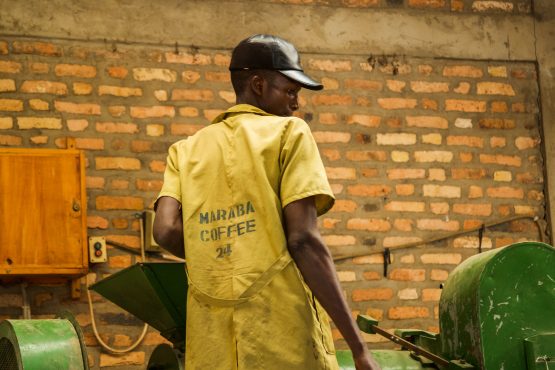
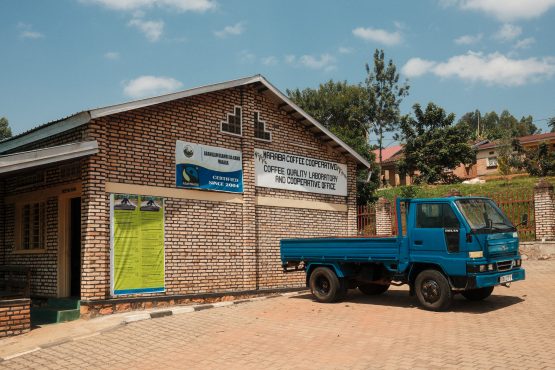
Established in 2008, Kibingo is the fourth (and final, for now) washing station built by the historic Abahuzamugambi Ba Kawa Maraba cooperative (or simply Maraba). Maraba were the first cooperative to build a washing station in Rwanda as the country recovered from the horrific genocide of 1994. Since then, they have been known as one of the country’s most forward-thinking, community-driven coffee co-ops. In recent years, Maraba have heavily promoted more environmentally sustainable farming amongst its members, with Kibingo serving as the preferred delivery site for farmers who follow organic practices.
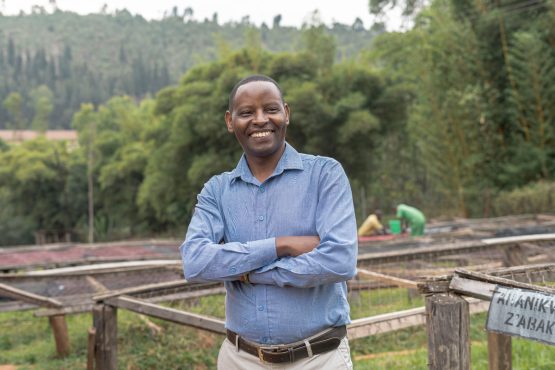
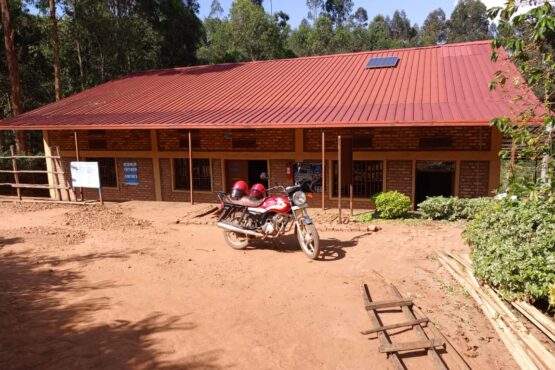
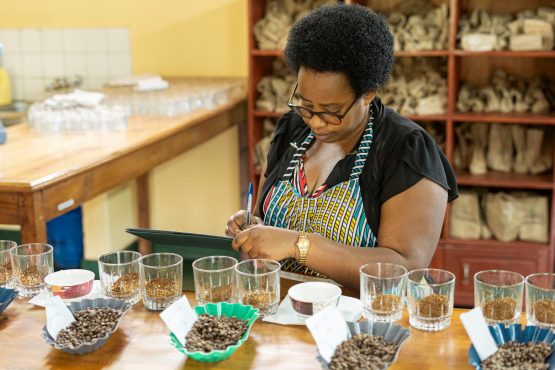
Kibingo washing station services nearly 200 members of the cooperative who deliver to the site and to other collection points in its vicinity. Day to day operations overseen by the station manager, Gedeon Dufitimana, while Christine Ilibagiza serves as Head of QC. Because Christine cups every one of the cooperative’s lots, she plays an important role in directing the year’s production, as she gives station managers instructions to follow, to ensure everything Maraba processes is clean, transparent and rich in sweetness.
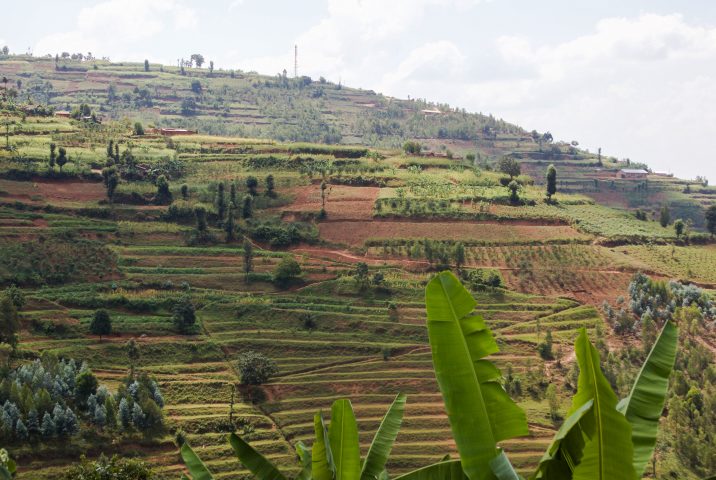
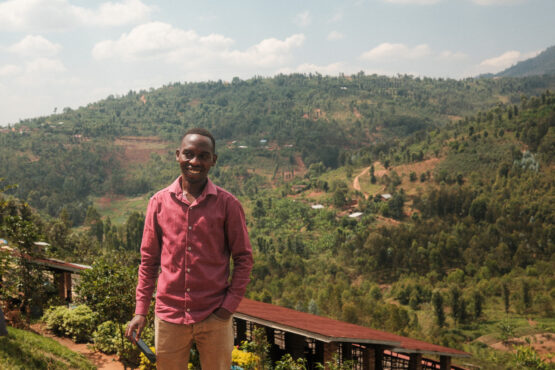
The area around Kibingo washing station has ideal growing conditions for exceptional coffee, with high elevations, good rainfall and steady, cool temperatures year-round. When driving through the region, colourful parcels of land growing all manner of food crops can be seen, as the soil here is incredibly fertile. Like most washing stations in Rwanda, Kibingo receives cherry from local farmers who tend to very small plots — often consisting of only a few hundred trees. These are then processed together as a mixed lot from multiple growers, and usually only separated as day lots (ie. cherries that were all picked on the same day).
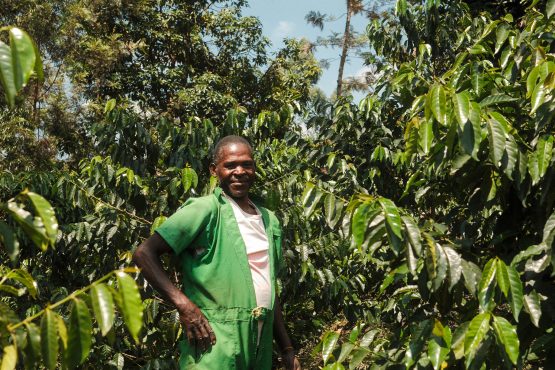
Along with support during the harvest, Maraba also provide year-round agronomy workshops to all their members.This initiative is spearheaded by the co-op’s enterprising Head Agronomist Jean Baptiste Minezero, who instructs community leaders on the best practices needed to grow high quality cherry. They then share their learnings with their neighbours and friends. By creating a chain of information, Maraba is able to reach a wider audience without requiring many resources. Jean, or Bati, as he is known to friends and colleagues, is a banana farmer and the son of a coffee grower who delivers to Cyarumbo, and his role is crucial to Maraba’s success. Because he is responsible for ensuring farmers’ volumes increase, he is across all of Maraba’s yearly production and is in constant communication with washing station managers throughout the harvest. Bati is also passionate about organic farming, and he has worked hard to ensure co-op members have access to the type of fertilisers and education needed to minimise the use of agrochemicals.
As part of their commitment to quality and sustainability, Maraba cooperative has invested in upgrading the cherry sorting equipment and a water treatment facilities at each of their washing stations. They have also built a warehouse that is easily accessed from each of their processing sites, where parchment is safely stored before being transported to Kigali for final stages of milling and preparation for export. The complex will also soon feature a roastery and café to host visitors.
Head here to learn more about the work of Maraba Cooperative.
PROCESSING AT KIBINGO WASHING STATION
The team at Kibingo Washing Station take a huge amount of care in sorting and processing their coffee. They own their own dry mill which enables them to control quality all the way through to export.
- Cherries are delivered to the washing station on the same day as they are picked and are inspected and sorted to ensure only the very ripest cherries are processed. They are then machine-sorted by density (and any floaters removed and returned to contributing farmer, to be sold at the local market) and pulped on the same day—always in the evening—using a mechanical pulper that divides the beans by weight (the heaviest usually being the best).
- After pulping, the coffee is fermented overnight for around 12–18 hours and checked regularly, to feel the stickiness of the remaining mucilage, as this determines when fermentation should stop. The beans are then washed with fresh water (sometimes up to five times) and moved to raised screens for ‘wet-sorting’ by hand.
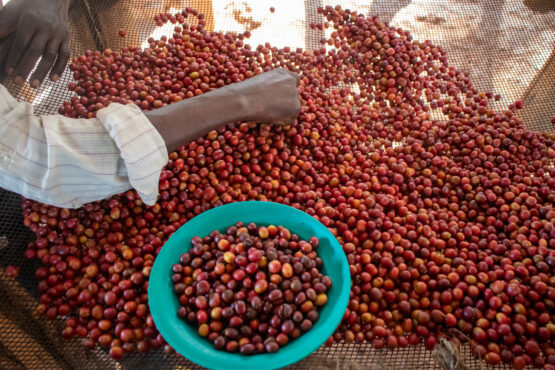
Upon delivery, cherries are sorted by hand to ensure only the ripest fruit gets processed. 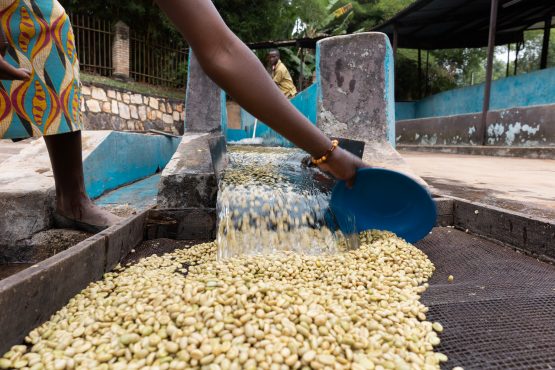
After being pulped and left to ferment in tank, the resulting parchment is washed with fresh water. - As with most washing stations in Rwanda, women do the majority of hand-sorting. This takes place in two stages—on the covered pre-drying tables and on the drying tables. Washed beans are moved from the wet fermentation tanks onto the pre-drying tables, where they are intensively sorted under shade for two days. The idea is that green (unripe) beans are still visible when they are damp, while the roofs over the tables protect the beans from the direct sunlight.
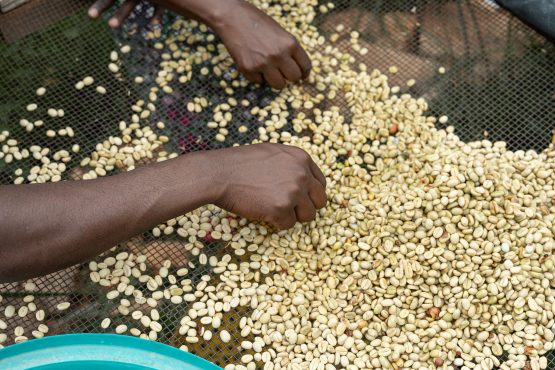
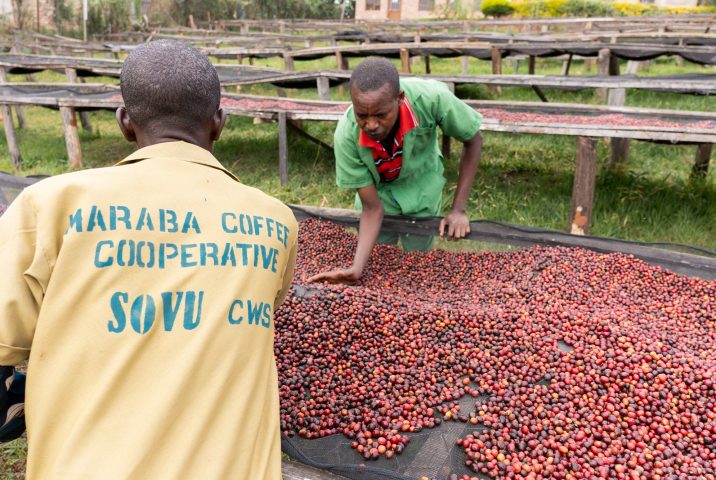
Once laid out to dry, coffee is sorted repeatedly, to remove any defective beans and ensure parchment dries evenly. 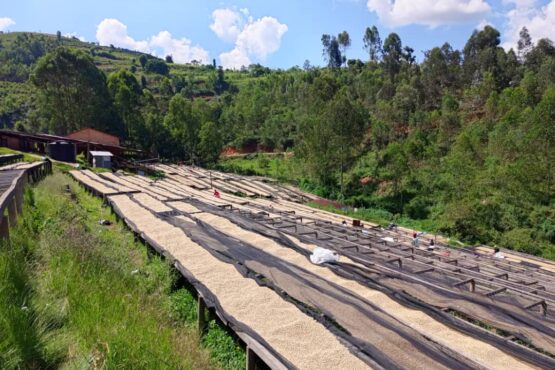
At Kibingo, coffee dries on raised beds in the sun.
- Next, the beans are moved onto the washing station’s extensive raised beds for between 14-21 days, where they are sorted again for defects and turned regularly and protected from rain and the midday sun by covers, ensuring both even drying and the removal of any damaged or defective beans. During this period, the coffee is also turned several times a day by hand to ensure the coffee dries evenly and consistently.
- After reaching 11% humidity, the coffee is stored in parchment and then when adequately rested it is carefully processed at the cooperative’s brand-new dry mill in Huye.
WHY WE LOVE IT
Coffees from Huye District are also characterised by heavy sweetness and juicy character, which this lot exhibits in spades, along with a silky mouthfeel, green apple and grape in the cup.