Nyakizu Anaerobic Natural
Intensely fruit-driven and expressive with pink lemonade acidity. Strawberry, plum wine and chocolate mousse.
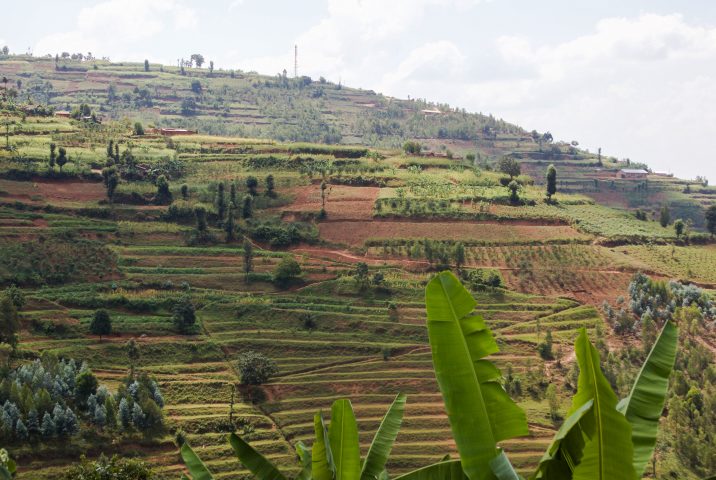
This special microlot was produced at the family-owned Nyakizu washing station, which services some 3,300 farmers in Rwanda’s fertile Southern Province. The washing station was built by Charles Kazunga in 2012, who also founded the family-run Nyakizu Coffee Ltd. which continues to own and operate the site. Nyakizu is located deep in Rwanda’s Southern province, close to the border with Burundi and the lush Nyungwe forest.
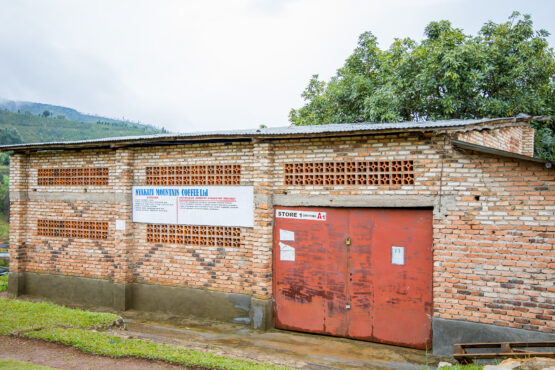
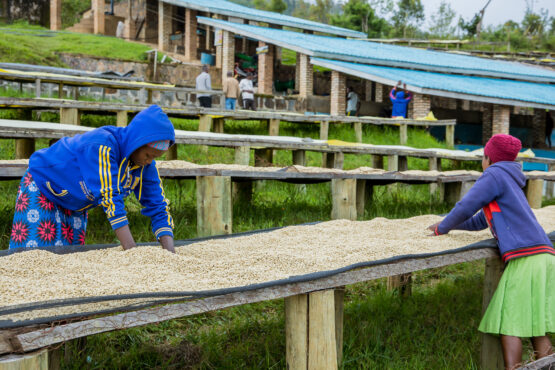
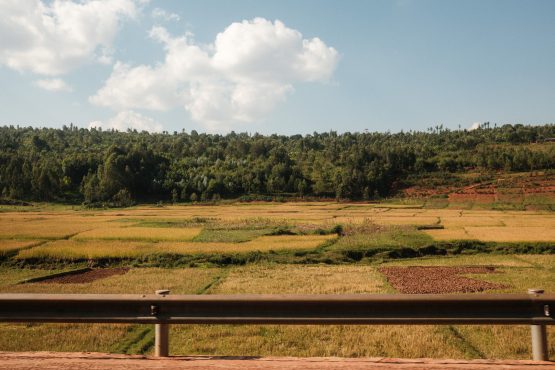
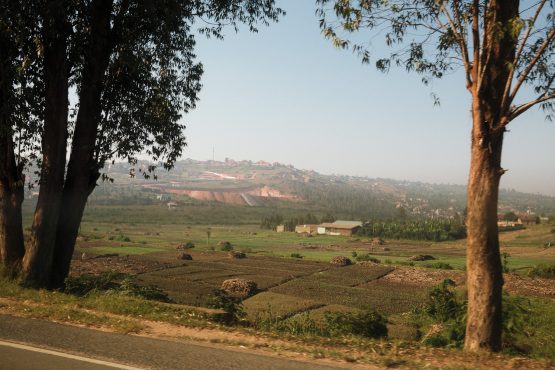
The area around Nyakizu washing station has ideal growing conditions for exceptional coffee, with high elevations, good rainfall and steady, cool temperatures year-round. When driving through the region, colourful parcels of land growing all manner of food crops can be seen, as the soil here is incredibly fertile. Like most washing stations in Rwanda, Nyakizu receives cherry from local farmers who tend to very small plots — often consisting of only a few hundred trees. These are then processed together as a mixed lot from multiple growers, and usually only separated as day lots (ie. cherries that were all picked on the same day).
We have access to Nyakizu’s coffees though supply partners Ikawa House, who have provided them with training in improved agricultural practices and processing techniques. Ikawa House was founded by Laetitia Mukandahiro and Uzziel Habimana, two of Rwanda’s most experienced coffee professionals. The exporting company’s primary goal is to elevate the quality of the country’s coffee, ensuring their producing partners can earn higher prices for their crop as a result.
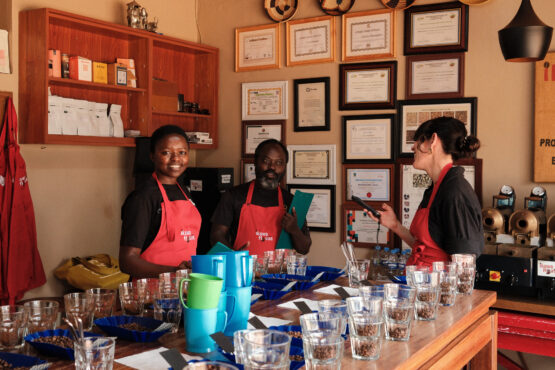
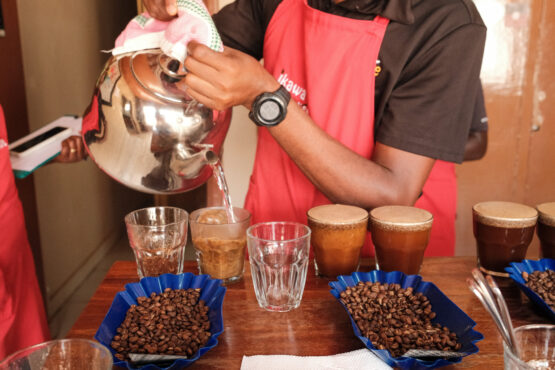
Head here to learn more about the work of Ikawa House.
ANAEROBIC NATURAL PROCESSING AT NYAKIZU WASHING STATION
The team at Nyakizu Washing Station follows Uzziel’s recommended practices, taking a huge amount of care in sorting and processing their coffee.
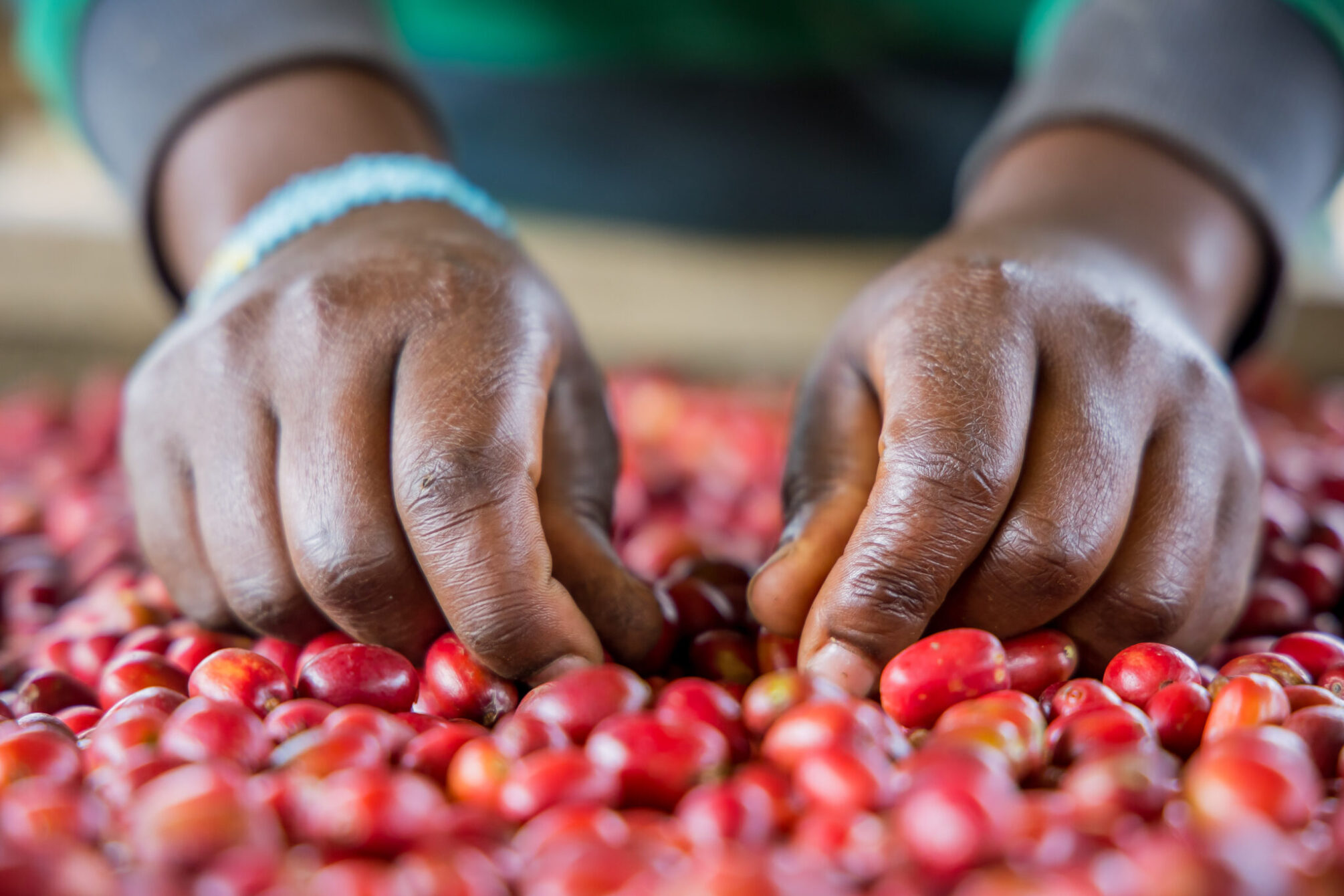
- Cherries are delivered to the washing station on the same day as they are picked and are inspected and sorted to ensure only the very ripest cherries are processed.
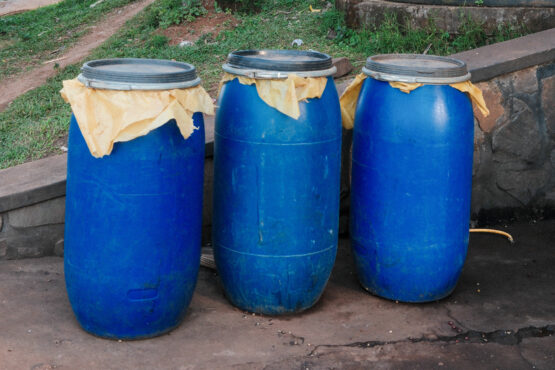
- After sorting, coffee cherries are placed in oxygen-deprived tanks and hermetically sealed.
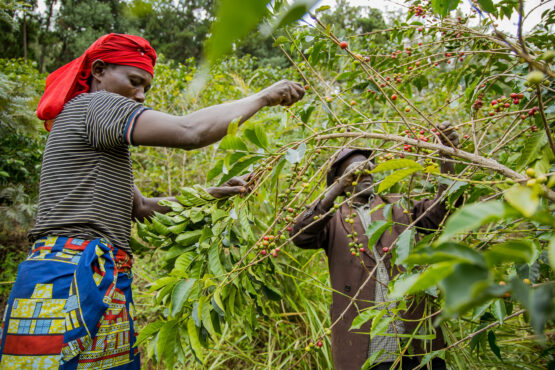
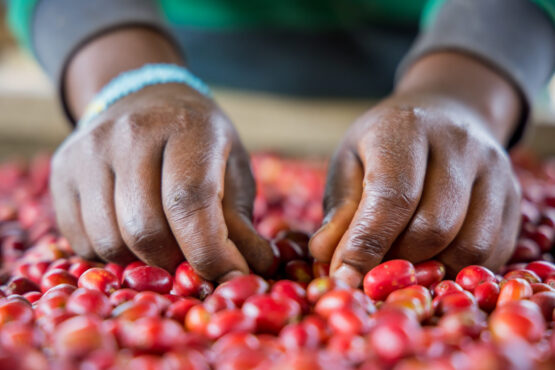
- The coffee ferments for a period of 84 to 96 hours, depending on the weather, allowing for microorganisms present in and on the cherries to break down sugars and mucilage into complex metabolites, enhancing the acidity, body and overall flavour profile of the coffee. Uzziel recommends this step be done under cover when the ambient temperature is unstable.
- Once the desired level of fermentation is achieved, when the pH of the tank is around 4.23, cherries are removed and laid out to dry in the sun for between 35-45 days, depending on weather conditions.
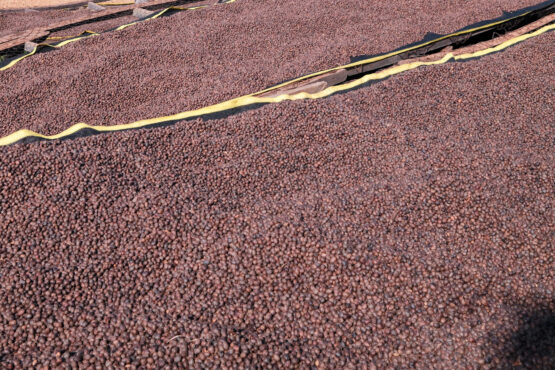
- Initially, Uzziel prefers for coffee to dry directly in the sun for a week, then he reduces the sun exposure to only four hours a day to avoid over-fermented flavours to develop.
- As coffee dries, it is sorted again for defects, turned regularly and protected from rain and the midday sun by covers, ensuring both even drying and the removal of any damaged or defective beans. During this period the coffee is also turned several times a day by hand to ensure the coffee dries evenly and consistently.
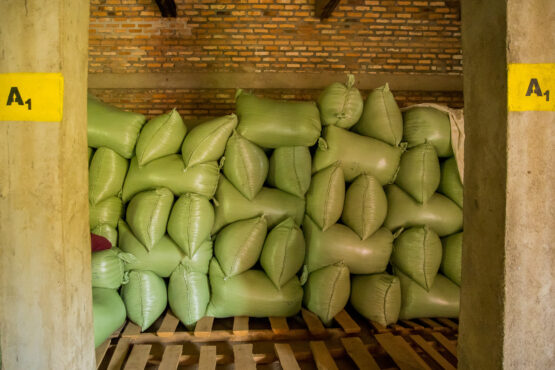
- After reaching their target humidity readings, the coffee is prepared for export.
WHY WE LOVE IT
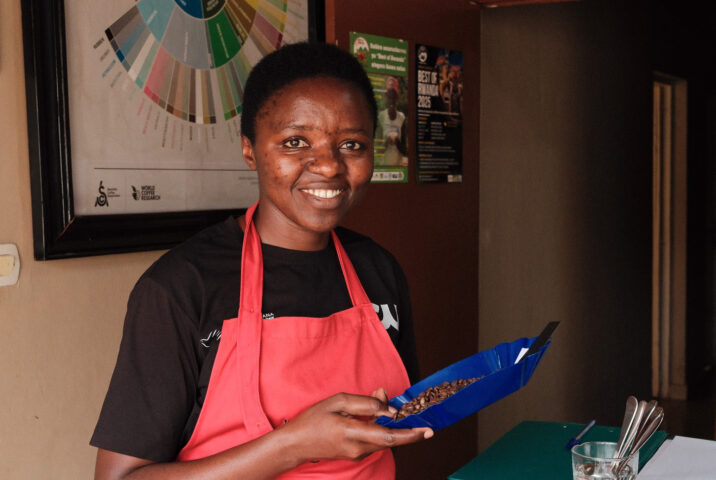
This is our first year working with Ikawa House and Nyakizu washing station coffees — we’re thrilled to introduce their work to our roasting partners. This lot jumped out at us on the cupping table, thanks to its intensely fruit-driven and expressive character, pink lemonade acidity and notes of fresh berries and chocolate mousse.