Ikawa House
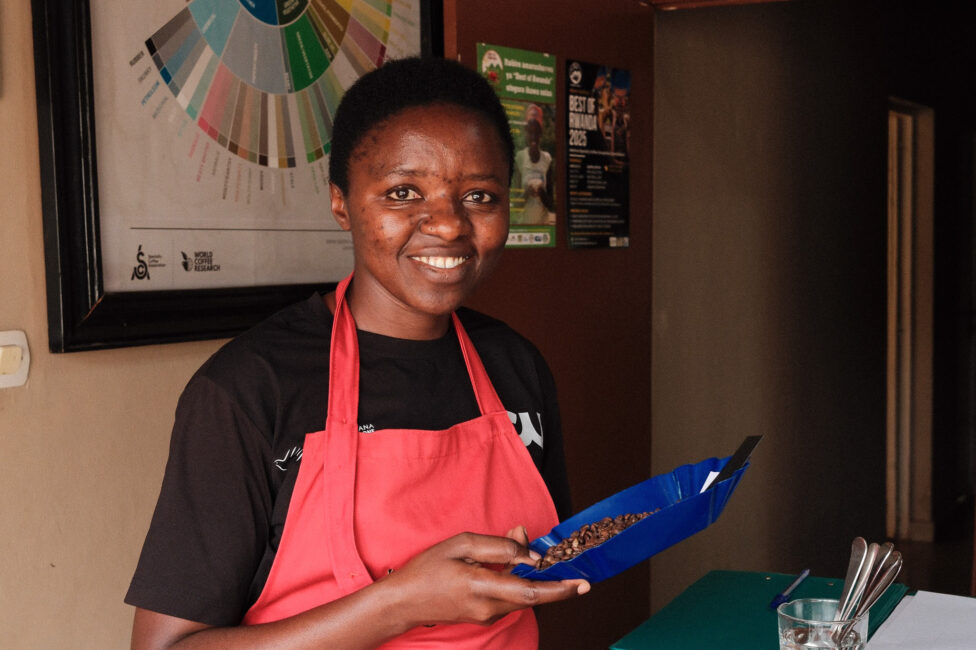
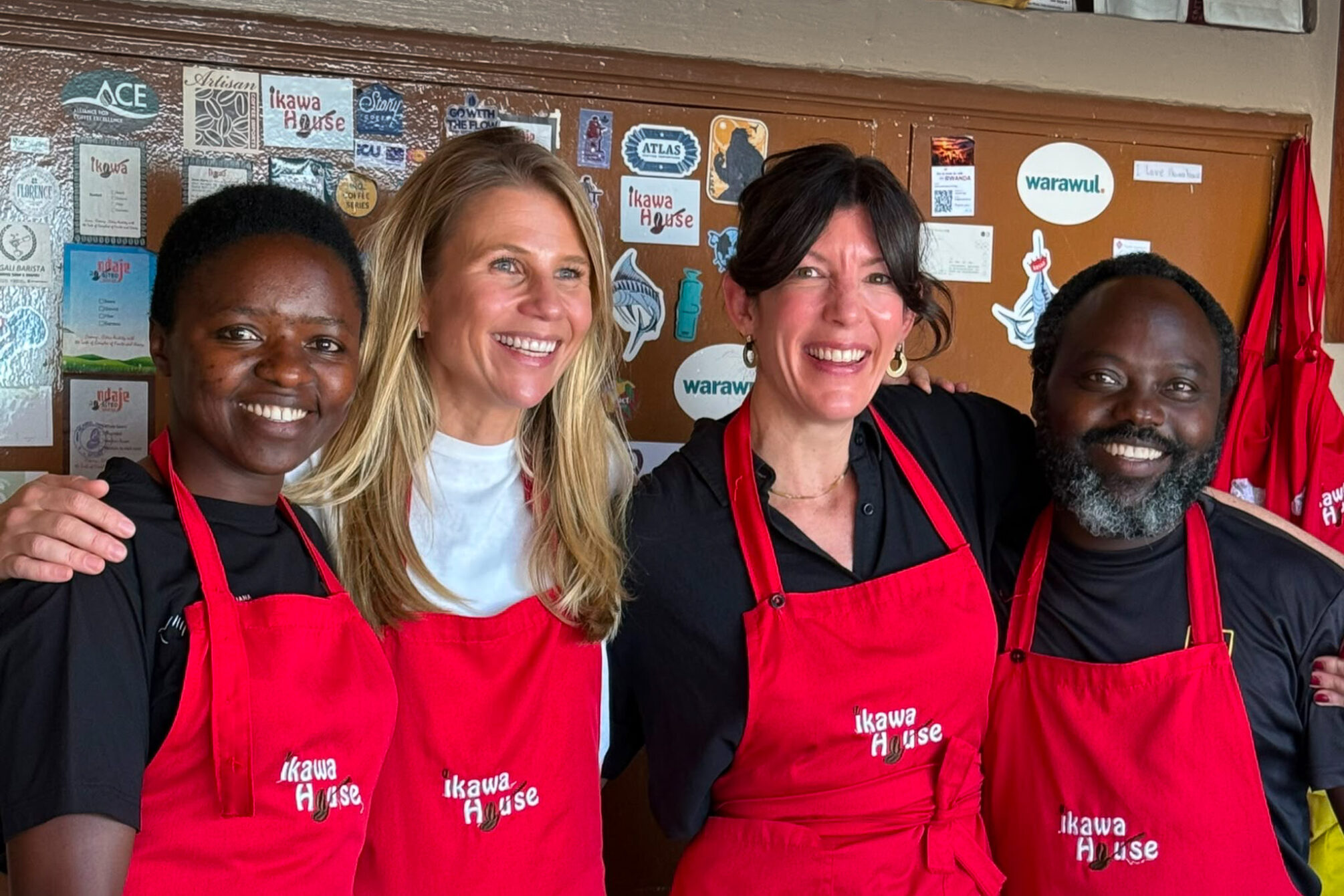
Founded by Laetitia Mukandahiro and Uzziel Habimana, Ikawa House are coffee producers, consultants and exporters. As two of Rwanda’s most experienced coffee professionals, Laetitia and Uzziel established the company with the goal of elevating the quality of the country’s coffee and propelling the local specialty industry forward.
Published 18 Sep 2026
By the time Laetitia and Uzziel founded Ikawa House in 2019, they had already become household names in Rwanda’s coffee sector. The pair were part of the first young professionals to be trained as cuppers in 2004, when the country’s specialty industry was established through USAID programs PEARL and SPREAD. During the training workshops, it became evident they had exceptional palates, a special talent for identifying a coffee’s attributes, and a desire to learn how the flavours they perceived were developed.
Having earned some of the highest scores in their training program, Laetitia and Uzziel continued their careers by working for the likes of local exporter RWASHOSCCO and multinational trader VolCafe, focusing on processing, quality assessment and procurement. We first met the pair during these years, sharing cupping tables together and having conversations about the country’s coffee industry and its future. By rubbing shoulders with coffee buyers from all over the world, Laetitia and Uzziel developed a keen sense for what the international market was looking for, and by working with producers from Rwanda’s various coffee regions, they realised the potential to meet those needs was achievable. Uzziel’s cherry fermentation and processing developments are examples of this, as he spoke about its potential for years before bringing his ideas to life in practice.
After spending 15 years working for local cooperatives, coffee businesses and exporters, Laetitia and Uzziel drew from their intimate knowledge of the local industry and years of expertise to found Ikawa House. Initially, the company worked as a consulting agency, partnering with Rwandan producers who wanted to better their cup scores to earn higher prices for their crop. While Uzziel focused on teaching improved processing practices (including experimental anaerobic and natural lots), Laetitia taught producers how these techniques affected quality on the cupping table.
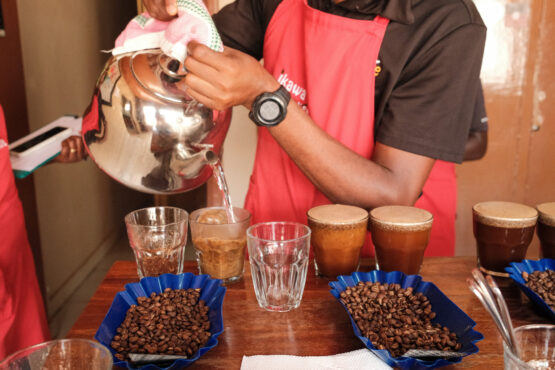
On their first harvest, producers realised their coffees were receiving much higher cup scores than expected — in some instances, going from the low 80s to 87s and 88s. Seeing the opportunity this provided, they went back to Laetitia and Uzziel, who had built strong relationships with international buyers in the US, Canada and Europe, and asked them to offer them coffees on their behalf. As Laetitia told us, “That’s when our second business idea came…” and soon Ikawa House also became an exporting company.
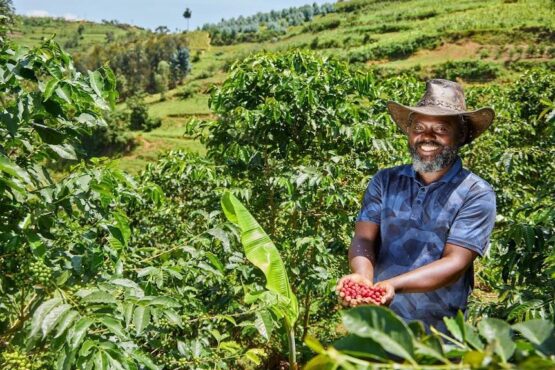
With such impressive results, Laetitia and Uzziel decided to plant their own farm and build a wet mill in Rwanda’s Western Province, to use as a model plot and to train more producers to improve the quality of their coffee through processing. Initially, Ruronzi farm was planted with 4,000 coffee trees — but once buyers tasted its production, demand quickly increased. Today, the farm includes 18,000 trees (with the goal of reaching 25,000), mostly of the Red Bourbon variety, but also including others like Mibirizi, Batian and Gesha.
All processing is overseen by Uzziel, who has received training from fellow Costa Rican and Colombian producers (along with taking a trip to Colombian farms in Huila and Caldas) in coffee fermentation practices. What sets Uzziel’s style apart is his implementation of archaic techniques he learned in Rwanda, from his parents and grandparents who would ferment fruits, milk and sorghum beer. Because, as he told us, he “doesn’t want his coffee to get funky,” Uzziel carefully controls how his lots ferment, by logging the number of hours spent and insulating his fermentation tanks from direct sunlight — hoping to only highlight the complex and distinct flavour profile resulting from Rwanda’s terroir.
The results of their work aren’t only evident on the cupping table, as their business and the number of producers interested in working with them has skyrocketed. The duo and their team are careful with how they manage the growth, because as Laetitia explained, “The coffee industry is not a straight line; it has ups and downs. It also depends on climate change, staff, productivity, competition… That’s why we’re always vigilant, especially with quality.”
Understanding that everyone benefits from improved quality and the increased prices it commands, Laetitia and Uzziel have set up a business model that safeguards and promotes it. Producers interested in working with Ikawa House must agree to follow their processing advice to a tee. Uzziel visits their partners regularly, to ensure everyone has the necessary tools and knowledge to accomplish this. In return, Ikawa House work hard at ensuring their partners receive the best prices they can, with full transparency and traceability made available to both buyers and sellers.
Over the last couple of years, as Rwanda’s coffee consumption has grown, Ikawa House have also expanded to include a roasting operation to supply quality-focused cafes, hotels and offices. They also offer classes for baristas and coffee enthusiasts to improve their brewing, roasting and cupping skills, with the hopes that it will continue bolstering the local specialty industry and strengthening the country’s professionals. This commitment to elevating what Rwanda is capable of producing is part of why we’re so delighted to invest in a new sourcing relationship with Ikawa House, and are excited to see how far they can go!