San Patricio El Limón Pacamara
Layered and complex with silky mouthfeel. Lime sorbet, pineapple and milk chocolate.
This exceptional Pacamara microlot was grown and processed by the Reyes family, on their stunning 60 hectare farm, San Patricio El Limón. The estate is located near the small town of Palencia, about an hour’s drive east of Guatemala City. The area’s high elevations, volcanic soil and rich, fertile landscape make for exceptional coffee production.
First established in 1997, San Patricio’s management is a family affair, with three generations of the Reyes family currently overseeing different areas of the business. San Patricio El Limón is led by Guadalupe Alberto Reyes Aguilar, who established the farm with a focus on producing exceptional, high quality coffees with practices that are socially and environmentally sustainable. Since exporting their first specialty-grade lots in 2011, the family have expanded their offerings by planting numerous varieties — from Caturra and Bourbon, to rarer ones like Gesha, SL 28 and Pacamara.
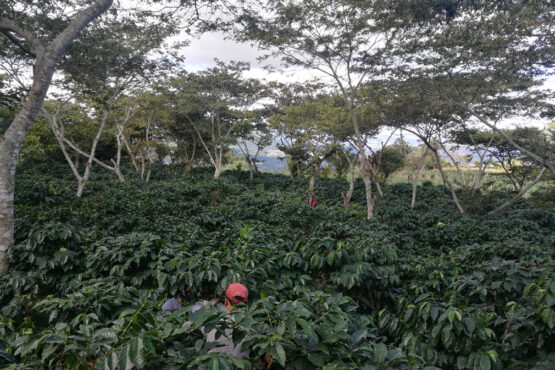
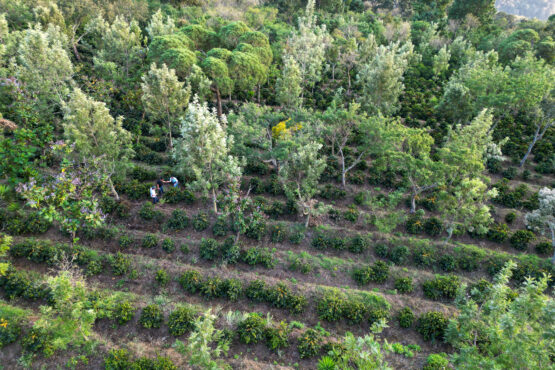
San Patricio sits at about 1,600 meters above sea level and has been terraced to prevent erosion. Soil analysis undertaken by the Aguilar family provides invaluable data for the cultivation of the crop. Coffee is grown in harmony with the surrounding native pine forest, which provides natural shade cover and supports a diverse eco-system of local flora and fauna. To avoid using damaging herbicides, weeding is done manually and pest control is limited to only twice a year. The team have also built eight water reserves on the farm to use during the dry season and established a treatment plant for the wet mill’s wastewater.
Guadalupe Alberto (who is affectionately known as ‘Beto’) is a man of the people and respected citizen of Palencia. He has been elected as mayor of Palencia five times since 2004, as he’s been recognised for the tirelessly supporting and elevating his local community. A carpenter by trade, Don Beto first entered the world of politics after joining a group of neighbours who campaigned for the building of a primary school in Palencia. Now, Don Beto applies that same passion and energy to advancing practices on the farm, applying great care and attention in the harvesting and processing of his crop.
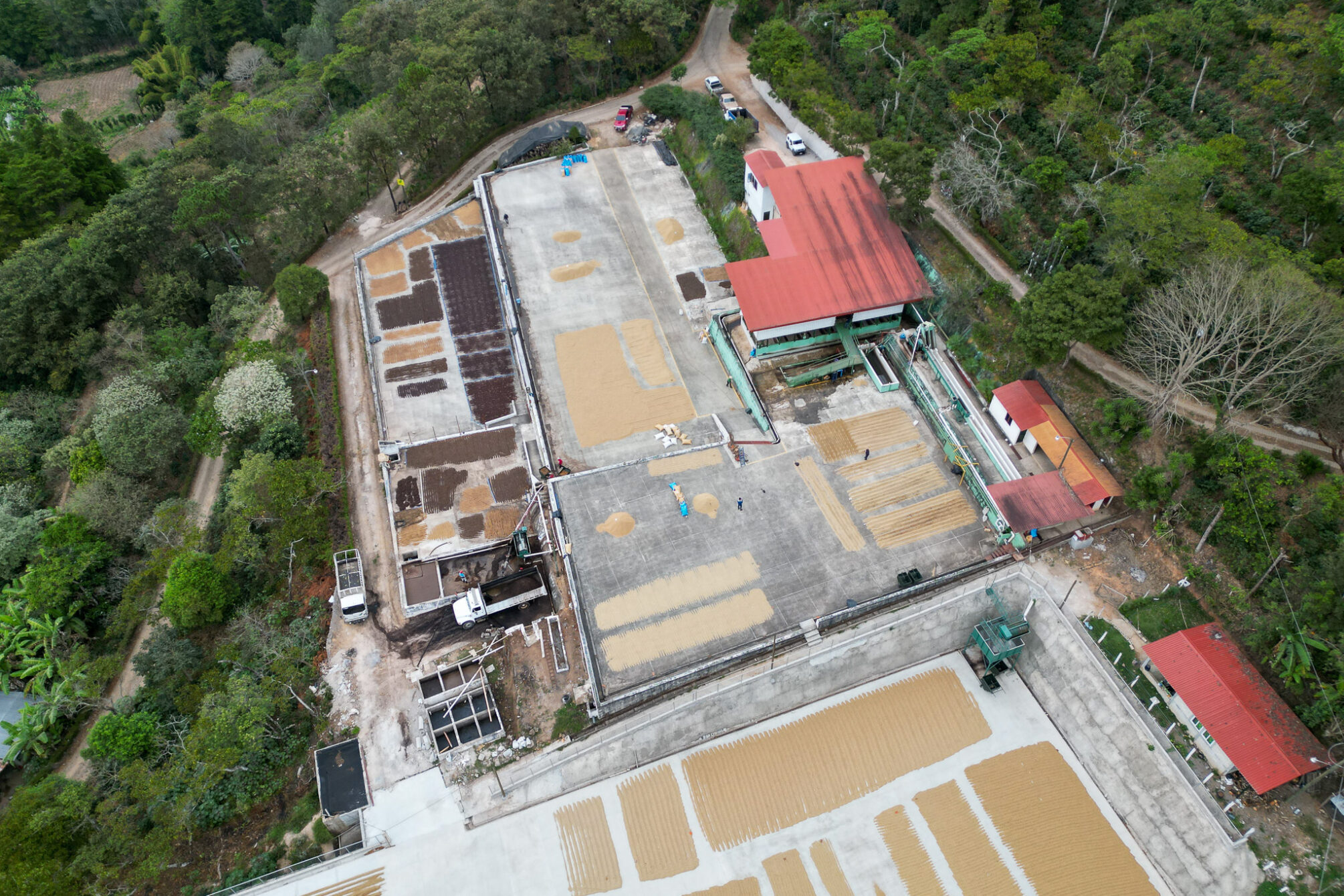
At San Patricio, Don Beto has built a new wet mill onsite, which allows greater capacity for selecting and separating lots into a single day’s harvest, or into single variety lots. It also gives San Patricio’s team greater control over the coffee’s final quality. To do so, the Reyes family has invested in state-of-the-art equipment to process the coffees, including imported flotation tanks and pulping machines.
ABOUT PALENCIA
Located some 28 kilometres east of Guatemala City, Palencia is an exciting, up-and-coming coffee region. While it hasn’t yet been formally recognised by Anacafe, Palencia’s fertile soil, mountainous terrain and cool climate point to its great potential for quality — as this lot clearly exhibits. Its relative proximity to Guatemala City also makes it attractive to prospective farmers who do not want to move to rural Guatemala.

Palencia, and the region surrounding Guatemala City, is the traditional land of the Kaqchikel people, who were one of Guatemala’s largest Mayan kingdoms. Their ancient capital, Iximché, is located some 50km west of the Guatemalan capital, and was considered one of the country’s most important cities before the Spanish invasion of the country. The Kaqchikel are remarkable historians, and their oral and written traditions (compiled in The Annals of the Kaqchikel) have been an important resource in preserving the cultural heritage of many of Guatemala’s indigenous communities.
HOW THIS COFFEE WAS PROCESSED
The harvest in Palencia typically runs from December through to April. Cherries are selectively hand harvested over many weeks and sorted again by hand and by water before processing to remove any underripe or damaged fruit.

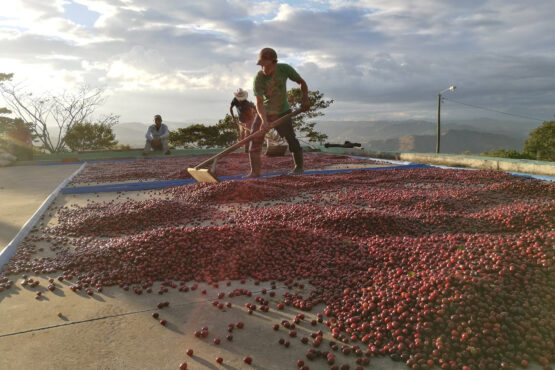
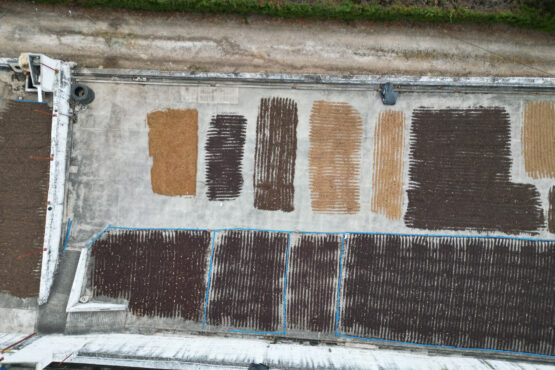
Cherries are then washed with cool, fresh water before being transferred to dry on a combination of patios and raised beds, depending on weather and capacity. Once it has reached its optimal moisture content, it is bagged and placed in the farm’s warehouse to rest before being prepared for export. The cool and dry conditions are ideal for preserving the quality of the parchment, ahead of being hulled and prepared for export.