Calahute Maragogype
Distinct and floral with winey mouthfeel. Apricot, strawberry and dark chocolate.
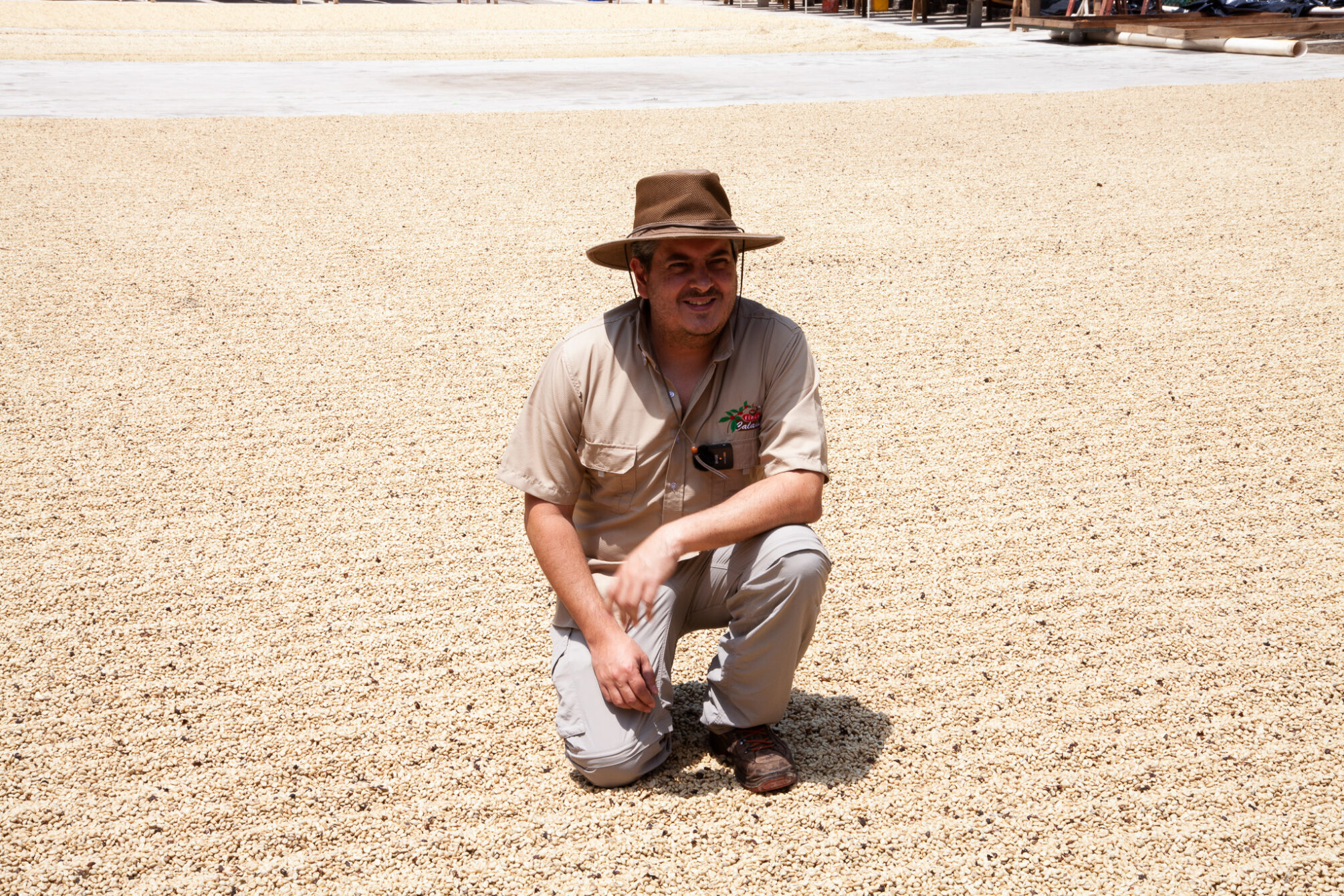
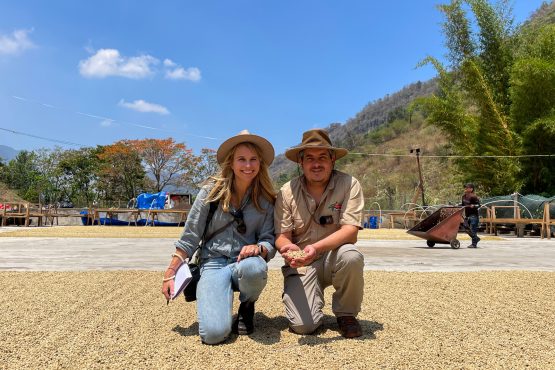
This 100% Maragogype microlot comes from Calahute, a farm owned by the Anzueto family, who first planted the property with coffee in 1952. Today, it is managed by third-generation coffee producer Alfonso Anzueto, who inherited the farm from his father and shifted production towards specialty coffee. Since doing so, Alfonso has carefully observed and become an active participant in every aspect of his farm — from the seedlings selected for the nursery, to the dry milling of his crop. As he told us on a recent call, “I believe being so involved with the coffees has helped me understand my customers’ needs better, so I can work harder at strengthening every step in the process. I want Calahute to run as well as a Rolex!”
Calahute (which translates to “Free Deer”) is located in Huehuetenango, a stunning region located in the west of Guatemala near the border of Mexico. To reach the estate, a steep road ascends the side of El Tapón Mountain in Huehuetenango and eventually rises to the town of San Pedro Necta. The verdant hills surrounding the town centre are home to many independent farmers, who grow coffee as their primary source of income.
The estate is relatively large for this region (most of the producers in San Pedro Necta have very small farms), with 210 hectares (out of a total 226) dedicated to coffee. While this lot is made up of Bourbon, a number of other varieties are grown on the estate, including Caturra, Catuai, Pacamara, Tekisik, Typica — and more recently, rare varieties like Sidra and Parainema have been introduced. Alfonso has also planted what he calls “an Ethiopian heirloom plot,” made up of various Ethiopian varieties he has gathered over the years that are grown with minimal management, “to see which ones thrive,” he explains.
Because the estate is over 50 years old and quite large, Alfonso and his team are still uncovering treasures on a regular basis. One of their most recent discoveries was a pair of old Pacamara trees, that looked different to the ones they had recently planted at a different plot. They’ve now decided to reproduce and proagate these trees because of their excellent cup quality and great adaptability to Calahute’s soil.
It was Alfonso’s father (Alfonso Sr.) who first planted Maragogype at Calahute some 30 years ago. The variety is a natural mutation of Typica first discovered in Bahia, Brazil in 1870. It is notorious for its large size and distinct, vibrant flavour profile. When we asked Alfonso about the variety, he told us he was, “grateful to get the chance to showcase a different variety” with Australia’s coffee community. “It is one of our oldest plots,” he went on, “my dad was one of the first to bring Maragogype to HueHue, he got it directly from El Salvador,” a country that specialised in its production after spending 30 years developing the Pacamara variety. “Our Maragogype was in the lot that placed us in 2018’s Cup of Excellence,” he told us when we asked him what he would tell Australian coffee drinkers enjoying it for the first time. “It’s very good seed quality; one just has to find the right way to roast it, because it is a large bean, but once you do your customers will love it!”
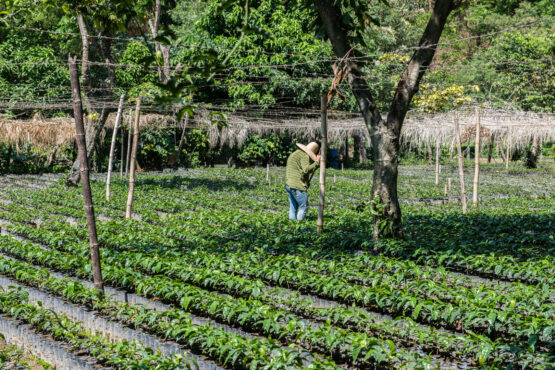
Calahute sits at an elevation of 1,300–1,500m above sea level, with an average temperature of 18-25°C, and an annual rainfall of 1,300–1,800mm. The coffee grows under a dense and very lush canopy of native shade trees which protect the coffee plantation from the sun and provide valuable organic material, keeping the soil moist and well-nourished. Unlike many other larger estates in Guatemala, Alfonso does not prune these shade trees, recognising the value they bring to the farm’s biodiversity and the overall health of the coffee trees.
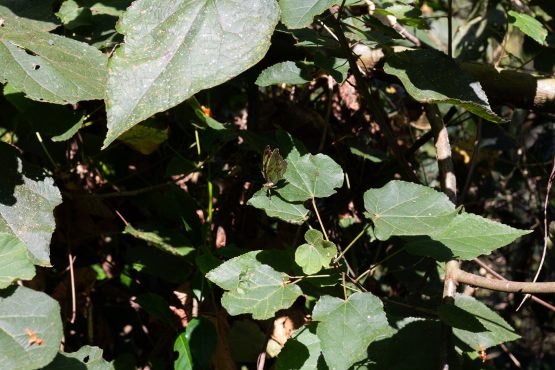
We have seen this firsthand on visits to Calahute; the plantation is lush and fertile and we have never seen so many butterflies floating around a coffee farm! To help further enhance this diverse ecosystem, Alfonso has dedicated three plots within the farm to bees, and built 100 boxes for them. The result of these initiatives is very positive, because less chemicals are needed on the farm, a safe habitat has been created for animals and plants to thrive in, and the quality and consistency of the resulting coffees have only improved. “In this industry, when one does things with passion, coffee thanks you back and work becomes more enjoyable.”

Like many of HueHue’s farmers, Alfonso has been dealing with staff shortages due to immigration in recent years. To manage this, he has made the decision to diversify his crop and increasing its value, while decreasing the total amount of coffee he produces. His success has perked up the interest of neighbours who have offered to sell him their land, even though Alfonso has no interest in taking on an expansion. After all, he’s an incredibly busy man — when he’s not at Calahute, he’s roasting coffee for the small café he runs with his family, “Cafe de Don Alfonso.” Named after his father, Alfonso Sr., the shop has quickly become a favourite amongst locals. For Alfonso, the café is the perfect avenue to celebrate coffee from Calahute, and hone in on his roasting skills.
ABOUT HUEHUETENANGO
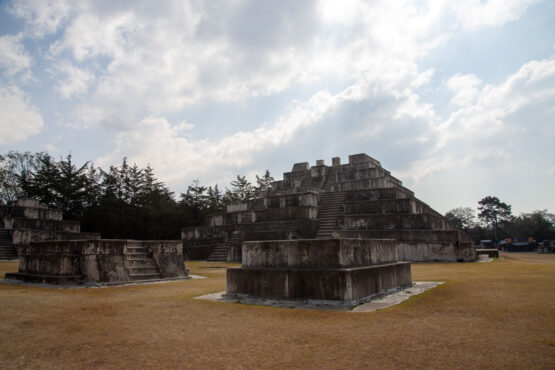
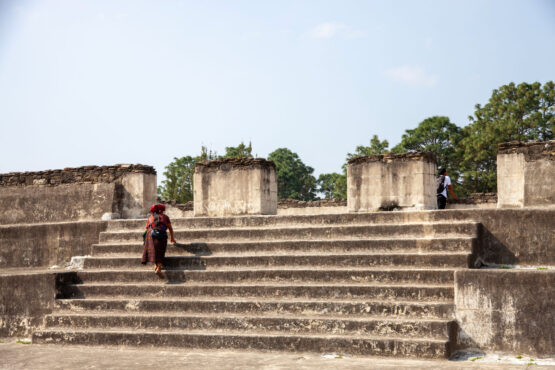
Huehuetenango (or HueHue as it is often called) is a stunning region located in the west of Guatemala near the border with Mexico. HueHue is known for being home to the Cuchumatanes mountain range, the highest non-volcanic mountain range in Central America, and for its vast ethnic diversity, which includes the Mam, Q’anjob’al, Chun and Jakalteko people. Before the Spanish invasion, the region was known as Xinabajul, which translates to “between ravines” in the local Mam language and is a reference to the numerous cliffs and steep hills found throughout the department. Pre-colonisation, the region’s largest city was Zaculeu (found in the outskirts of modern Huehue City), which translates to “white earth,” and whose ruins can still be visited today.
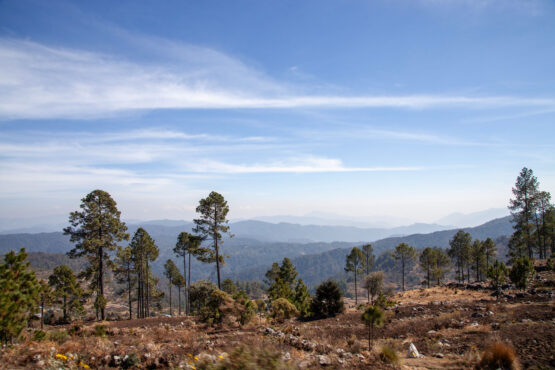
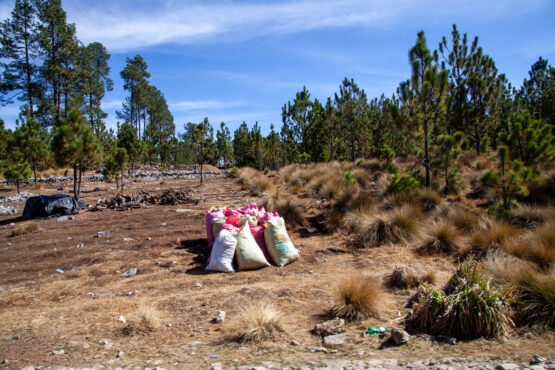
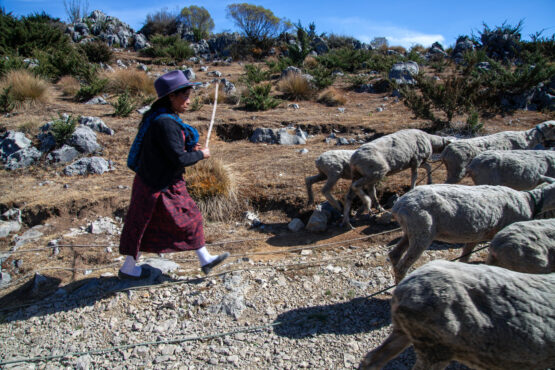
The department is vast, and includes a number of types of terrain that are suited to different forms of agriculture, depending on the elevation. Corn is the main staple of the lower regions, which transitions into coffee the further up one goes, with local pine farmed throughout the entire department. Huehue’s coffee-growing regions produce some of the most complex and celebrated lots in the country, and the region frequently appear in the top ten of the Cup of Excellence competition. This is in part due to the incredibly high elevations that coffee can grow (up to 2,000m above sea level), thanks to the dry, hot winds that blow into the mountains from Mexico’s Tehuantepec plain and protect the region from frost. These high elevations combined with a relatively predictable climate make for exceptional quality coffee. Areas in HueHue above 2,100m above sea level are quite dry and rocky, so most farmers dedicate themselves to growing potatoes and herding sheep, goats and llamas.
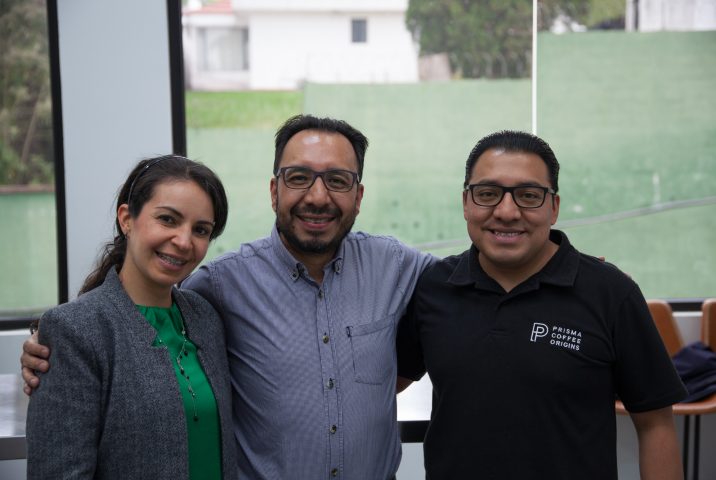
This exceptional lot was sourced with the help of export partner Eduardo Ambrocio and the team at Prisma Coffee Origins. Eduardo, who is also a Head Judge for Cup of Excellence, is one of the best cuppers we know — and through his work in Guatemala, we are connected to several quality-focused producers, who grow coffee at a small to medium scale. Head here to learn more about Eduardo’s work in Guatemala.
HOW THIS COFFEE WAS PROCESSED
Harvest time at Calahute begins in December and concludes at the end of April. Around 120 people from the surrounding villages are employed during this time, which helps sustain the local economy. These seasonal workers are trained in best-picking techniques and select only the perfectly ripe cherries. All operations at the farm are overseen by Alfonso and his manager Víctor Martínez, who has worked with the Anzueto family for many years.

This coffee was processed using the washed method at the family’s wet mill, which was built on the farm in 1958. Choosing to do so is neither cheap nor easy, but it gives Alfonso greater control over the quality of his coffee. “It’s not the same for me to send my coffee to another beneficio instead of doing the work myself,” he explained of the decision. “I have very high expectations of our quality and trust the team that works with me greatly.”
At the end of the day, each worker delivers their carefully selected coffees to the mill, where they are hand-sorted before being weighed, pulped and fermented for 24–36 hours. The beans are then washed, graded by weight in long channels, and carefully dried on patios for 7 -12 days. Because Alfonso realises the final days of drying are crucial to the long-term quality of the coffee, once it is close to its 11% target, the coffee is covered from direct sunlight at noon and only dried in patio once the sun begins to set in order to lengthen the drying process. Recently, Alfonso has also been dry milling his own coffee, giving him and his team complete oversight of their production.


WHY WE LOVE IT
Calahute is one of the healthiest, most biodiverse farms we have ever visited in HueHue. Alfonso’s long-term dream is to become recognised as a quality-focused leader in the San Pedro Necta region —which is why he is happy to share seedlings and advice with fellow producers and celebrate the local coffee offerings through his roastery and cafe.