Mbilima Organic Peaberry
Lemon, apple and plum with brown sugar sweetness and honeysuckle florals.
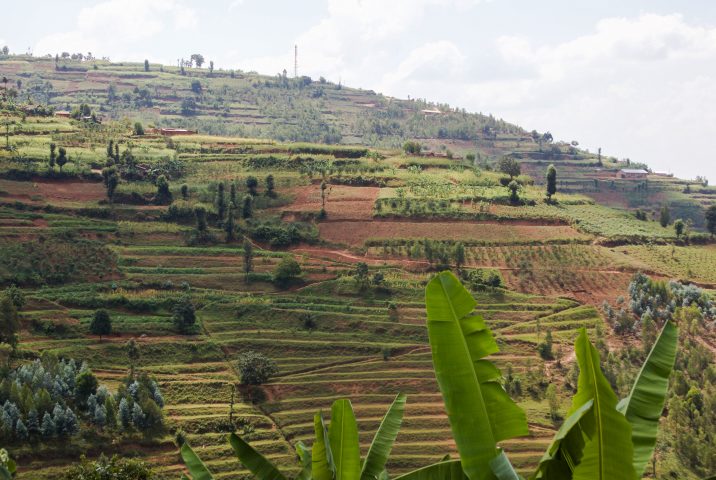
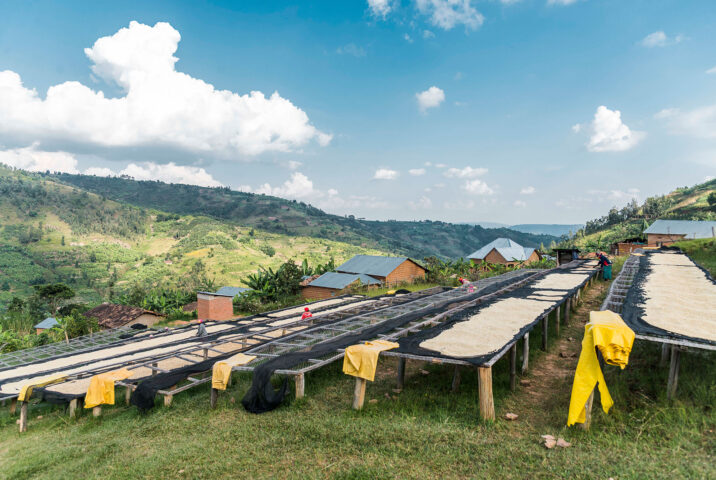
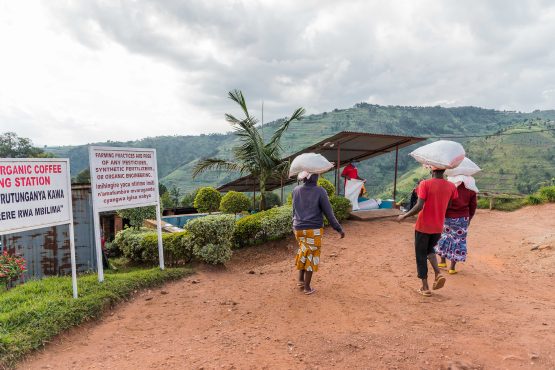
This special coffee was processed at Dukunde Kawa Cooperative’s highest washing station, the beautiful Mbilima, which sits at a staggering 2,070 metres above sea level. It was produced using coffee cherry from 65 smallholder farmers who follow organic practices.
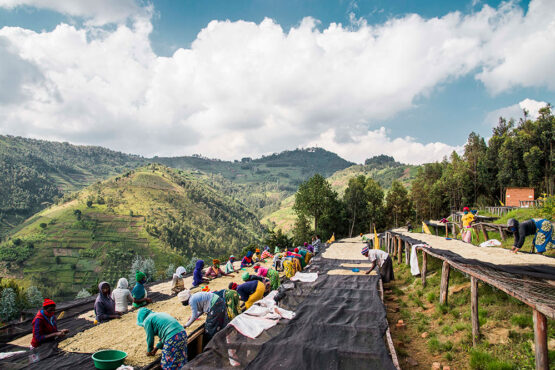
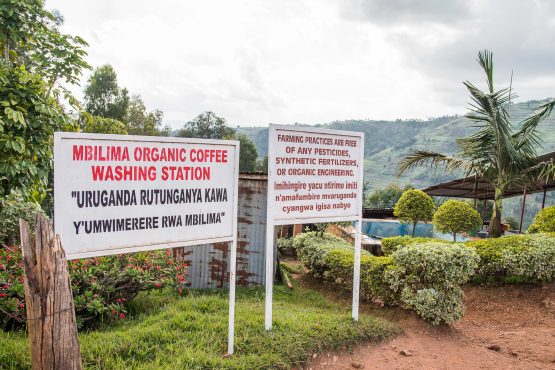
Unlike most coffee-producing countries, where land size is used as a measure of scale, farms in Rwanda are often very small, and production capability is determined by the number of trees a farmer tends to. The majority of producers who contribute to the Mbilima washing station own a couple of hundred trees, planted on one tenth of a hectare of land, along with subsistence food crops like maize, beans and sorghum and livestock like cows, goats and chickens.
This is a peaberry lot, which refers to the size and shape of the beans. Normally coffee seeds develop as a pair with flattened facing sides, but sometimes just one seed develops and forms an oval shape to occupy the entire space within the coffee cherry. This is called a peaberry and these small and round coffee beans are carefully selected and separated out from the rest of the crop during the milling stages. These are little beans with a big flavour! We purchased our first micro-lot of Rwandan peaberries in 2017 and have been consistently impressed with these lots ever since.
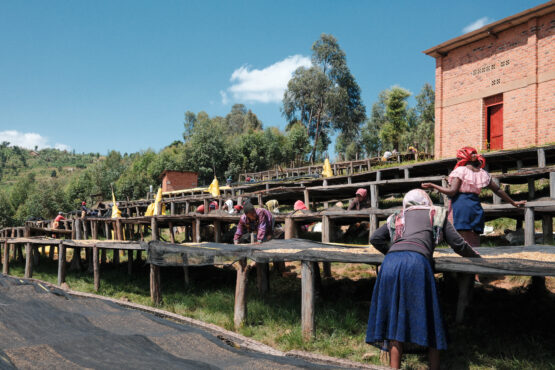
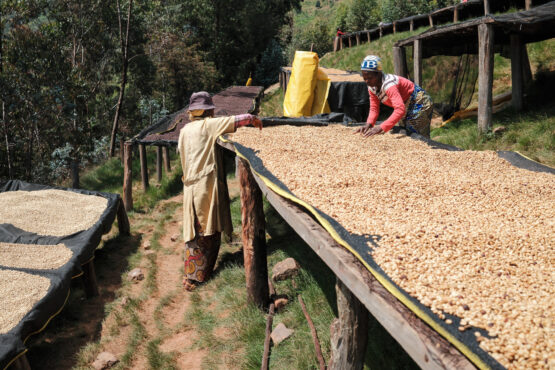
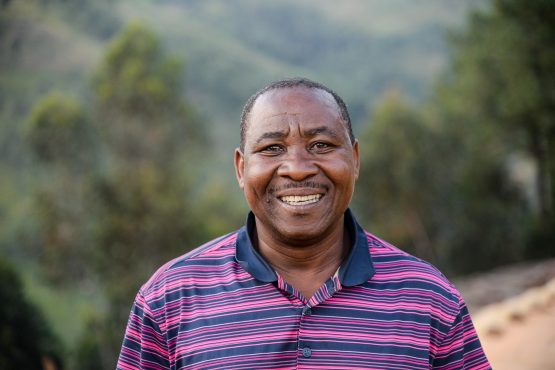
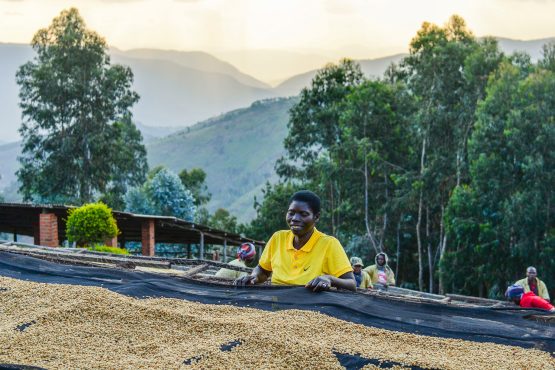
Mbilima was built in 2005 with the profits earned from the cooperative’s first washing station, Ruli. By Rwandan standards, Mbilima is a fairly small washing station, yet they always produce exceptional coffee thanks to their dedicated team (which is mostly made up of women). Day-to-day operations at Mbilima are overseen by Jean Bosco Habimana, who began working at the site when it was being constructed in 2004 and has been the washing station’s manager since 2012, while QC is headed by Agnes Mushimiyimana.
Mbilima washing station is 100% organic, Rainforest Alliance certified, UTZ certified, and Fair Trade certified. Jean Bosco explained that becoming certified was extremely useful in formalising and documenting a lot of things that the cooperative was already doing. “It helped us to better the lives of our producers and quality of our coffee. It’ was a lot of work to get the certifications,” he explained, “but it also made us realise how many positive things we were already doing. The certifications reinforce this.” Because all lots processed at Mbilima are organic, they are dry milled and stored separately.
While the site received organic certification in 2018, the lengthy process began in 2015. Dukunde Kawa wanted to operate one of their washing stations using organic practices and, after consulting with local farmers, they decided on Mbilima. The transition required a lot of work and created challenges for farmers, who initially experienced decreased yields after they stopped using synthetic fertilisers. After a couple of years, however, they began to realise that while volumes stayed the same, their trees were significantly healthier after the harvest (whereas under synthetic fertilisation, they would wither and “dry up” after cherry was picked) — leading to greater stability in the crop produced.
The farmers who deliver to Mbilima are now firm believers in the benefits of organic production and certification. Certification is free for the producer, with Dukunde Kawa covering all costs associated with the program (including surveyors who inspect participating farms on regular intervals), and paying an additional premium for these coffees. By committing to the program, farmers must cease all use of synthetic fertiliser — not just from coffee plots, but from the entire farm — a transition that Dukunde Kawa supports by sending trainers to the farms and providing further education. Since the co-op first launched the initiative, the number of enrolled producers has grown by nearly 25% — proof that in the long run, the benefits outweigh the initial difficulties experienced.
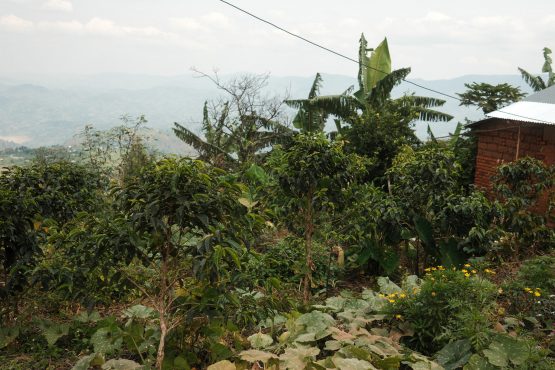
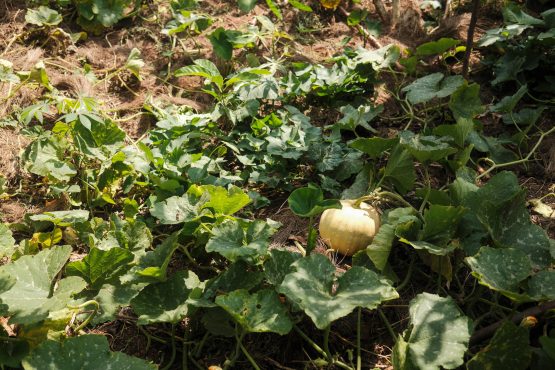
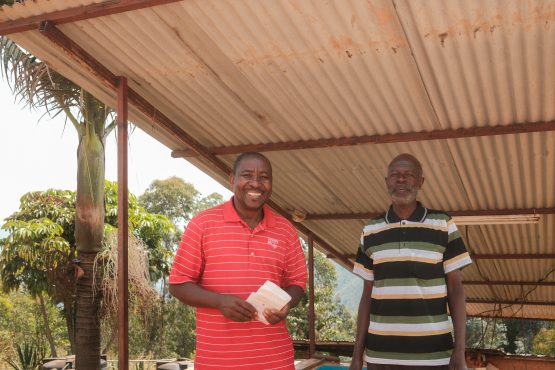
Site manager Jean Bosco has personally seen the benefits of organic farming at his own plot of land, as he also grows coffee and delivers to Mbilima. On our most recent trip to the region, we stopped by Habimana’s home, where he lives with wife Emerthe and his four children. Walking up to the property we first saw the couple’s beautiful front garden, which includes a few coffee trees, along with pumpkin and squash (which also provide excellent ground cover) for consumption and herbs that are used in the kitchen. Jean Bosco was thrilled to hear how much coffees processed at Mbilima were enjoyed in Australia, and assured us that “coffee will be still here, we will keep producing good quality and good volume for you. And we are happy that they are appreciating the quality that we are serving them.”
Head here to learn more about the work of Dukunde Kawa in Rwanda.
PROCESSING AT MBILIMA WASHING STATION
The team at Dukunde Kawa takes a huge amount of care in processing its coffee. All members of the cooperative are trained to only select ripe coffee cherries from their trees.
- On delivery, the cherries are inspected and sorted by hand to ensure only the very ripest cherries are processed. Farmers do the selecting, and receive the highest income from the ripest, healthier fruit. The remainder of their crop still gets purchased by the co-op, at a lower price, to be processed and sold for the internal market.
- Cherry is then sorted by weight using a Pinhalense machine, with any floaters are removed. By using a machine, rather than a clerk, Dukunde Kawa are more transparent with contributing growers about which fruit gets processed. Coffee is then depulped using a mechanical pulper that divides the beans into three grades by weight, with the heaviest, A1, usually having the highest cup quality.
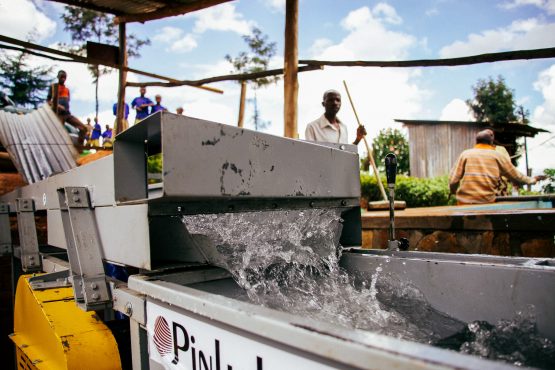
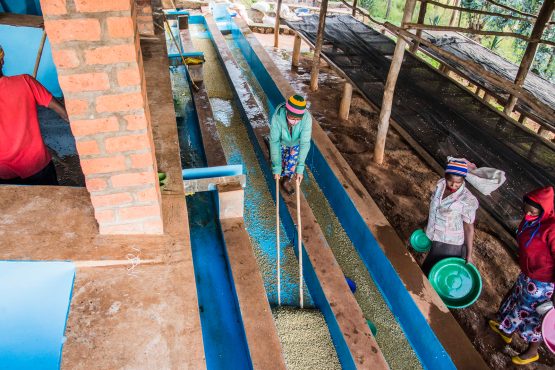
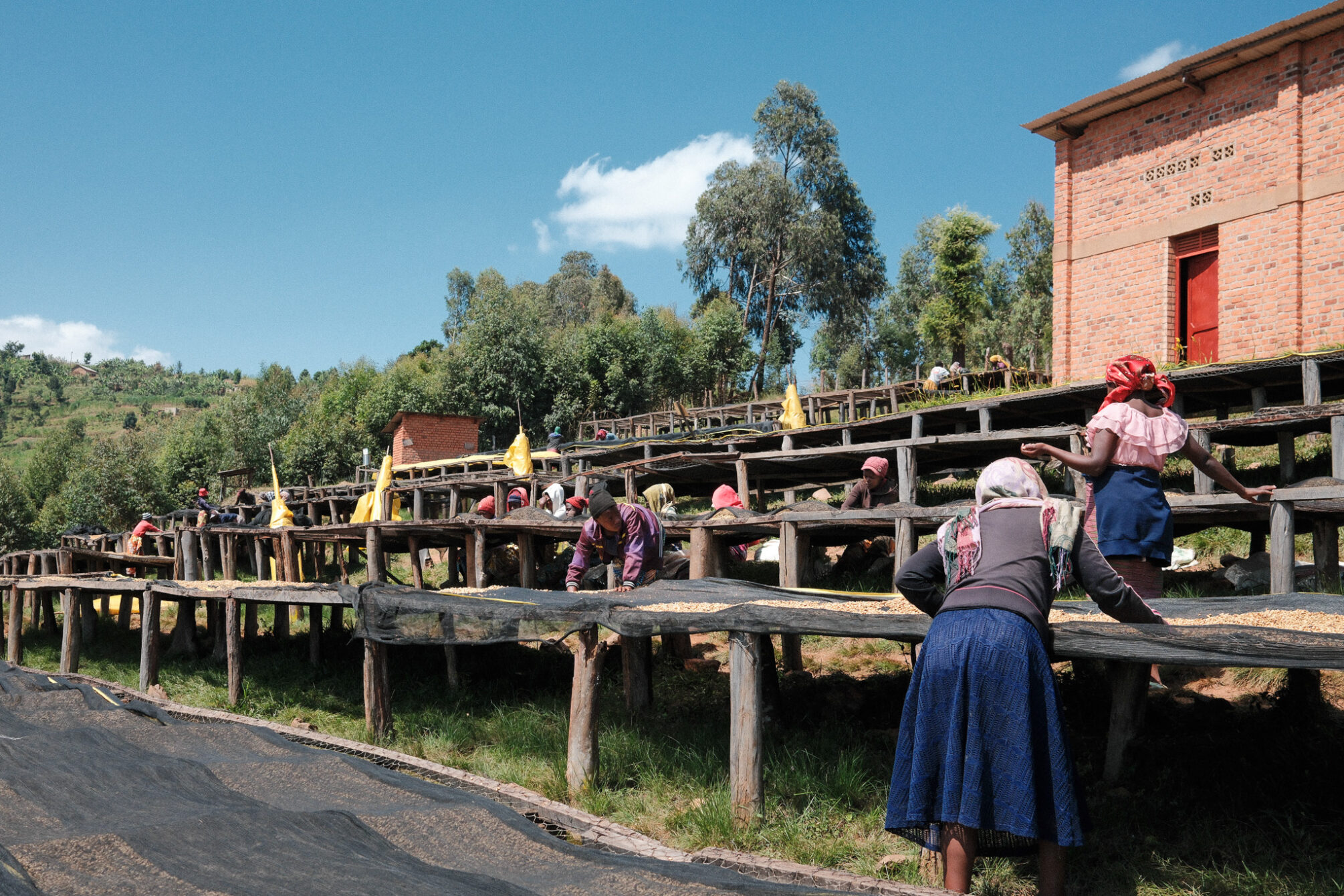
- After pulping, the coffee is pre-washed, graded again using floatation channels that sort the coffee by weight, and left to ferment overnight for around 12–18 hours. The following day, wet parchment is the washed a second time and left to ferment for a further six hours — with the goal of removing as much mucilage as possible without using machinery that may accidentally crush or damage the beans. As with most washing stations in Rwanda, women do the majority of hand-sorting. This takes place in two stages – on the covered pre-drying tables and on the drying tables. Washed beans are moved from the wet fermentation tanks onto the pre-drying tables, where they are intensively ‘wet sorted’ under shade for four hours. The idea is that greens (unripe beans) are still visible when the beans are damp, while the roofs over the tables protect the beans from the direct sunlight.
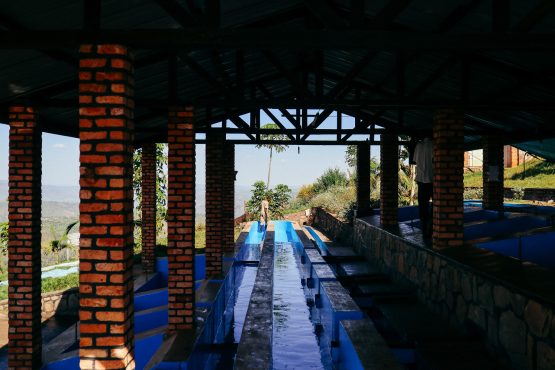
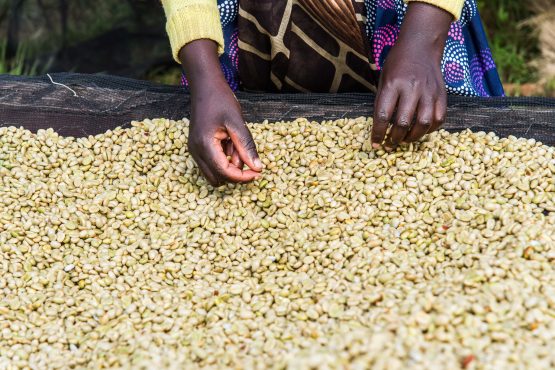
- Next, the beans are moved onto the washing station’s raised drying tables for around two weeks, where they are sorted again for defects, turned regularly and protected from rain and the midday sun by covers, ensuring both even drying and the removal of any damaged or defective beans. During this period the coffee is also turned several times a day by hand to ensure the coffee dries evenly and consistently.
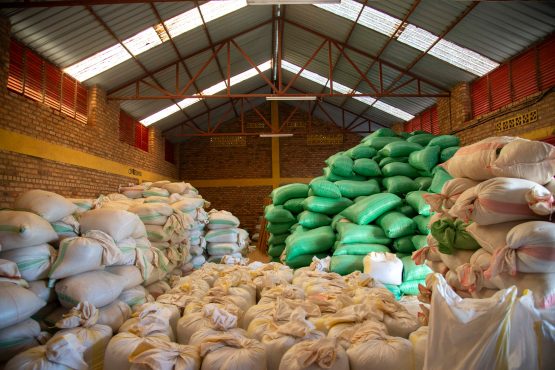
- After reaching 11-12% humidity, the coffee is then transported to Dukunde Kawa’s purpose-built warehouse prior to final dry milling and hand sorting at the cooperative’s milling facilities.
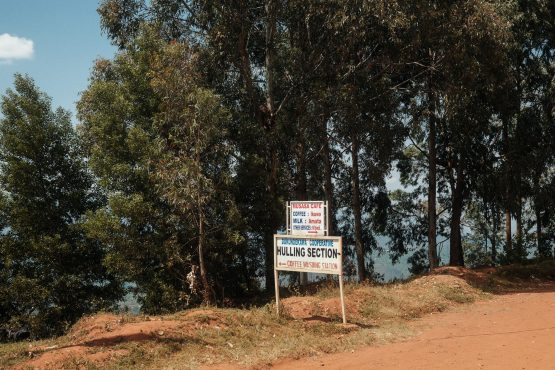
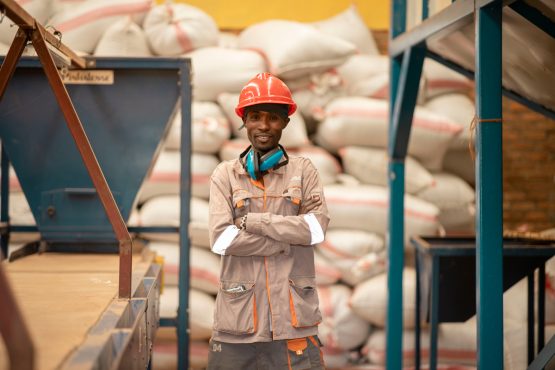
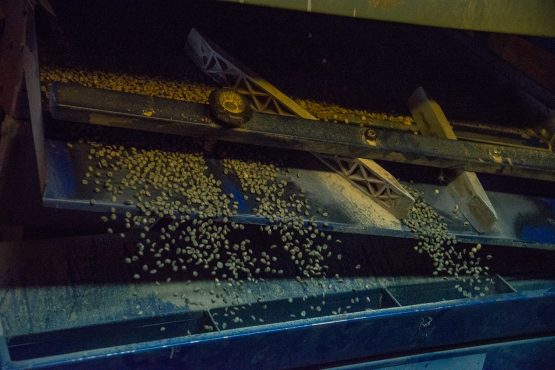
- Located in Ruli, Dukunde Kawa’s dry mill has the capacity to process one full container of coffee a day — and combines the use of technology with meticulous hand sorting to ensure only the best beans are bagged. Before being loaded for export, Rwanda’s National Agricultural Export Development Board also inspects and samples the prepped parchment.
WHY WE LOVE IT
Peaberry lots from Rwanda tend to have exceptional character, with sparkling acidity, juicy fruit and complex florals. This lot exemplifies the hard work the members of Dukunde Kawa have undertaken to produce coffees that fulfil the potential of this beautiful region. We love this brown sugar sweetness, honeysuckle florals, and its notes of lemon, apple and plum.