Ndocha Estate AA
Winey and rich with hibiscus florals. Tropical fruits, yellow peach and pomegranate.
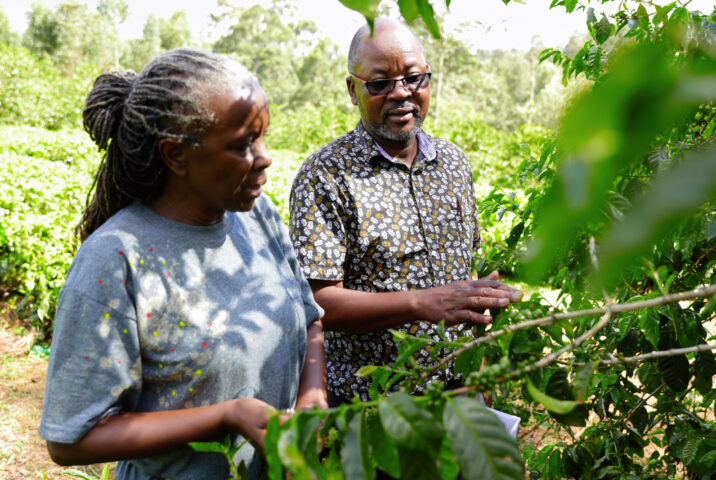
Ndocha is a family-owned and operated coffee farm located in Kenya’s Kiambu County. Much of the work behind Ndocha is split across three siblings: Geoffrey Gachogo Karugondo manages commercial operations, Danson Wanyitu Karugondo looks after the farm and Peris Wambui Karugondo oversees the processing.
The farm was initially part of a larger estate, then named Muhathi, which was inherited by a total of seven siblings on their parents’ passing and divided into various plots. Over the years, we have purchased coffee from three of them: Dagitu, Muhathi and Ndocha. Each shamba (Swahili for farm) is run independently and coffees are processed at a shared wet mill (or factory, as they are known in Kenya) which was built by their father in the 1980s. The siblings pick cherries and process them on alternate days, in order to market and sell their coffees as separate lots.
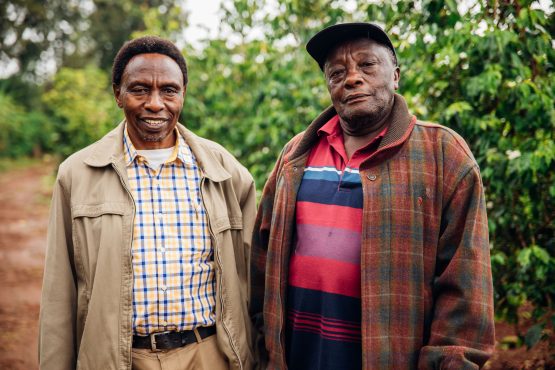
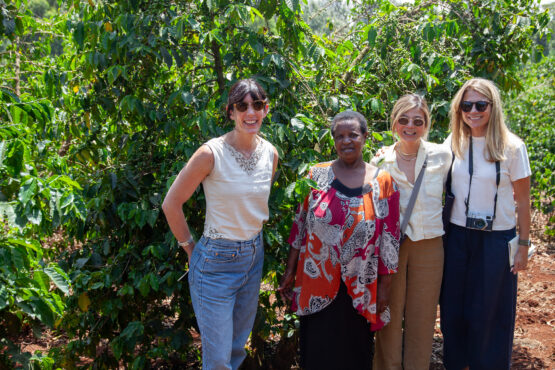
Ndocha is the largest of the plots that make up the estate. To maintain it, Danson is assisted by wife Josephine and son Gishu, as the family live on site, along with six other permanent members of staff. The entire property totals about 25 hectares and sits in the foothills of the Aberdare mountains, nearby the Komothai river. Besides coffee and sustenance crops, the siblings also raise cows and pigs, which provide manure to produce nutrient-rich compost when mixed with the coffee pulp that results from the washed processing.
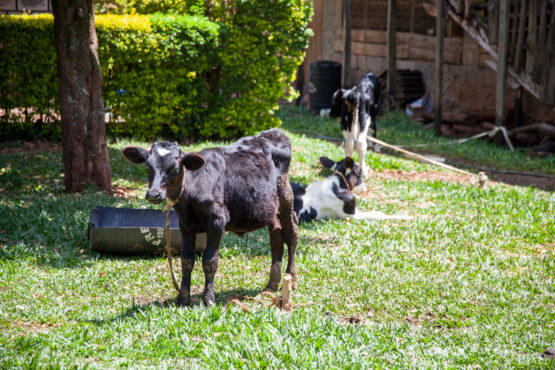
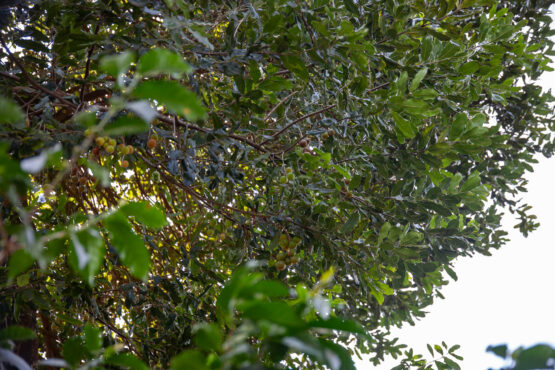
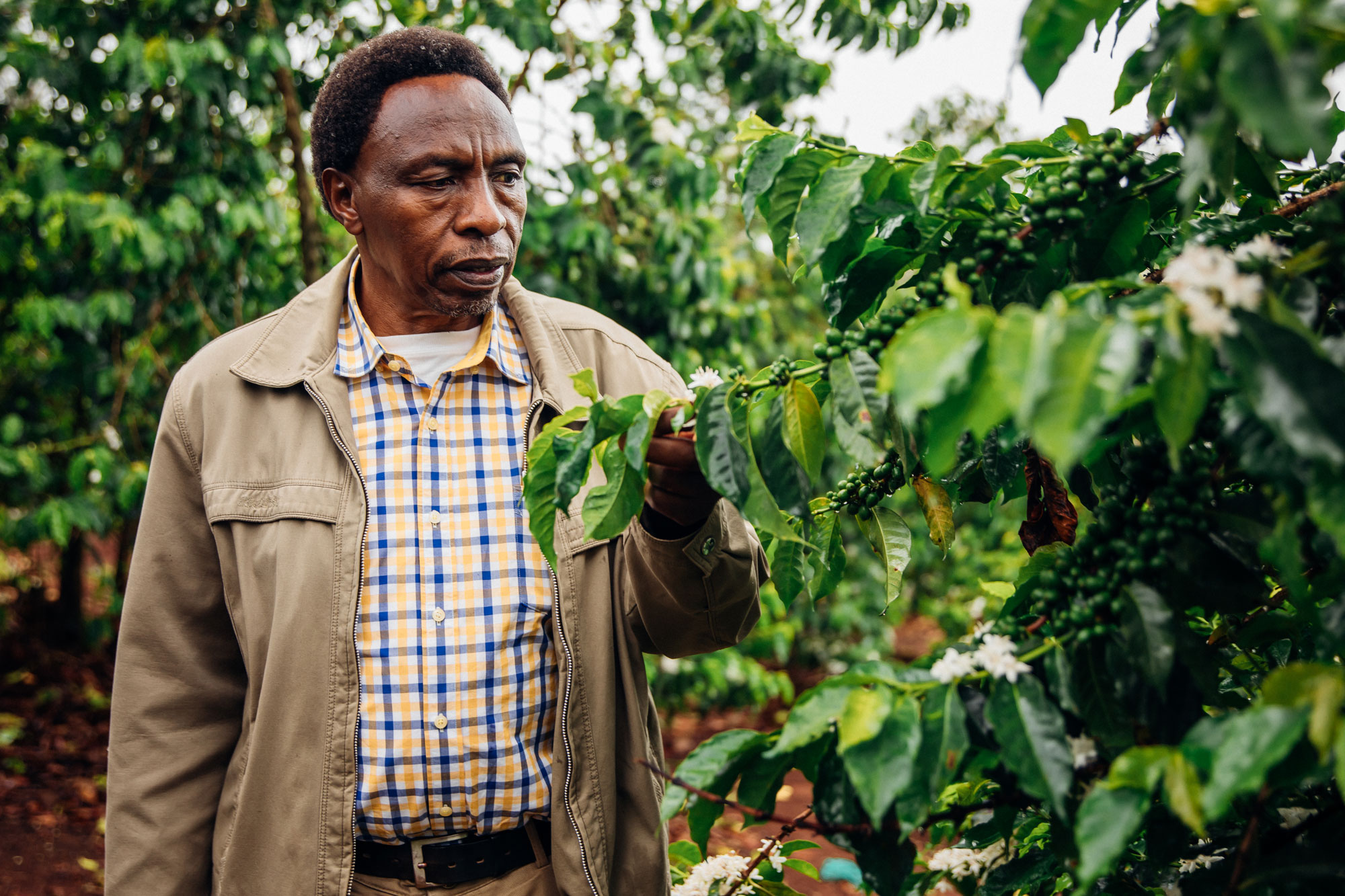
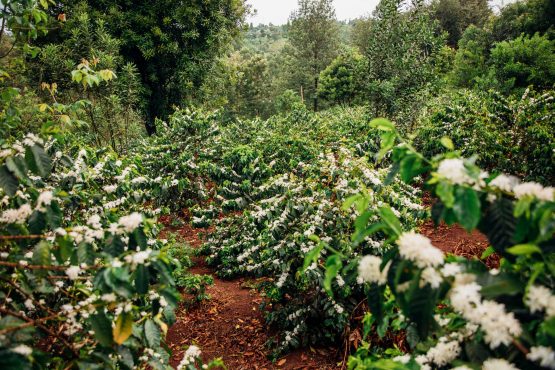
The main variety grown on the farm is SL28, which was selected and planted by Geoffrey’s grandfather. The trees have been continuously regenerated since that time, using a stumping technique where new stalks are allowed to grow from the stump to replace older stalks, which are then cut back when the new stalks reach full maturation. In recent years, trees at Ndocha have struggled with the effects of climate change, as productivity has nearly halved and incidences of coffee leaf rust and coffee berry disease have increased. To combat this, Geoffrey has introduced the hybrid Ruiru 11 to positive results, as it is highly resistant to disease and pests, and has been backcrossed with SL28 and SL34 to achieve a high cup quality.
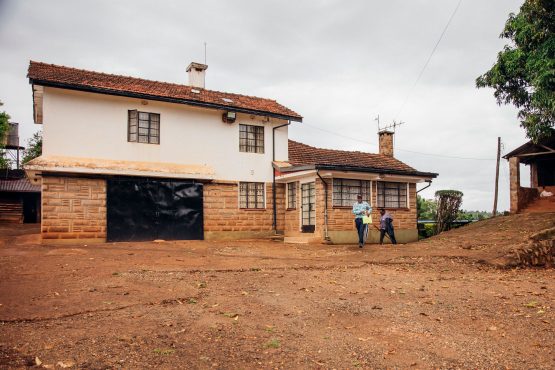
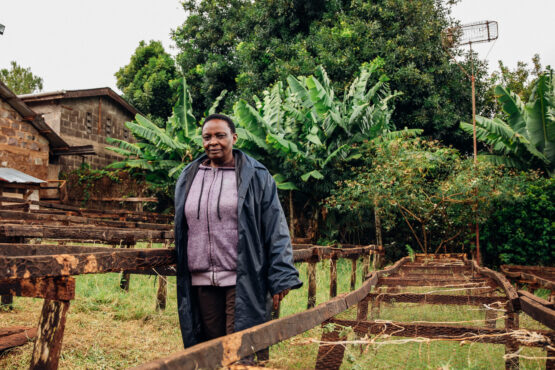
The coffee’s processing was overseen by Geoffrey’s sister, Peris, who lives at the original farmhouse alongside the shared factory. The family has been processing their own coffee since 1987, when their father first built the infrastructure for processing. The on-site facility was constructed with great care and expertise, modelled on a local cooperative’s factory which their father managed. At the time, Kenya’s Coffee Research Institute distributed blueprints for estate owners to follow when establishing their wet mills in a way that ensured bottlenecks were avoided during the peak of the harvest, including recommendations like the building of multiple fermentation tanks to allow for lot separation.
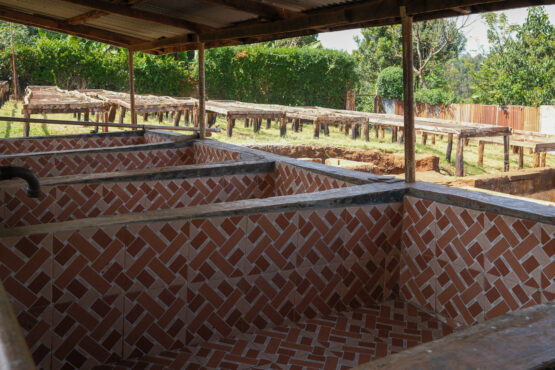
The siblings have continued to invest in their small factory — on our 2026 visit, Peris proudly showed us the brand new tiles they had installed on their tanks. Outside of the additional expense in establishing and operating an onsite factory, it is far costlier to mill and market small volume, single producer lots than large day lots from cooperatives. This investment has paid off, however, as the siblings produce exceptionally high-quality lots, and they are able to command excellent prices for their crop each year.
Since the Kenyan government’s coffee trade reforms of 2023, we have been sourcing Geoffrey’s coffee directly, with the help of Wycliffe Murwayi as the Direct Sales Agent. The benefits of this direct sales model are higher returns for Peris, as the buyer (in this case, MCM) must offer competitive pricing to secure the coffee. In addition, Geoffrey also receives the funds faster than she would if selling the coffee via the auction. This direct sales model also supports a more stable, meaningful and values-led relationship between the growers and their buyers and have become more widespread as the coffee sector adapts to the reforms.
ABOUT KIAMBU
Kiambu County is part of Kenya’s former Central Province, which was dissolved in 2013. The area includes Murang’a, Nyeri, Kirinyaga, Kiambu and Nyandarua Counties, and is traditionally the homeland of the Kikuyu people, who have a long and proud history of agriculture. Kiambu sits parallel to Mt. Kenya, on the Aberdare mountains, and has the highest production in the country. The region is home to many large estates, many of which require irrigation because Kiambu is slightly drier than other coffee producing areas.
Like many coffee farms in Kiambu, Muhathi (the original name for the property Ndocha is a part of) was established in the early 1960s. The siblings’ grandparents planted the estate’s first 100 trees, a limitation set on Kenyan farmers by the ruling British colonialists. The family established the parcel in the wake of the Mau Mau uprising and the resulting land reforms, which allowed Kenyan nationals to own and plant coffee farms. Prior to these reforms, all coffee estates in the country were owned by British exporters who strictly regulated the industry to exclude African Kenyans. As a result, some of Kenya’s oldest independent coffee farms are found in Kiambu. Following Kenya’s independence in December 1963 and the abolishment of these regulations, Muhathi’s plantation was expanded.
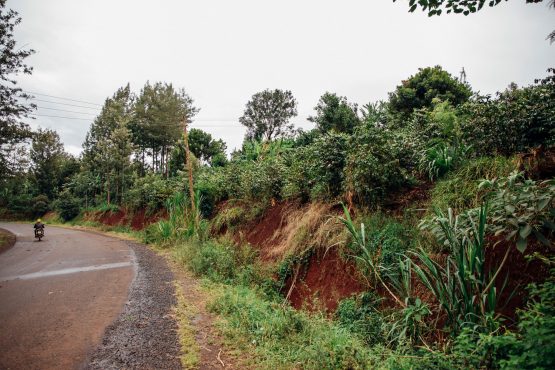
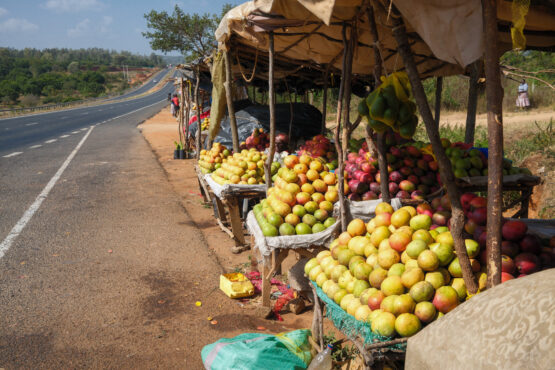
Kenya’s central highlands are some of the wealthiest areas of the country, due to the incredibly fertile land, geographical proximity to the capital, Nairobi, and close integration with the country’s colonial administration before Kenya gained independence. This integration afforded some of the communities who lived here with opportunities for education, business and political prowess, even if most smallholders still had to endure the various injustices and limitations placed by the colonial government. That’s why independent estate owners who are able to process and sell their own crop are incredibly proud of their work, as it affords them access to markets and opportunities that have been historically difficult to reach.
GRADING
Kenya uses a grading system for all its exportable coffee lots. The grading system is based on the size and assumed quality of the bean. A coffee’s grade is directly correlated with the price it attracts at auction or through direct trade.
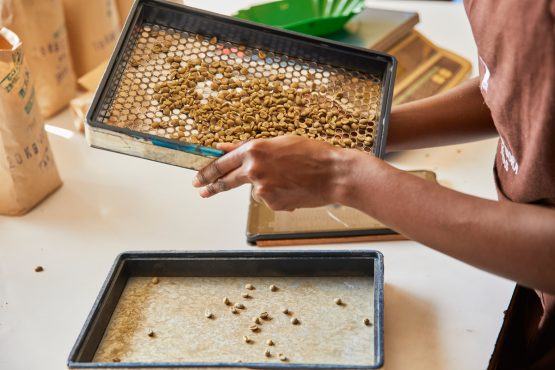
This microlot is graded as an AA. This grade is easily defined by size (in this case, AA means that the beans are screen size 18 and above) and to a certain extent, quality. While it is assumed that AA lots represent the highest quality, we have often found AB and peaberry lots to be just as good.
HOW THIS COFFEE WAS PROCESSED
During harvest, the siblings employ up to 50 local pickers who have been trained to pick only the ripest red cherry. The pickers meticulously hand sorted the cherry to remove any under ripes before processing. Pickers are paid by volume of fruit picked, or on a day rate when there isn’t much cherry to collect.
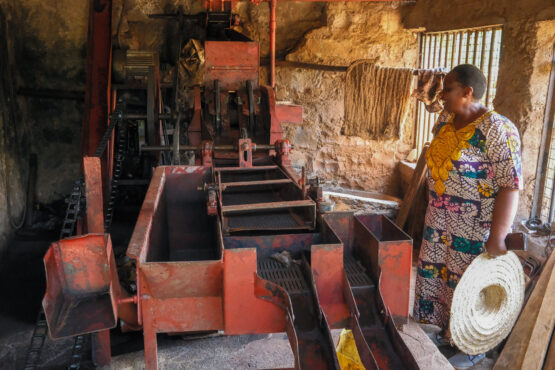
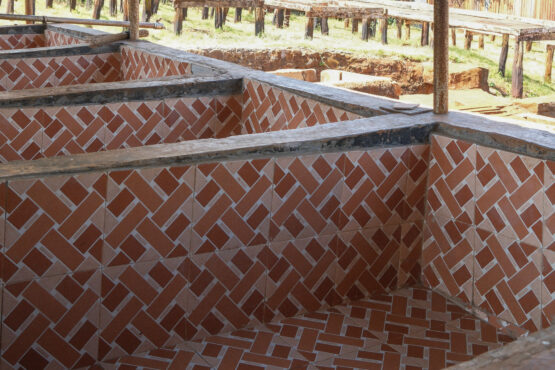
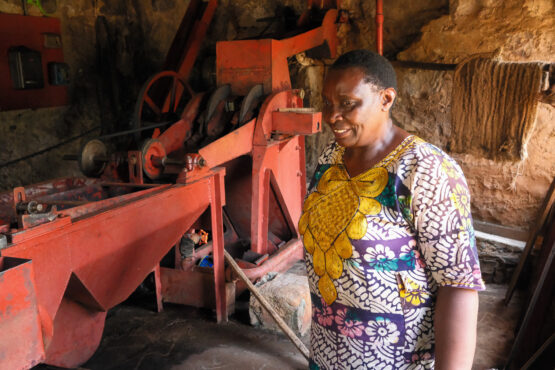
After careful hand sorting, the coffee was pulped by Peris’ son Sam in the late afternoon of the day it was picked, using a two-disc pulping machine, which removes the skin and mucilage (sticky fruit covering) from the inner parchment layer that protects the green coffee bean. The parchment was then dry fermented overnight, or up to 24 hours depending on the weather, to break down the sugars and remove the remaining mucilage from the outside of the beans. The coffee was checked from the following morning onwards, and when it smelled ready, it was rinsed and removed from the tanks.
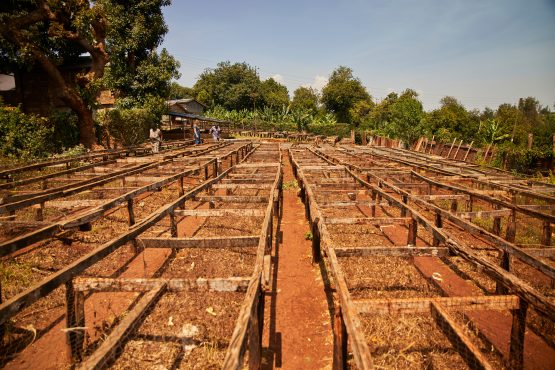
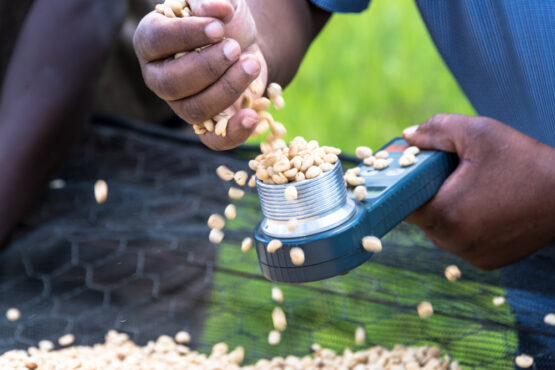
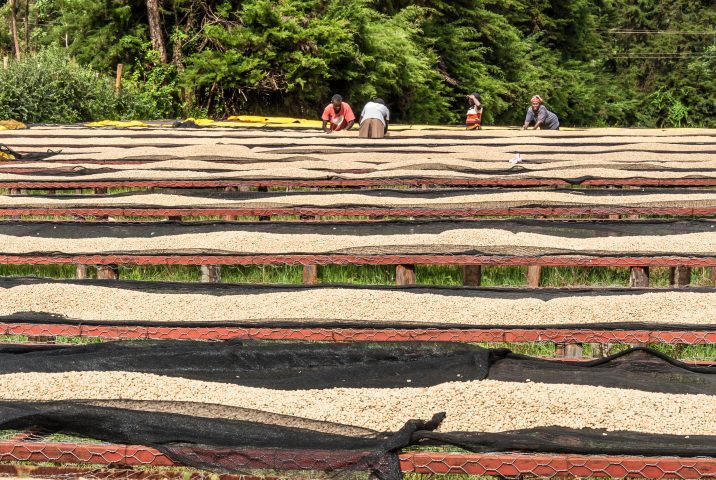
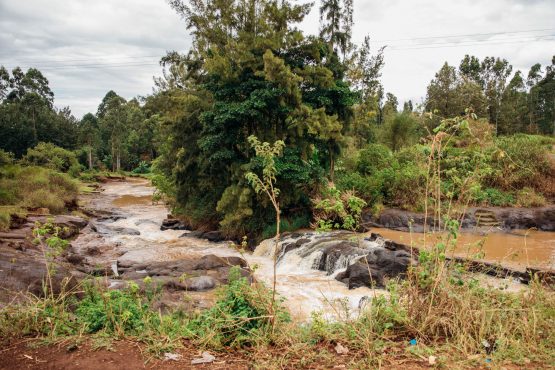
Using clean water from the nearby Komothai River, the parchment-covered coffee was then washed and graded in water channels, before being transferred to raised drying tables. During the drying stage, which takes up to three weeks, the coffee was turned constantly to ensure it was dried evenly, until it reached 11–12% humidity. To protect it from the elements and avoid condensation, all drying parchment is packed and put away during the night, and laid out to dry again in the morning. After the coffee reached the targeted moisture content, it was dry milled and prepared for export.