Ruli Natural
Intensely floral, with sparkling, tropical acidity and sugarcane sweetness. Guava, star fruit and jasmine.
This special coffee was processed as a natural lot using coffee cherry from 320 smallholder farmers who deliver to Ruli washing station, one of three washing stations owned by the Dukunde Kawa Cooperative. Ruli is located close to the small town of Mususa, in the Ruli Sector or Gakenke District, in Rwanda’s rugged and mountainous Northern Province. Like most coffee from Rwanda, it is 100% Red Bourbon.
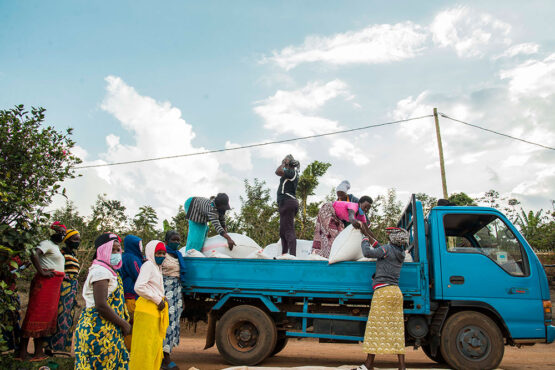
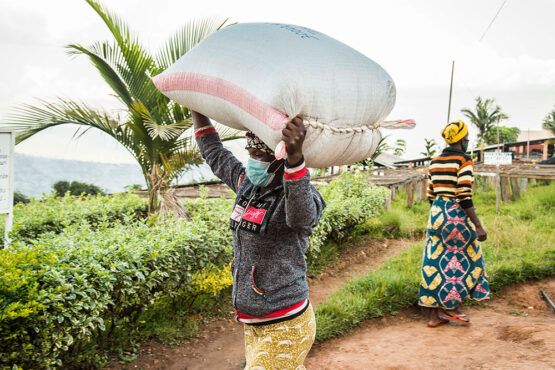
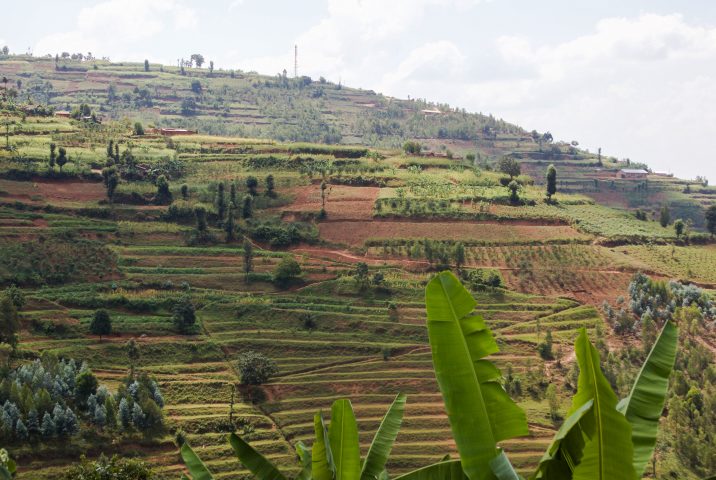
Ruli sits at 1,920 meters above sea level, overlooking a beautiful landscape of rolling green hills and rich, red earth. A total of 1756 farmers (1104 men, 652 women) deliver cherry to the washing station throughout the season, which employs 43 permanent staff and increases by another 170 seasonal staff during the harvest period. The area surrounding Ruli has mineral-rich soil and a lush environment that is well suited to specialty coffee production. Typically, farms are situated between 1,800 to 2,100 meters above sea level.
The producers who contribute to the Ruli washing station own an average of one tenth of a hectare of land, on which they farm coffee, along with subsistence food crops like maize, beans and sorghum and some livestock like goats and chickens. Cows are also an important asset to a farming family. Besides having practical advantages – like providing milk and yoghurt to feed the family, producing excellent manure for the coffee farms, and being an opportunity for additional income – they are also a traditional symbol of wealth and status in Rwanda.
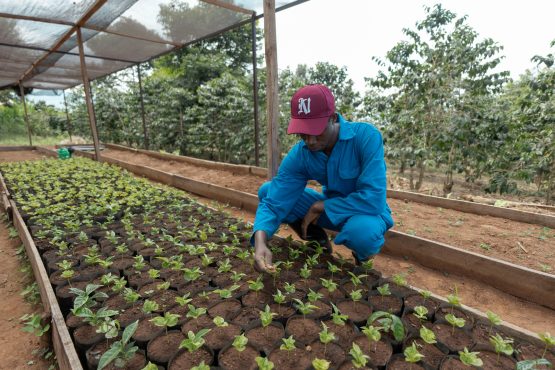
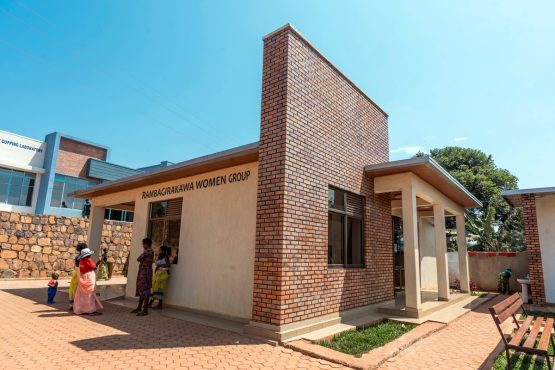
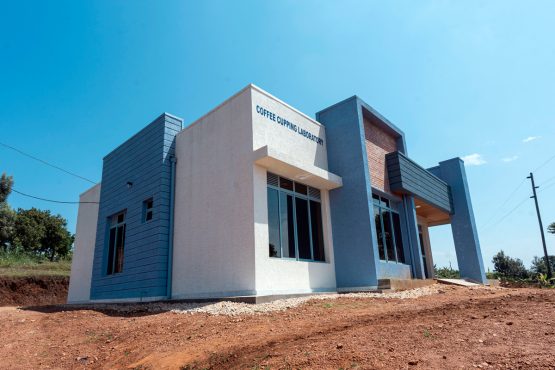
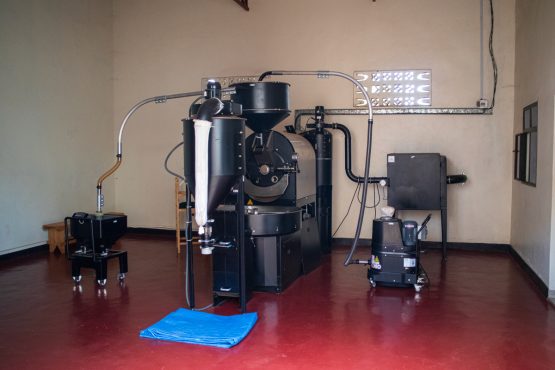
The washing station was established in 2003 and is the largest of Dukunde Kawa’s washing stations. It serves as the head office for the cooperative’s management team and the site also encompasses the cooperative’s dry mill and its dairy operations. The property is also the site of the Rambagirakawa community room and Dukunde Kawa’s cupping lab, nursery and model farm. Recently, the cooperative decided to expand their business by establishing a commercial roastery that supplies coffee to restaurants and hotels across town, with all activities carried at a building also located in Ruli.
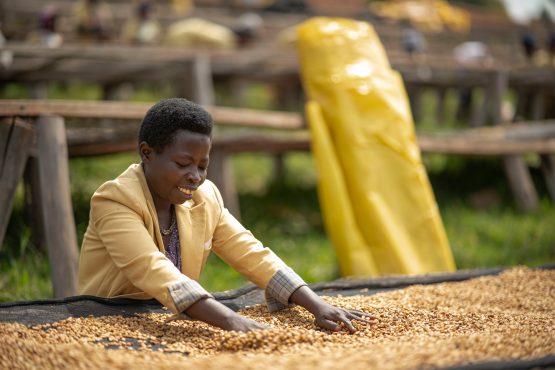
Quality control operations at Ruli are overseen by Emerthe Mukamurigo, who has held this position since 2014, while the day to day is managed by Philomene Nyirabantu. Ruli is Rainforest Alliance certified, UTZ certified, and Fair Trade certified. These certifications help the growing cooperative find different markets for the coffee. “We were already doing a lot of the things that were required for these certifications”, Isaac (the executive secretary of the cooperative at the time) explained, “We are always trying to be the best cooperative we can be. Getting the certifications has helped highlight what we are doing well and helped us raise our standards in other areas.”
Head here to learn more about the work of Dukunde Kawa in Rwanda.
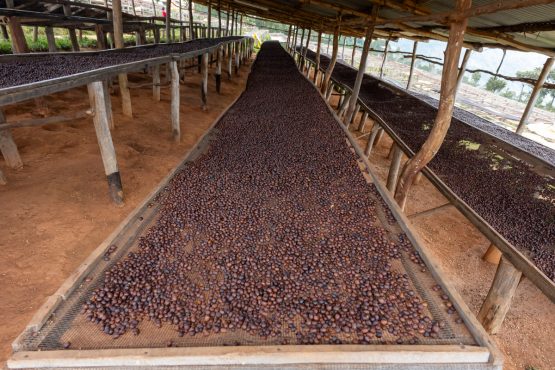
NATURAL PROCESSING AT RULI WASHING STATION
The team at Dukunde Kawa takes a huge amount of care in processing its coffee. All members of the cooperative are trained to only select ripe coffee cherries from their trees.
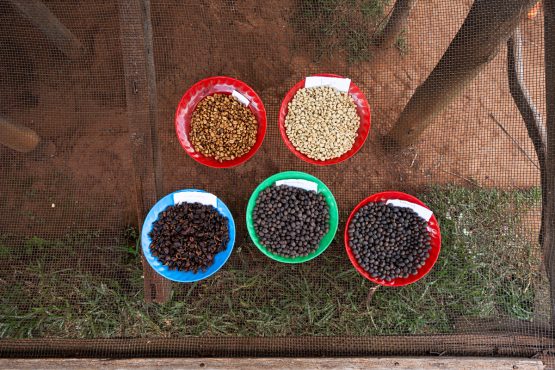
- On delivery, the cherries are inspected and sorted by hand to ensure only the very ripest cherries are processed. They are then sorted by weight (and any floaters are removed) by a Pinhalense machine that the washing station staff affectionately have named the ‘Umupolisi’ (police person). For their naturally processed coffees, Dukunde Kawa select the heaviest and juiciest coffee cherries, as these are the ripest and have the highest sugar content.
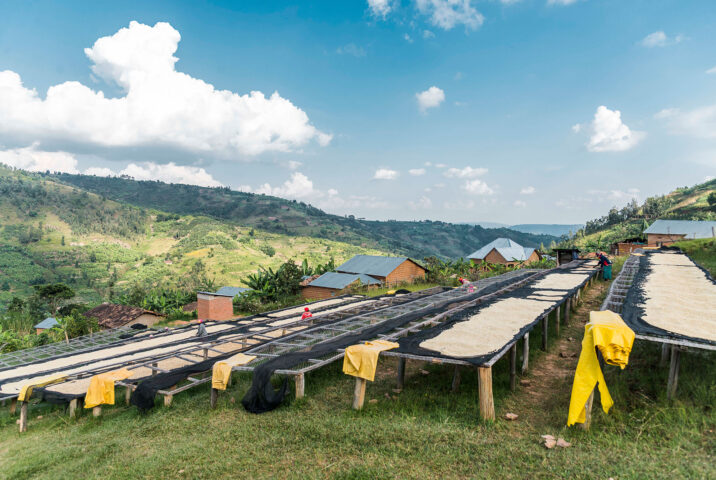
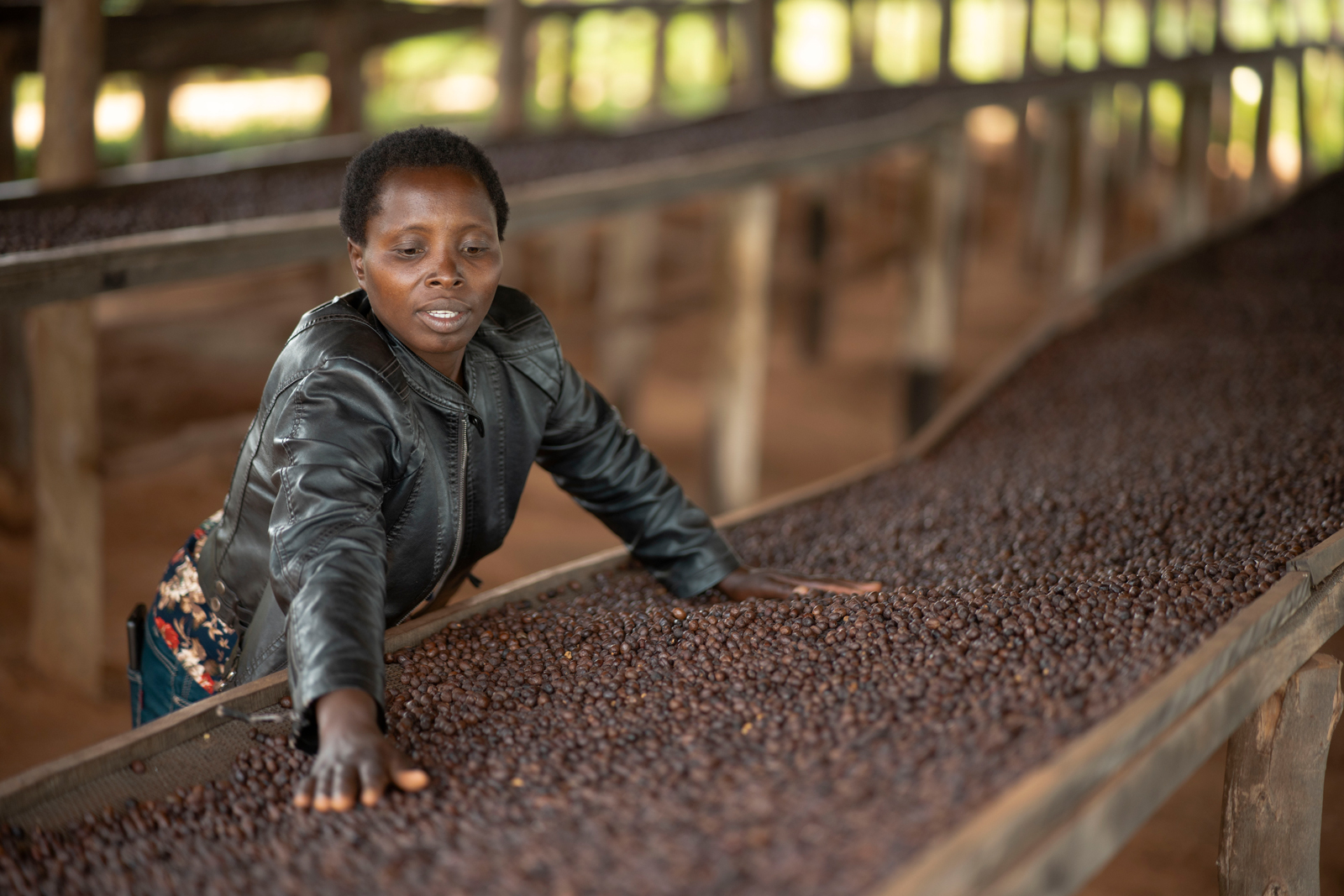
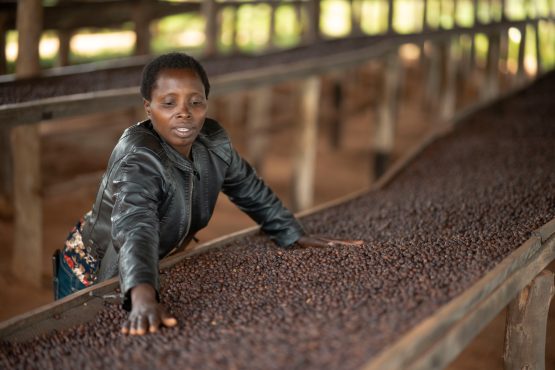
- After sorting, coffee cherries are taken directly to raised beds to dry in the sun for about 50-60 days, depending on weather conditions. As coffee dries, it is sorted again for defects, turned regularly and protected from rain and the midday sun by covers, ensuring both even drying and the removal of any damaged or defective beans. During this period the coffee is also turned several times a day by hand to ensure the coffee dries evenly and consistently. As with most washing stations in Rwanda, women do the majority of hand-sorting.
- During the final stages of the drying process, cherries are laid out in raised beds under cover.
- After reaching their target humidity readings, the coffee is then transported to Dukunde Kawa’s purpose-built warehouse prior to final milling and hand sorting at the cooperative’s dry mill.
WHY WE LOVE IT
This lot exemplifies the hard work the members of Dukunde Kawa have undertaken to produce coffees that fulfil the potential of this beautiful region. We love how clean and floral this coffee is, with strawberry and milk chocolate in the cup.
We feel so lucky to work with Dukunde Kawa. When we first started working with the cooperative over a decade ago, the president at the time, Anastase Minani, explained that their goal was to be the very best cooperative in Rwanda. We think they’re well on their way to achieving this goal, and we are excited to have been able to share this journey with them.