Kiama Cooperative
During our yearly visits to Kenya, we are always delighted to spend time with the leadership of Kiama Farmers’ Cooperative Society (FCS), who are happy to share key insights into how they’re able to produce such delicious coffees every year.
Published 10 June 2025
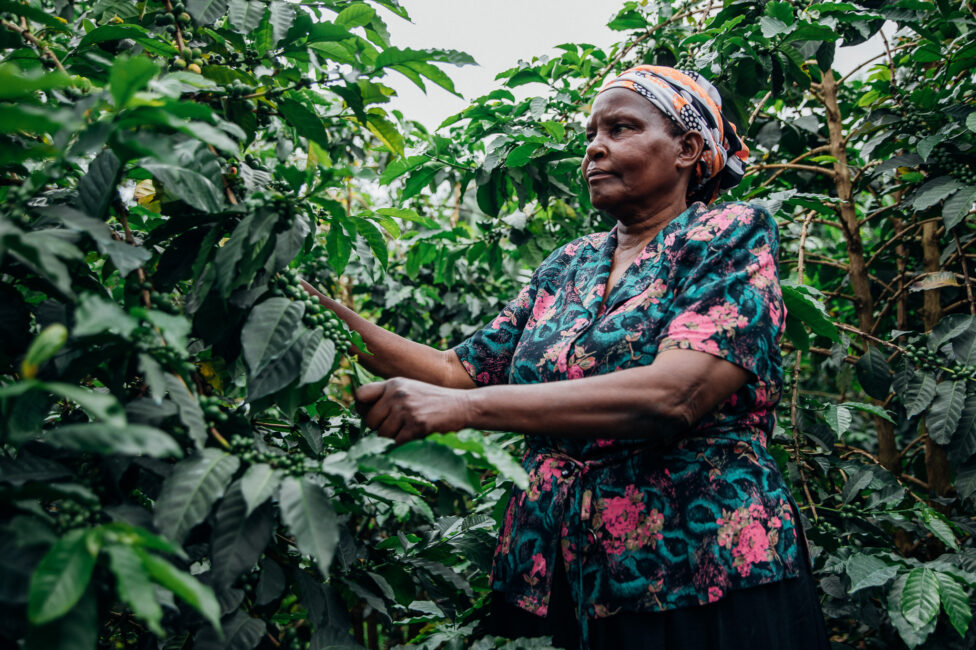
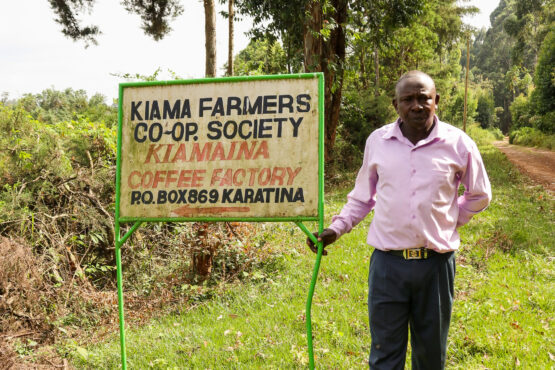
Since 2019, we’ve been sourcing coffee from Kiama FCS, which was founded in 2005 when two smaller co-ops merged. Today, they own four washing stations in Nyeri (Gachuiro, Kiangundo, Ichuga and Kiamaina), and a cherry collection point, Inwagi. In total, over 3,000 Nyeri farmers are members of the cooperative, most of whom own small shambas (Swahili for ‘farm’) averaging just half a hectare in size, and grow coffee alongside other food crops like banana, maize, macadamia, avocados and vegetables.
We’ve always known cooperatives play an important role in Kenya’s coffee trade, and whenever we visit Kiama we truly appreciated just how much their support impacts, and improves, the quality of the final cup. Because over 60% of the country’s coffee production comes from properties smaller than two hectares in size, farmers rely on factories (as washing stations are known in Kenya), to process their crop. Due to this, most of the country’s coffee is meticulously pulped, fermented, washed and dried under the watchful eye of an experienced Factory Manager, with the help of a larger team of people than most estate owners could employ.
The costs associated with maintaining washing channels, fermentation tanks and drying beds are also covered by the co-op, meaning contributors don’t have to worry about budgeting for these costs during the season. The system gives farmers greater flexibility, while buyers are guaranteed consistent quality year-on-year. By combining lots from a wider region, lots produced by cooperatives are also able to offer a distinct taste of place in the final cup.
All contributing growers receive an advance payment on delivery of cherry. Since switching to digital scales at all factories and digital payments, the process is transparent and quick. Contributors then get the full payment for their crop (according to the volume they delivered) when the coffee is sold. If Kiama secures a good price for the coffee either via direct sale or at auction, contributors also earn a better final price.
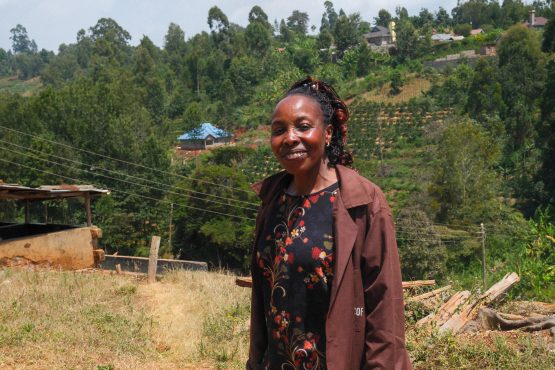

Kiama’s support goes further than the final payment, as they offer their farmer members pre-harvest financing, allowing them to plan and invest in their upcoming harvest. They also buy inputs in bulk and distribute them to members at a lower cost than otherwise possible, and advise on the best timing of application. Since 2023, the cooperative has distributed shade tree seedlings to its members, all grown on a nursery they have built at Kiangundo Factory. By providing farmers with strong agricultural support and reliable price premiums, Kiama’s membership has grown by over 20% in the last three years, and volumes have doubled. In fact, out of all the cooperatives we have visited in recent years, Kiama has been the only one who reported such a significant increase in volumes.
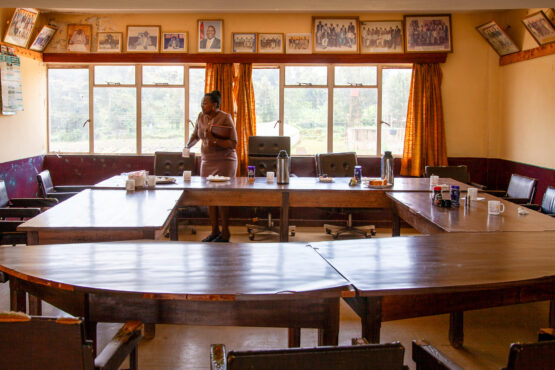
Because the cooperative’s leadership is made up of farmers, all regulations in place have one goal: to improve the quality and yields of coffee processed. In doing so, the co-op can earn a higher revenue they can then re-invest into each factory’s infrastructure and community-focused programs. This focus on quality and the resulting higher earnings has the effect of incentivising more farmers to deliver their cherry to one of their sites. Focusing on yields also improves the overall efficiency of operations, reducing costs and further maximising profits.