Small Estates, Major Victories
By prioritising coffees from small, independent producers and family-run estates, we source our Kenyan offerings a little differently than most importers do. A look back at the crop’s history in Kenya and the context under which these farms were established is key in understanding why our strategy goes against the status quo — and why we’re so committed to their coffee.
Published 28 Jul 2026
Each year, when our container of Kenyan coffee arrives, our whole team crams into the cupping lab to taste what is one of our most exciting tables of the year. While you may expect us to spend most of that time calling out tasting notes of blackcurrant, cherry or tropical fruits to each other, if you pop your head in, you’re more likely to hear exclamations like, ‘How good is Joseph’s coffee this year?!’ or ‘Wow, Peris has outdone herself!’ instead. That’s because the majority of our Kenyan offerings comes from single producers who process and market their coffees outside of the cooperative system and we often know them on a first-name basis.

While this procurement strategy is uncommon amongst importers (and, arguably, not particularly efficient), it is hugely significant and meaningful to us and our supply partners. In Kenya, most of the small estates we work with average less than five hectares in size. The lots they produce are much more than great cups of coffee; they embody the tenacity and determination of producers who, against systemic odds and obstacles, take great pride in the quality and value of what they deliver. By investing in their own processing facilities and choosing to sell their coffee independently, they’ve made a name for themselves and their family-run farms in a country already praised for its spectacular coffee.
Coffee’s early days in Kenya
After being introduced by foreign missionaries in the late 1800s, Kenya’s commercial production of coffee began under the rule of British colonialists, at a time when the country was still known as British East Africa. Following the widespread loss of coffee crops in their Ceylon colony (now Sri Lanka), the empire needed to find new soils to grow coffee on. Kenya fit the bill perfectly, as its most productive lands, those that lie at the foot of both Mt. Kenya and the Aberdare Ranges, had been ‘reserved’ for European settlers as part of a policy that lasted from 1902 to 1961. The region had come to be known as ‘the White Highlands,’ and the scheme that allocated them displaced and uprooted the region’s traditional owners — with the Kikuyu and Maasai people being the most affected.
By the 1920s, coffee had become Kenya’s primary export product. To accomplish and sustain this, the colonialist government made coffee-production permissible to African Kenyans, though growing the crop came with strict limitations, the threat of heavy fines, and even the possibility of land confiscation for disobeying them. Kenyan farmers were initially only allowed to plant 100 coffee trees – with varieties determined and distributed solely by the government – until a district commissioner determined they had enough experience to grow more. Fields were also regularly inspected to ensure they were run ‘properly,’ and estates were established in areas that facilitated European supervision. Finally, once coffee was planted, removing it was illegal, even on occasions when property owners needed more space to introduce food crops for sustenance.
Land ownership and its complexities
Resistance to British settlement eventually gained strength and numbers, resulting in the Kikuyu-led Mau Mau uprising of the 1950s. Attempting to relieve tensions, the colonialists in power enacted the Swynnerton Plan in 1954, which led to parcels of land being distributed across what is now prime coffee-growing country: Nyeri, Kirinyaga, Kiambu, Murang’a and Embu. Whilst this was an important step forward, the process was far from equitable, as influential community elders who remained loyal to the ruling government received first access to the best properties and opportunities, while many who had actively fought for these land rights ended up with nothing.
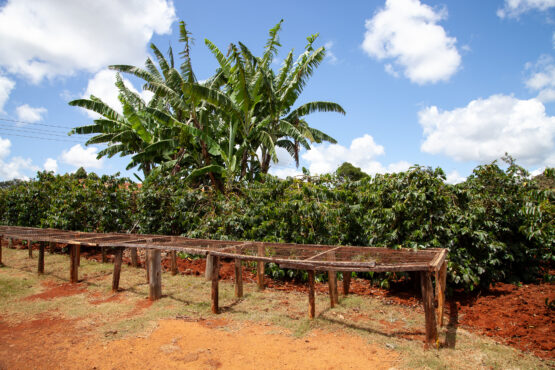
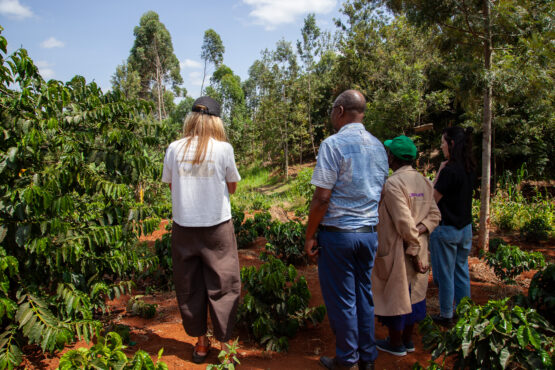
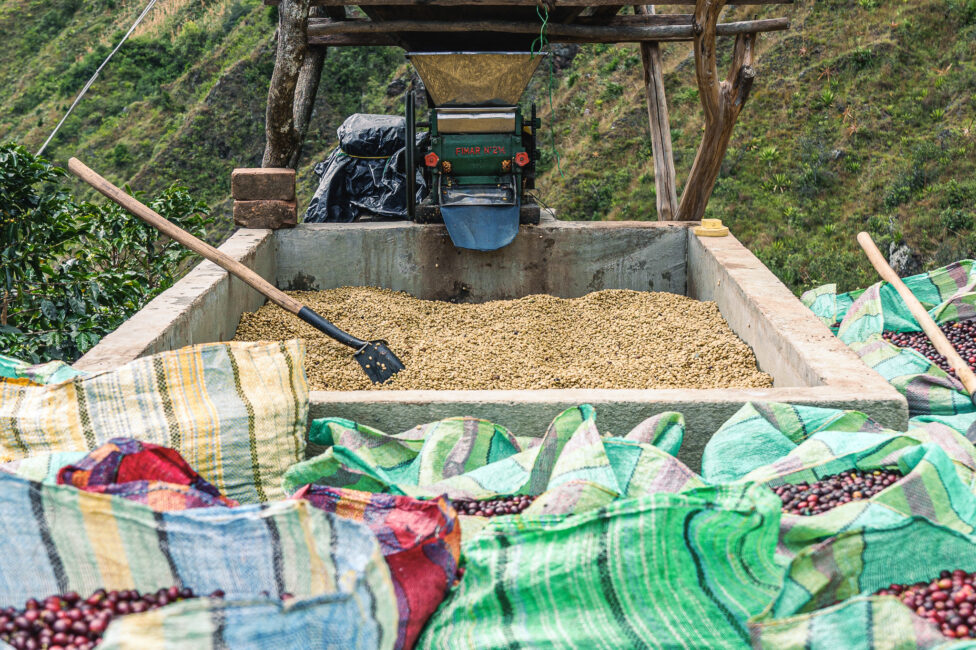
At this time, coffee cooperatives had also begun to be established; however, in the early days many of them failed to provide long-lasting support to the small-scale growers they were meant to champion. Co-ops oversaw the maintenance of the processing equipment that shaped the quality of the coffee they sold (and thus, the remuneration farmers received for it) and controlled access to credit and financial assistance programs that could help a grower expand their plantation. When equipment was misused or compromised and access to finances withheld, it was the smallest landholders who paid the price. Even though Kenyans who had worked for European farmers understood coffee could be a profitable crop, these conditions forced many to sell their parcels before they had the opportunity to realise their full potential.
In the 1960s, conditions across the entire industry began to improve as limitations on African Kenyans began to be lifted more broadly, especially once the country gained independence. Much of the infrastructure, regulations and practices that had been put in place by the British remained, allowing for a productive and quality-focused focused industry to be supported. For example, the cooperative and county factories and dry mills they established were built for efficiency and scale; internationally, they had marketed Kenyan coffee heavily for its distinct cup with great success. The country’s auction system, established in 1934, played a pivotal role in cementing this positioning, as it created a transparent trading platform that rewarded cup quality above all else.
While legislation introduced in 2006 enabled foreign green buyers to purchase coffee outside of the auction, nearly three-quarters of Kenya’s production is still traded through the Nairobi Coffee Exchange.
Coffee continued to be propagated throughout Kenya in the subsequent decades. Gradually, volumes produced at estates were surpassed by those from growers who are part of cooperative societies that own and operate centralised wet mills, where fresh cherry is delivered to be processed during the harvest. As recently as 2022, co-ops serviced some 800,000 growers and their lots accounted for 70% of the country’s total coffee production, with most of them being bought and sold via Kenya’s auction system. While legislation introduced in 2006 enabled foreign green buyers to purchase coffee outside of the auction, nearly three-quarters of Kenya’s production is still traded through this platform.
How we buy coffee in Kenya today
A large part of our sourcing strategy in Kenya is focused on buying coffees from small, independent estate holders who process and market their coffee outside of the cooperative and auction system. Like in the other countries we source from, our goal is to invest in direct relationships and work towards long-term, mutually beneficial partnerships with producers and cooperatives.
To achieve this, we work closely with Wycliffe Murwayi, a licensed agent who facilitates direct sales between MCM and small-scale producers. Wycliffe has an extraordinary knowledge of Kenya’s coffee industry and the people who operate within it, and his work as an agronomist over the past three decades has undoubtedly contributed to higher quality and volumes across the sector. Wycliffe became a Direct Sales Agent after Kenya’s 2023 trade reforms and has been instrumental in connecting us to some of the country’s finest small estate holders.
In this capacity, Wycliffe has helped both us (the buyers), and producers (the suppliers), understand how direct sales work outside of the auction system and navigate price discussions face-to-face. While it’s still early days for the new model, the 2023 reforms have provided small holders with more transparency, allowing them to understand the costs associated with the preparation and sale of their crop, thereby giving them more leverage and agency to negotiate fair prices and choose how they want to sell their coffee. This openness has strengthened the trust and relationships we have with the estate holders we source from and allowed for a more direct dialogue and new way of working together.
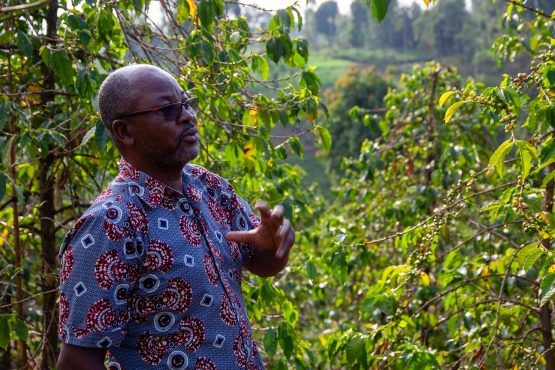
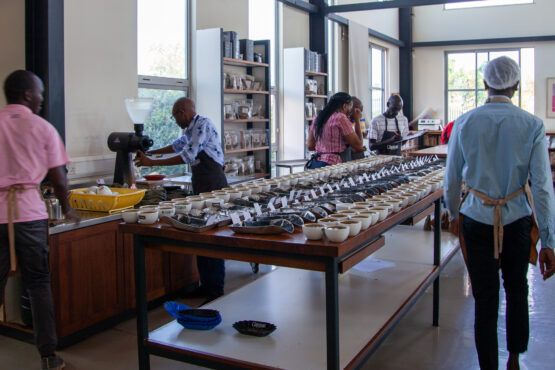

One of the wonderful things about buying coffee in this way, is that we are able to visit and spend time with producers, in their homes and on their farms. It is during these visits that we are able gain added context, learn more about their estates’ histories, and better understand the complexities, challenges and opportunities they face. Many of the farms we work with were established in the 50s, 60s and 70s, and have been slowly built up over decades of hard work. To hold on to their properties, many of these original landowners had to take up secondary trades, or become involved in industries like cattle-raising, as the price of coffee was not consistent due to market volatility. Farmers we visit also take great pride in explaining the agricultural practices they have in place, or varieties they’ve decided to introduce. In doing so, producers are pointing out a choice that they, or their parents, made independently – not under pressure or obligation – to improve the profitability of their property, reminding us that, decades on, colonialism’s historical baggage cannot be ignored.
In addition to buying coffee from smallholders, we also select offerings from forward-thinking and quality-focused cooperatives. Their lots have always played an important role in our Kenyan sourcing program; it is, after all, how most of the country’s coffee is processed because the majority of shambas (as farms are called in Swahili) are too small to merit the costs involved in building a processing factory on site. Large wet and dry mills keep the whole industry moving because they set the pace at which the harvest progresses, whereas processing individual lots is time-consuming and operationally difficult. The reality is that small estates can ultimately be less reliable because they are directly impacted by climatic events that occur during the season with no safety net in place. Many green buyers exclusively focus on coffees from cooperatives for good reason; quality is very consistent, volumes are stable year-on-year, and their shipping and logistic processes are straightforward.
We are drawn to small estate offerings because they represent a family’s heritage and history, along with the intentional choices made throughout the season to produce something exceptional and enduring.
At MCM, for example, we work with Kiama Farmers’ Cooperative Society every year because they have the resources and facilities required to produce remarkable offerings that present all the attributes we love from Nyeri coffees. Having met their leadership team and learned about the many ways they support their members, we’re also convinced they have a wide enough reach and financial muscle to significantly benefit many of the region’s communities. With such a positive track record, Kiama have continued to gain members and grow their production volumes every year, even when national yields are in decline.
Small estates, major victories
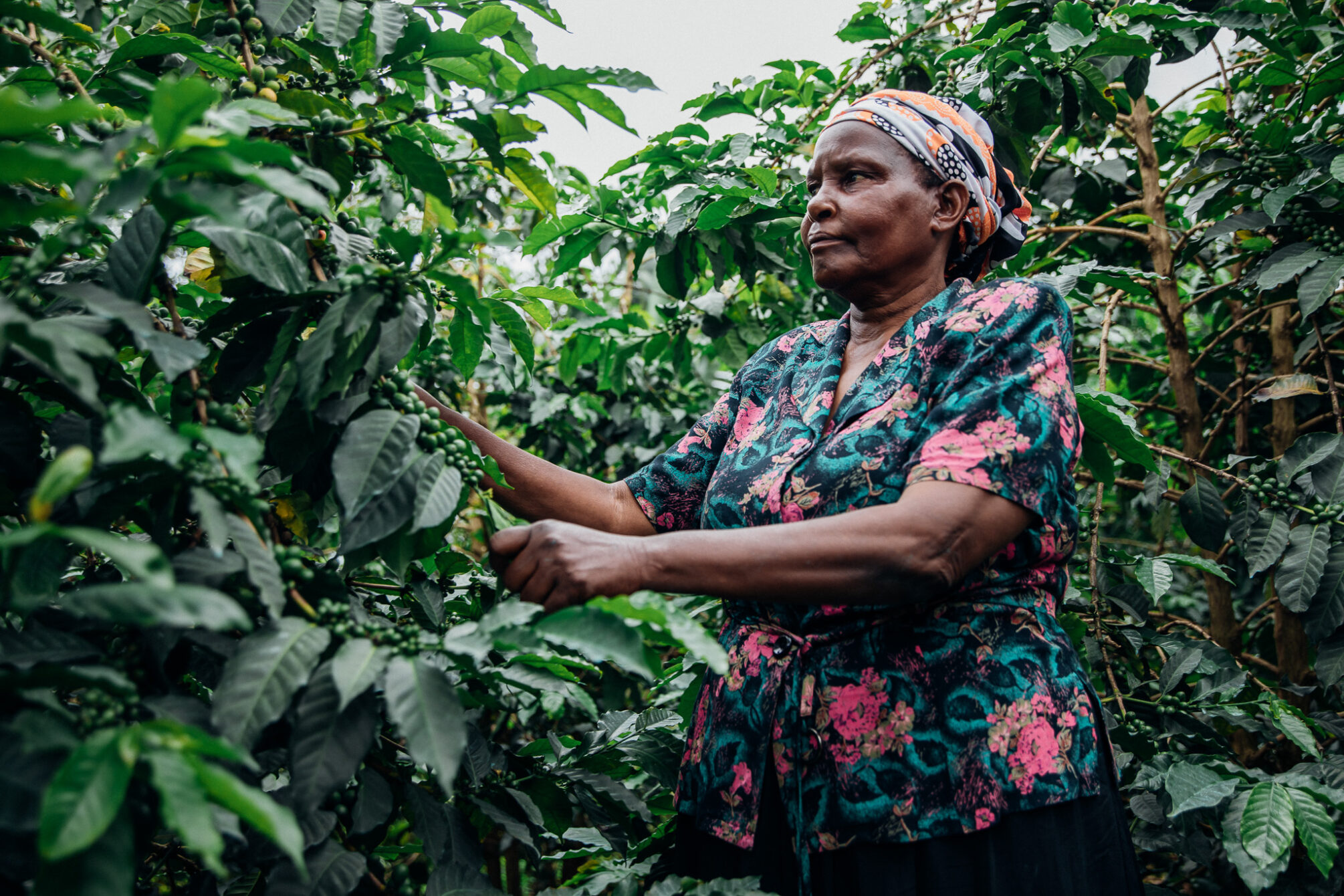
Having a strong and diverse offering of small producer coffees that sit alongside our cooperative lines will always be an important part of of our sourcing strategy in Kenya. A recent phone call to Faith Estate owner Cecilia Wanjiku Haniel highlighted the importance and validity of this approach. When we asked where her farm’s name came from, she recounted what her childhood in Kiambu was like, and how she used to see large British-owned farms and farmers enrich themselves through coffee production. “I grew up seeing that the Europeans were doing very well, and I decided that when I grew up, I wanted to farm and process coffee like them,” she told us. When her and her husband took over a property in 1972, she helmed operations and named the shamba Faith Estate, because “it took faith, of having a dream from my childhood, and then accomplishing it as an adult[…] When I bought the farm, I only thought of planting coffee and processing it, and selling it to buyers from abroad.”
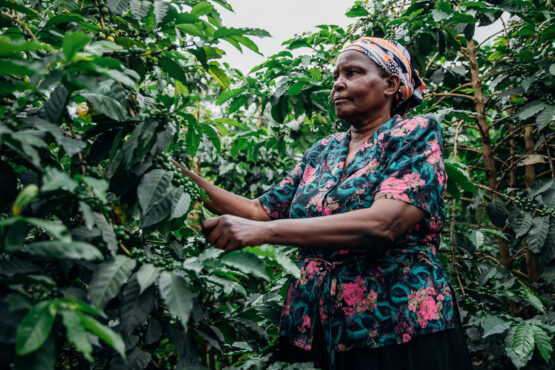

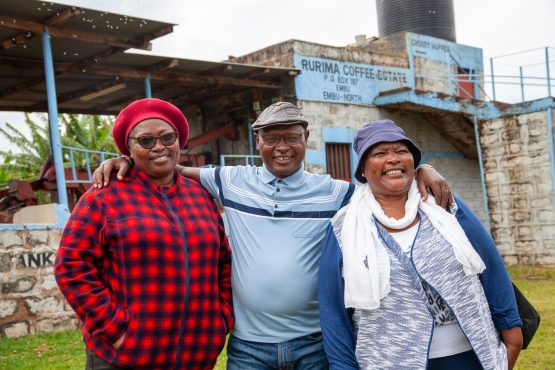
Cecilia’s farm, like many of those we buy coffee from every year, is incredibly healthy and impeccably run, and consistently produces stunning coffees. Over the years, she has become a mentor to other small-scale growers in Kenya, much like Joseph Mugo Karaba of Kabumbu Estate, whose crop we have been sourcing since 2019. For sibling farmers like Peris, Danson and Geoffrey (of Muhathi, Dagitu and Ndocha respectively), or Lucy Wanja Ndogo of the family-owned Rurima Estate, growing and processing coffee has become an important part of their family’s identity and prosperity. David Murathe of Waturi Estate pays homage to his mother (after whom the farm is named) by producing incredible coffee, and to his daughter by distributing it through his company Allena Coffee, which he christened after her. At Mbokam, Arthur and Josephine have created a haven for sustainable coffee-growing, while Jane and Grace have used their farms Mutura and Kamvara as grounds where the next generation of Kenyan producers are learning firsthand how to run a successful coffee business.
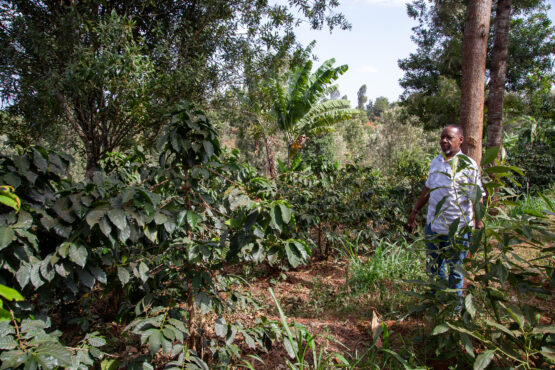
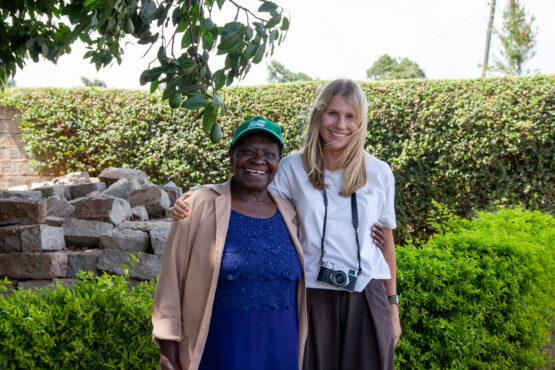
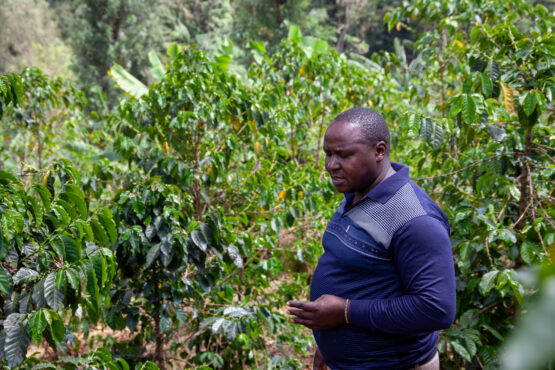
As these examples highlight, we are drawn to small estate offerings because they represent a family’s heritage and history, along with the intentional choices made throughout the season to produce something exceptional and enduring. The quality of these lots is not better or worse than those produced by cooperatives, nor is their scarcity a marketing ploy we use to manipulate sales, it simply feels right to show up year after year, even if sometimes we miss out on lots that are sold at prices that exceed our own or our customers’ budgets. We hope to continue growing our availability of small estate lots because we want to keep celebrating the people who produce them. After all, the impact of their efforts is tangible in ways that far exceed what they can deliver in a single harvest.
Sources and further reading recommendations:
Amrik Heyer. “The Gender of Wealth: Markets & Power in Central Kenya.” Review of African Political Economy 33, no. 107. http://www.jstor.org/stable/4007112.
Barnes, Carolyn. “An Experiment with Coffee Production by Kenyans, 1933-48.” African Economic History, no. 8. https://doi.org/10.2307/3601565.
Dewees, Peter A. Social and Economic Incentives for Smallholder Tree Growing. Chapter 3: The Evolution of Kikuyu Land Tenure. https://www.fao.org/4/U8995E/u8995e06.htm.
Magowan, Philip. “Kenyan Coffee: Enticing and Quenching an Imperial Thirst for Quality.” Scottish Centre for Global History. https://globalhistory.org.uk/2020/08/kenyan-coffee-enticing-and-quenching-an-imperial-thirst-for-quality/.
Morgan, W. T. W. “The ‘White Highlands’ of Kenya.” The Geographical Journal 129, no. 2. https://doi.org/10.2307/1792632.
Ministry of Agriculture and Livestock Development. COFFEE DEVELOPMENT AND MARKETING STRATEGY 2024-2029. https://www.kilimo.go.ke/wp-content/uploads/2024/10/Final-Draft-Coffee-Developemnt-and-Marketing-Strategy-27-Jan-2024-1.pdf.
Ng’ang’a, D. Mukaru. “Cash Crops And Class Formation: The Case Of The Gatanga Coffee Growers’ Co-Operative Society.” Journal of Eastern African Research & Development 6, no. 1. http://www.jstor.org/stable/43661428.